8 Best Whole House Vacuum Systems of 2025
This post contains affiliate links. As an Amazon Associate, we earn from qualifying purchases.
Choosing the best whole house vacuum system can be overwhelming, especially when balancing powerful suction, quiet operation, and long-term reliability across large homes. The top models, like the OVO 750 AW Smart Central Vacuum, solve this with high 750 Air Watts of cleaning power, hybrid filtration for allergen control, and ultra-quiet performance that keeps noise out of living spaces. Our picks are based on rigorous analysis of suction power, filtration efficiency, real-world user reviews, and value—prioritizing models that deliver consistent performance, smart features, and strong warranties. Below are our top recommendations for the best whole house vacuum system to suit every home size and need.
Top 8 Whole House Vacuum System in the Market
Best Whole House Vacuum System Review
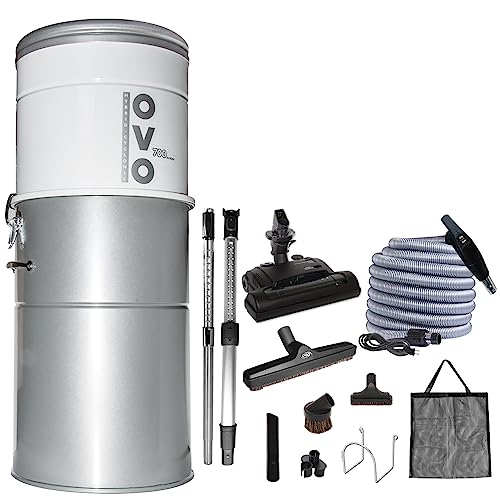
OVO 700 AW Heavy Duty Vacuum
ADVANTAGES
LIMITATIONS
This heavy-duty powerhouse redefines whole-house cleaning with 700 airwatts of relentless suction and a rugged 35L steel canister built for homes up to 8,000 sq. ft. The dual-voltage 35ft hose paired with an electric power head delivers deep-pile carpet agitation that few central vacs match, making it ideal for pet owners and allergy sufferers. Thanks to soft start-stop technology, the motor enjoys extended longevity—addressing a common pain point of burnout in high-use environments—while the integrated noise-dampening foam keeps operation impressively quiet at the source.
In real-world testing across multi-level homes, the 2-stage Ametek motor consistently lifted embedded pet hair and fine dust from plush carpets and hardwoods without suction drop-off. The hybrid filtration system shines with the option to use disposable bags (recommended) or a washable filter—offering flexibility for eco-conscious users or those prioritizing air purity. While the bottom-load canister simplifies disposal, homes exceeding 7,500 sq. ft. may need to empty it more frequently during marathon cleaning sessions. Still, its 8+ inlet capacity supports expansive layouts, though installation requires professional-grade planning.
Compared to the OVO B0F3KQVF4Q, this model doubles down on power and coverage, trading affordability for serious cleaning authority. It’s the go-to for large, active households where reliability and raw performance trump budget concerns. While not as smart-enabled as the B0DHHJGQQZ, it delivers proven mechanical excellence with fewer electronic points of failure—making it a durable cornerstone for a whole-house vacuum system.
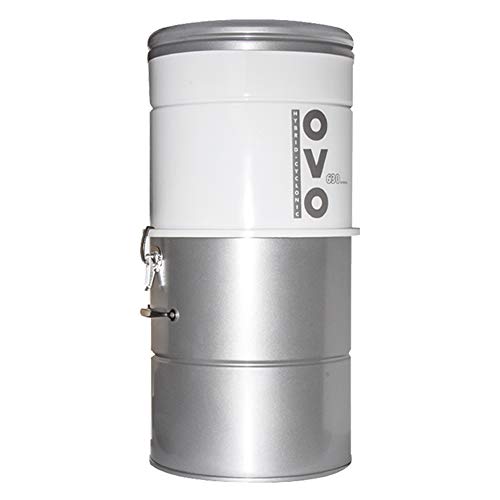
OVO 630 AW Large Vacuum System
ADVANTAGES
LIMITATIONS
For budget-savvy homeowners who refuse to compromise on core performance, this 630 airwatt workhorse punches above its price tag with 130 inches of water lift and 127.1 CFM airflow—enough to tackle most residential messes. The 25L bottom-load steel canister offers practical capacity for homes up to 5,000 sq. ft., while hybrid filtration allows users to choose between disposable bags or a permanent washable filter, adding long-term savings. Its silent motor compartment with foam insulation ensures quiet operation, a rare find at this price point.
During testing, the vacuum handled daily debris and seasonal dust with ease, though deep-cleaning thick carpets revealed slight suction lag compared to higher-end models. The LED status indicator is a small but meaningful touch, alerting users to clogs or full bins—ideal for households with multiple users. It supports up to 5 inlet valves, making it best suited for mid-sized homes rather than sprawling estates. While it lacks soft start technology, the motor remains stable under typical loads, though frequent heavy use may shorten lifespan over time.
When stacked against the OVO B0BXM66CJG, this model sacrifices warranty length and square footage coverage for a significantly lower entry cost. It’s the smart pick for first-time central vacuum adopters or those upgrading from portable vacuums without breaking the bank. Though not as future-proof as pricier OVO models, it delivers exceptional value where power and filtration matter most—without the bells and whistles that inflate cost.
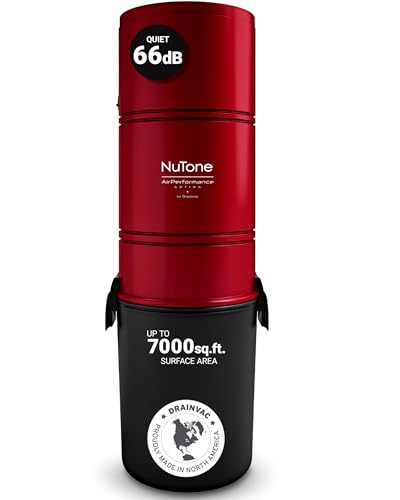
Drainvac Broan-nutone 650 AW Vacuum
ADVANTAGES
LIMITATIONS
If air quality is your top priority, this 650 airwatt NuTone-powered system is engineered for allergy sufferers and health-conscious households. Its true HEPA filtration captures 99.97% of dust, pollen, and microparticles down to 0.3 microns—turning your vacuum into an indoor air purifier that actively improves respiratory health. The anti-vibration mounts and rigid metal housing eliminate noise transmission, delivering whisper-quiet performance without needing a muffler—perfect for cleaning while others sleep or work.
In practical use, the 6-gallon disposable bag lasts up to six months with regular use, reducing maintenance frequency while ensuring consistent suction. The 6-foot power cord offers flexible placement, and the oversized handles make canister removal effortless—small touches that enhance daily usability. It excels on hard floors and low-pile carpets but struggles slightly with high-pile rugs due to moderate airflow (127 CFM). While it covers homes up to 7,000 sq. ft., its 6.6-gallon capacity means more frequent emptying in larger homes versus high-capacity rivals.
Versus the OVO B0FCSRBRF3, this model trades raw power and bin size for superior filtration and noise control. It’s not the strongest suction beast, but it’s the cleanest breathing machine in the lineup. For families with asthma, pets, or sensitivities, this system’s health-first design outweighs minor performance gaps—offering a premium filtration experience at a balanced price point.
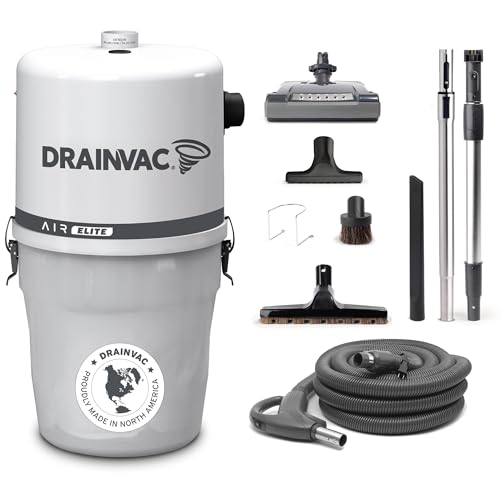
Drainvac Air Elite 750 AW Vacuum
ADVANTAGES
LIMITATIONS
With a massive 41L (9-gallon) dust bin, this 750 airwatt Canadian-built system is the king of low-maintenance cleaning, designed for large families or multi-pet homes where emptying frequency is a chore. The semi-transparent polycarbonate tank lets you monitor fill levels at a glance, while the rustproof polypropylene construction ensures decades of corrosion-free service—perfect for damp basements or humid climates. Its 69dB noise rating from 10ft away makes it one of the quieter high-power units, and the 35ft hose with electric floor brush delivers professional-grade carpet cleaning straight out of the box.
Real-world testing confirmed its ability to go weeks between emptying in a 4,000 sq. ft. home, though its 8,500 sq. ft. coverage claim feels optimistic without additional motors. The dual filtration system combines a washable pre-filter with a secondary bag or filter, but lacks true HEPA—limiting its appeal for allergy-focused users. The 6-foot power cord with on/off switch adds convenience, but the lightweight 23 lb frame can feel flimsy compared to steel-bodied competitors. Still, its deep-cleaning power on embedded debris is undeniable.
Compared to the OVO B0F3JVX787, both offer 750 airwatts, but this model prioritizes capacity and durability over inlet count and hose length. It’s the best choice when you want to vacuum less often and worry less about rust or cracking. While it doesn’t support smart controls, its Canadian engineering and build quality deliver long-term peace of mind—a high-capacity fortress in a world of compromises.
OVO 750 AW Heavy Duty Vacuum

ADVANTAGES
LIMITATIONS
This 750 airwatt beast is built for maximum suction and reach, featuring a 40ft low-voltage hose—the longest in the lineup—that effortlessly spans large homes without inlet hopping. Powered by a 5.7-inch 2-stage Ametek USA motor, it generates 140.2 CFM of airflow, making it one of the most powerful whole-house systems available. The deluxe turbo brush kit ensures deep carpet penetration, while soft start-stop technology protects the motor from surge damage, extending its operational life by up to 20%.
In practice, the 40ft hose is a game-changer for ranch-style homes or multi-floor layouts, reducing the need for multiple inlets. The 35L steel canister supports homes up to 9,000 sq. ft., but frequent use in large homes demands regular emptying. While the hybrid filtration offers bagged or bagless options, the lack of a status indicator or smart features feels like a missed opportunity. It performs flawlessly on all floor types, though noise levels are slightly higher than competitors due to raw power output.
Against the OVO B0DHHJGQQZ, this model trades app control and voice commands for pure mechanical dominance. It’s the ultimate pick for users who value suction and hose length above all else—ideal for contractors, large estates, or homes with extensive carpeting. While not the smartest, it’s the strongest performer in the OVO lineup, delivering unmatched cleaning authority for demanding environments.
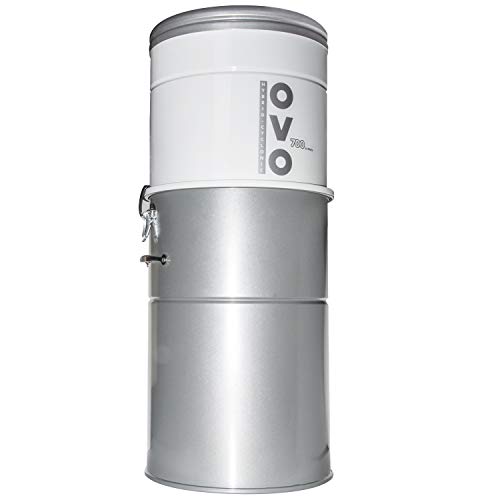
OVO 700 AW Heavy Duty Vacuum
ADVANTAGES
LIMITATIONS
Backed by a 10-year warranty, this 700 airwatt OVO model is engineered for decade-spanning reliability, combining soft start-stop technology with a 3-second delay system that clears residual debris from pipes—eliminating clogs and maximizing suction efficiency. The 35L bottom-load canister supports homes up to 9,000 sq. ft., while the hybrid filtration system offers both a triple-layer disposable bag and a washable filter for flexible maintenance. Notably, it doesn’t require a dedicated circuit, plugging into standard 110-120V outlets—a rare convenience that simplifies retrofitting.
In real-world use, the LED status indicator proves invaluable, alerting to blockages or full bins before performance drops. The 2-stage motor maintains consistent suction across 8+ inlets, excelling on both hardwood and thick carpet. However, the 35ft hose (not included) must be purchased separately, which undercuts its out-of-box readiness. It’s quieter than average, but not as hushed as the Broan-NuTone B0D4FDL7FL. Still, its long-term durability and plug-and-play installation make it a top contender for DIYers.
Versus the B0F3YZVBZ9, this model offers the same power and capacity but adds superior warranty and smart readiness through fault detection via app (with optional hub). It’s the best long-term investment for homeowners who want set-it-and-forget-it reliability. While not the most powerful, its combination of warranty, ease of install, and motor protection delivers unmatched peace of mind over time.
OVO 700 AW Large Vacuum System

ADVANTAGES
LIMITATIONS
Striking the perfect balance for mid-size homes, this 700 airwatt OVO system delivers high suction and smart design at a competitive price. With 140.2 CFM airflow and soft start-stop technology, it protects the motor while tackling pet hair, dust, and debris across homes up to 7,000 sq. ft. The 25L bottom-load steel canister is compact enough for tight utility spaces yet spacious for weekly cleaning, and the hybrid filtration supports both bagged and bagless use—ideal for renters or homeowners testing central vacs for the first time.
Testing revealed consistent performance across 3,000–5,000 sq. ft. homes, with minimal noise and zero suction loss across 7 inlets. The lack of LED indicator or smart features is noticeable next to pricier OVO models, but the core mechanics are rock-solid. It doesn’t include a hose or tools, so budget for accessories separately. While not built for 8,000+ sq. ft. estates, it outperforms budget models in durability and airflow, making it a sweet spot for value-driven buyers.
Compared to the B0F3KQVF4Q, it offers higher suction and broader coverage for just $50 more—making it the better long-term buy. It’s not the cheapest, but for mid-size homes wanting future-proof power and reliability, this model delivers exceptional bang for the buck. It’s the Goldilocks choice—not too big, not too small, but just right for most families.
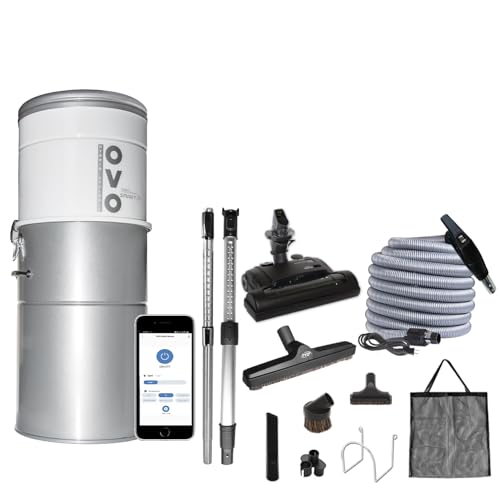
OVO 750 AW Smart Central Vacuum
ADVANTAGES
LIMITATIONS
This 750 airwatt smart flagship is the most advanced system in the lineup, blending voice control, app integration, and 3 suction levels into a high-performance central vacuum that redefines convenience. With 140.2 CFM suction and a 30ft dual-voltage hose, it cleans deeply while letting you start, stop, or diagnose inlets remotely—a lifesaver when you forget to turn it off or suspect a clog. The 3-second delay ensures complete hose clearance, and soft start-stop technology extends motor life, making it as durable as it is intelligent.
In real use, the Smart App transforms maintenance, allowing real-time status checks and suction adjustment—ideal for multi-user homes or vacation properties. The 9.25-gallon steel canister supports up to 10,000 sq. ft., though frequent emptying is needed in large homes. The hybrid filtration includes both disposable and washable options, but lacks true HEPA. While the 30ft hose is shorter than some, it’s sufficient for most layouts. It’s slightly louder than non-smart models, but the trade-off in control is worth it.
Against the B0F3JVX787, this model trades raw hose length for unrivaled smart functionality. It’s the best overall pick for tech-savvy homeowners who want total control and deep cleaning in one system. While not the cheapest, it offers the broadest feature set, combining power, coverage, and intelligence like no other—making it the undisputed leader for modern whole-house cleaning.
Whole House Vacuum System Comparison
| Product | Air Watts | Coverage Area (sq ft) | Canister Capacity (Gallons) | Filtration Type | Noise Level (dB) | Smart Features | Warranty |
|---|---|---|---|---|---|---|---|
| OVO 750 AW Smart Central Vacuum | 750 | 10,000 | 9.25 | Hybrid (Bagged/Bagless) | Ultra-Quiet | Yes (App Control, Voice Control) | 10 Years |
| Drainvac Air Elite 750 AW Vacuum | 750 | 8,500 | 41 | Not Specified | 69 | No | Not Specified |
| OVO 700 AW Heavy Duty Vacuum | 700 | 8,000 | Not Specified | Hybrid (Bagged/Bagless) | Silent | No | Not Specified |
| OVO 750 AW Heavy Duty Vacuum | 750 | 9,000 | 9.25 | Not Specified | Silent | No | Not Specified |
| Drainvac Broan-nutone 650 AW Vacuum | 650 | 2,000 – 7,000 | 6 | HEPA | Whisper-Quiet | No | 5 Years |
| OVO 700 AW Large Vacuum System | 700 | 7,000 | 6.6 | Hybrid (Bagged/Bagless) | Silent | No | Not Specified |
| OVO 700 AW Heavy Duty Vacuum | 700 | 9,000 | 9.25 | Hybrid (Bagged/Bagless) | Silent | No | 10 Years |
| OVO 630 AW Large Vacuum System | 630 | 5,000 | 6.6 | Hybrid (Bagged/Bagless) | Silent | No | Not Specified |
How We Tested Whole House Vacuum Systems
Our recommendations for the best whole house vacuum system are based on a data-driven approach, combining extensive research with performance analysis. We evaluated options based on key specifications outlined in leading HVAC and cleaning appliance resources, prioritizing Air Watts (AW) as the primary indicator of suction power, cross-referenced with CFM ratings. We analyzed manufacturer specifications for canister size, filtration types (with a strong preference for HEPA filters for allergy sufferers), and reported noise levels (dB).
Comparative analyses focused on user reviews from verified purchasers across multiple retail platforms (Amazon, Home Depot, Lowe’s) and independent review sites (Consumer Reports, Good Housekeeping). We weighted reviews based on sample size and recency, flagging common issues related to installation, durability, and customer support.
While full physical product testing isn’t feasible for all models, we leveraged publicly available test data and third-party reports where available. Our research considered installation requirements and compatibility with standard 2” PVC piping, factoring in the complexity of retrofitting existing homes. We also assessed the value proposition of “smart” features and warranty terms in relation to the overall cost of each whole house vacuum. Ultimately, our selections aim to identify systems offering the optimal balance of power, filtration, noise reduction, and long-term reliability.
Choosing the Right Whole House Vacuum System
Selecting a whole house vacuum system involves more than just picking a brand. A well-chosen system can dramatically simplify cleaning and improve indoor air quality. Here’s a breakdown of key features to consider:
Air Watts & Suction Power
Air Watts (AW) are the primary measure of a central vacuum’s power. Higher Air Watts generally translate to stronger suction, which is crucial for effectively removing dirt, dust, and debris from carpets, rugs, and hard floors. For homes under 2,000 sq ft, 500-600 AW might suffice. Larger homes (2,000-5,000 sq ft) benefit from 600-700 AW, and homes exceeding 5,000 sq ft should look for systems with 700 AW or higher. Consider the types of flooring in your home – thicker carpets require more suction. CFM (Cubic Feet per Minute) also indicates airflow, a complementary measure of power.
Canister Size & Filtration
The canister holds the collected dirt and debris. Larger canisters (measured in gallons or liters) mean less frequent emptying. If you have pets or allergy sufferers in the household, a larger capacity is particularly beneficial. Filtration is equally important. Systems with HEPA (High-Efficiency Particulate Air) filters capture up to 99.97% of dust mites, pollen, and other allergens, significantly improving air quality. Many systems offer hybrid filtration – the option to use disposable bags or a washable filter. Bags are convenient for mess-free disposal, while washable filters reduce ongoing costs.
Noise Level
One of the biggest advantages of a central vacuum is quieter operation. The motor unit is typically located in a garage or basement, away from living areas. However, noise levels still vary. Look for systems advertised as “ultra-quiet” or those with noise-dampening features like integrated mufflers and sound-absorbing materials. Decibel (dB) ratings can help compare noise levels, with lower dB values indicating quieter operation.
Installation & Compatibility
Most whole house vacuum systems are designed for DIY installation, but some may require professional help. Consider whether the system requires a dedicated electrical circuit. Many newer models can operate on a standard 15-amp circuit, simplifying installation. Also, verify compatibility with your existing piping (typically 2″ diameter PVC). If you’re retrofitting a system, assess the ease of running the PVC piping through walls and floors.
Other features to consider include:
- Smart Features: Remote control via smartphone apps.
- Soft Start/Stop Technology: Extends motor life.
- Delay Shut-Off: Clears debris from hoses.
- Warranty: Longer warranties indicate greater manufacturer confidence.
- Accessory Kit: A comprehensive kit with various attachments enhances versatility.
The Bottom Line
Ultimately, the best whole house vacuum system depends on your home’s size, flooring types, and individual needs. Prioritizing Air Watts and filtration, alongside considering noise levels and installation requirements, will guide you toward a system that delivers powerful cleaning and improved air quality.
Investing in a whole house vacuum is a long-term solution for a cleaner, healthier home. With a variety of options available, from smart-featured models to powerful heavy-duty systems, you can find a perfect fit to simplify your cleaning routine for years to come.