
Can I Vacuum a Damp Carpet? The Wet/Dry Vacuum Answer
This post contains affiliate links. As an Amazon Associate, we earn from qualifying purchases.
You can vacuum a damp carpet only with a vacuum specifically designed for wet pickup—a wet/dry shop vac or a dedicated carpet extractor. A standard household vacuum will short-circuit, destroy its motor, and trap moisture that leads to mold within 48 hours. The rule is absolute: if the label doesn’t say “wet/dry,” keep it away from all liquids.
That distinction—wet-rated versus dry-only—is the entire game. It decides whether you salvage a spill or create a costly, hazardous mess. Manufacturers like Kärcher and Rug Doctor build specific seals, drainage systems, and waterproof motors for their wet-capable models; a standard vacuum has none of these defenses.
What follows: the precise failure sequence inside a dry vacuum, the two tools that actually work, and the drying procedure that prevents mold from taking root after you’ve extracted the water.
Key Takeaways
- A standard vacuum will short-circuit and burn out its motor if used on wet carpet, presenting a serious shock hazard.
- Mold can begin growing in a damp carpet within 24-48 hours if moisture is pushed deeper by improper vacuuming.
- Only use a wet/dry vacuum or a carpet extractor (like a Rug Doctor or Bissell machine) for damp carpets.
- Even wet/dry vacuums require you to swap the dry filter for a foam filter before tackling liquids.
- The goal is extraction, not just surface drying. Proper technique pulls water from the pad beneath the carpet.
What Happens If You Use a Regular Vacuum?
The motor burns out. It’s not a maybe; it’s a when. A standard vacuum cleaner is an electrical device that moves air to lift dry debris. Introducing water creates a direct path for current to escape.
Where this goes sideways: The moisture creates a conductive path from the live motor windings to the grounded metal chassis. This causes a short circuit that can trip your breaker, deliver a shock, or fry the motor’s insulation in seconds. The repair cost often exceeds the value of the vacuum.
The internal paper or cloth filter instantly clogs when wet, choking airflow. The motor then overheats trying to pull air through a soaked block. You’ll hear a high-pitched whine, then smell the distinct odor of burning insulation or hot plastic. Once that smell hits, the motor is already damaged. On a circuit level, it’s a predictable failure. The 1300W motor in a typical wet vacuum like the Kärcher WD series is insulated and positioned away from the liquid path; a standard vacuum’s motor sits directly in the air stream.
Beyond the immediate breakdown, you force moisture deeper into the carpet fibers and down into the backing pad. This trapped water has nowhere to go. It becomes a perfect breeding ground for mold spores already present in your home.
| Component | In a Standard Vacuum | In a Wet/Dry Vacuum |
|---|---|---|
| Motor Sealing | Unsealed; air-cooled windings exposed to airflow. | O-ring sealed or physically isolated in a separate chamber. |
| Filter Media | Paper, cloth, or HEPA material; disintegrates when wet. | Removable foam sleeve or cartridge; washable and water-resistant. |
| Drainage | None; liquid pools in the bag or bin. | Dedicated drain plug or easy-pour container. |
| Float Switch | Not present. | Automatically shuts off suction when the tank is full to prevent overflow. |
Mold growth isn’t a slow, theoretical risk. In a warm, dark environment under a damp carpet, colonies can establish in under two days. The first sign is often a musty odor, not visible spotting. By the time you see discoloration, the mycelium network has already spread through the carpet backing. At that point, professional remediation or carpet replacement is the only fix. The takeaway is blunt: using the wrong tool transforms a simple spill into a structural moisture problem.
The Right Tools for a Damp Carpet
You have two correct options, and they are not interchangeable. A wet vacuum (shop vac) is for emergency water extraction. A carpet washer or extractor is for cleaning with solution. Using one for the other’s job leads to poor results or machine damage.
Wet/Dry Vacuums (Shop Vacs): The Extraction Workhorse
These are built for volume liquid pickup. Brands like Kärcher, DeWalt, and Stanley make durable models. The key is the switched filter system. For dry dust, you use a bag and a cartridge filter. For wet pickup, you must remove both and install the included foam filter sleeve over the cage. This open-cell foam allows water to pass through while protecting the pump. The Kärcher manual for its wet/dry models states this step explicitly: “Before vacuuming up wet dirt, you must first remove the filter bag and then remove the cartridge filter. Install the foam filter.”
The part nobody mentions: If you run a wet/dry vac on a damp carpet without swapping to the foam filter, you will suck fine, silty water straight into the pump mechanism. That sediment acts as grinding paste on the impeller fins, wearing them down over a dozen uses until suction drops permanently. The foam filter blocks that grit.
Their power is raw suction, designed to pull free water from a surface. They are the first tool you reach for after a plumbing leak or a major spill. For ongoing carpet care, however, they are a blunt instrument. They remove water but do not clean.
Carpet Extractors & Washers: The Cleaning Tools
Machines like the Rug Doctor TruDeep, Hoover SmartWash, or Bissell ProHeat are designed for a different job. They spray a cleaning solution, agitate it with a brush, and then vacuum the dirty water back into a separate tank. They are not, and cannot be, used as standard dry vacuums.
The Rug Doctor TruDeep manual is unequivocal: “DO NOT use the machine for dry vacuuming. This machine does not have a fine dust filter. Using machine to dry vacuum causes damage to the vacuum motor.” These machines use a different pump and motor design optimized for liquid, not air. Running them dry overheats the pump seals and burns out the motor just as surely as water kills a standard vacuum.
For a damp carpet that needs cleaning, not just drying, a carpet washer vacuum is the appropriate tool. It injects and extracts moisture in a controlled cycle. The critical rule here is to avoid over-wetting. The same Rug Doctor manual warns: “DO NOT use more than two (2) cleaning passes on any area of carpet as over-wetting and damage may result.”
Step-by-Step: How to Dry a Damp Carpet Correctly
This process assumes you’re using the correct wet/dry vacuum. Speed is your ally. The goal is to remove as much free water as possible, then create airflow to evaporate the rest.
- Safety First: Unplug Everything. Before you touch any water or machine, ensure the outlet you’ll use is not wet and is protected by a GFCI (Ground Fault Circuit Interrupter). This is non-negotiable. Plug your wet/dry vac into a GFCI outlet or use a GFCI extension cord.
- Configure Your Wet/Dry Vac. Open the tank and ensure all dry collection bags and paper filters are removed. Install the foam filter or wet filter cartridge according to your model’s manual. Confirm the drain plug is closed.
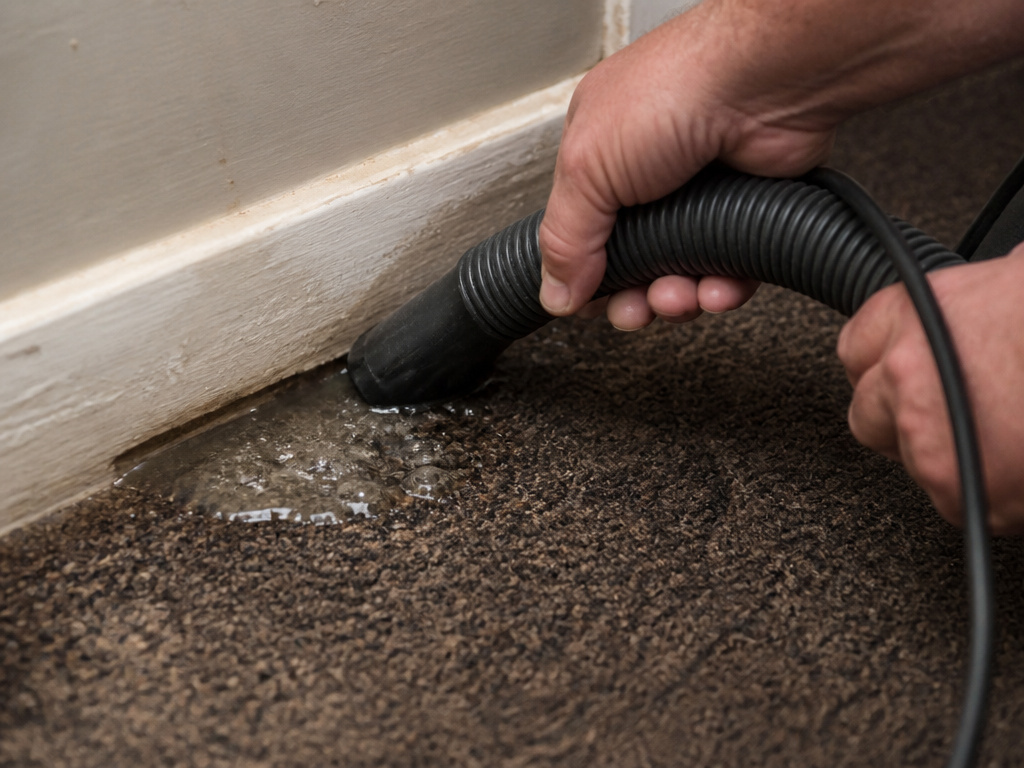
- Extract Surface Water. Use the broad floor nozzle (not a narrow tool) and make slow, overlapping passes. Push the nozzle firmly enough to seal the edge against the carpet. You should hear the pitch of the motor change as it lifts water—a deeper, gurgling sound. Tilt the nozzle slightly to lead with one edge, pushing water toward the suction path.
- Target the Pad. This is the step people skip. Carpet padding holds several times more water than the carpet fibers. After the surface seems dry, go over the area again, moving even slower. Hold the nozzle in place for 3-5 seconds per spot to allow suction to pull moisture from the depths. You’ll often see water appear in the hose again after the surface looks dry.
- Empty the Tank Frequently. Most wet/dry vacs have a float valve that shuts off suction when the tank is full. If you hear the motor pitch rise suddenly to a high whine, the tank is full. Power off, unplug, and empty it immediately. Letting the machine run against a closed float valve strains the motor.
- Create Airflow. Once extraction is complete, you must dry the residual moisture. Move furniture off the area. Use oscillating fans pointed directly at the floor. In humid climates, run a dehumidifier in the room. Open windows if the outside air is drier.
- Verify Dryness. The carpet surface may feel dry to the touch while the pad beneath is still soaked. The only reliable test is a moisture meter. Lacking that, place a dry, white paper towel on the carpet and weigh it down with a heavy, flat object (like a stack of books). Check it after an hour. If the towel shows any dampness, continue fan drying.
Common mistake: Stopping when the carpet surface feels dry. The moisture trapped in the pad will wick back up into the fibers, restarting the mold clock and creating a lingering damp smell. Keep fans running for at least 24 hours.
When “Damp” Is a Sign of a Bigger Problem
Sometimes, a damp carpet isn’t from a visible spill. It’s a symptom. Distinguishing between a simple accident and a hidden leak changes the response from cleaning to investigation.
Localized Dampness near a window, exterior wall, or under a sink usually points to a leak. The water is likely coming from behind or below. No amount of vacuuming will fix it. You must find and stop the water source first. Vacuuming here is just a temporary step during repair.
Generalized Dampness across a large area or a whole room, especially on a ground floor, suggests rising damp from a cracked foundation slab or a failed vapor barrier. This is a structural issue requiring a professional assessment and likely a perimeter drainage fix.
High Humidity Dampness feels cool and slightly clammy but isn’t soaked. This can happen in basements or tightly sealed homes. A standard dry-only vacuum can even be at risk here. The Kärcher T 10/1 Bp manual for a dry vacuum lists “short-circuit due to high levels of humidity” as a potential hazard. The solution isn’t vacuuming; it’s lowering the ambient humidity with a dehumidifier to prevent mold and dust mite proliferation.
If your damp carpet fits any of these patterns, treat the vacuum as a stopgap tool for managing the symptom. The real fix is elsewhere.
Frequently Asked Questions
Can I use my carpet cleaner to vacuum up water?
No. While a carpet cleaner (extractor) vacuums wet, dirty solution, it is not designed for bulk water pickup. Using it to suck up a large spill can overwhelm its smaller recovery tank and pump, leading to motor failure. It lacks the large drain port and high-volume capacity of a dedicated wet vacuum.
How long does it take for mold to grow on a wet carpet?
Under ideal conditions (warm, dark, and stagnant), mold spores can begin germinating in as little as 24-48 hours. Visible growth may take a few days, but the harmful mycotoxins and musty odors start developing during the initial germination phase. This is why rapid extraction and active drying are critical.
What’s the difference between a wet/dry vac and a carpet shampooer?
Wet/dry vac is for liquid removal. It has powerful suction, a large tank, and a simple foam filter. A carpet shampooer** is for cleaning. It has a system to spray cleaning solution, brushes to agitate, and a vacuum to suck the dirty water back up. They are engineered for different primary functions, though there is some overlap in extraction capability.
My vacuum sucked up a little water by accident. Is it ruined?
Not necessarily, but it’s at high risk. Unplug it immediately. Disassemble it as much as you safely can: empty the bin, remove the filter, and let every component air-dry completely for at least 72 hours in a warm, dry place. Do not use a hair dryer, as concentrated heat can warp plastic. Before plugging it back in, check for any visible moisture or corrosion on the motor housing. If it smells burnt, it’s likely damaged.
Can I vacuum a carpet that’s damp from cleaning?
Yes, but only after it is completely dry to the touch and has passed the paper towel test. Vacuuming a slightly damp carpet with a standard upright vacuum will clog the filter with moist fibers and soil, drastically reducing suction and potentially causing motor strain. Always ensure the carpet is fully dry before resuming regular dry vacuuming.
Before You Go
The answer to “can I vacuum a damp carpet” hinges entirely on your tool. A standard canister vacuum or upright vacuum is a hard no—it’s a safety hazard and a death sentence for the machine. The job belongs to a wet vacuum or, for cleaning, a dedicated carpet washer.
The procedure is straightforward: configure the wet/dry vac correctly, extract thoroughly down to the pad, and then force-dry the area with fans. The stakes are mold and motor failure, both of which are expensive and unhealthy. For pet owners dealing with frequent accidents, investing in a vacuum for pet hair and carpet that also has wet extraction capabilities can be a smart, dual-purpose solution. Keep your dry vacuums for dust, and let the wet-rated tools handle the spills.