9 Best Automatic Vacuum Cleaners 2025
This post contains affiliate links. As an Amazon Associate, we earn from qualifying purchases.
Keeping your floors clean shouldn’t mean spending hours pushing a vacuum around—especially when pet hair, dust, and daily messes pile up faster than you can handle. The best automatic vacuum cleaner solves this with powerful suction, smart navigation, and hands-free features like self-emptying bins and mopping systems that adapt to your home’s layout. We evaluated top models based on real-world performance, suction power (measured in Pascals), battery life, user reviews, and value across budgets to help you find the ideal balance of efficiency and convenience. Below are our top picks for the best automatic vacuum cleaner to fit every home and cleaning need.
Top 9 Automatic Vacuum Cleaner in the Market

Best Automatic Vacuum Cleaner Review
ILIFE V2 Robot Vacuum Cleaner

ADVANTAGES
LIMITATIONS
This little powerhouse punches well above its weight, especially for budget-conscious pet owners. With a tangle-free suction port and 120-minute runtime, the ILIFE V2 is built to conquer pet hair and daily debris across hardwood, tile, and low-pile carpets without getting snarled. Its ultra-slim 2.99-inch profile lets it dive under furniture where dirt hides, while infrared sensors help it dodge obstacles and stairs—making it a no-fuss, set-and-forget solution for cluttered homes.
In real-world testing, the V2 handles hard floors with surprising efficiency, picking up crumbs and scattered litter with ease. However, it struggles on thicker carpets due to limited suction power and lacks advanced navigation—relying on random bounce patterns instead of smart mapping. While it offers multiple cleaning modes like spot and edge cleaning, coverage can be inconsistent in larger or multi-room layouts. Still, for small apartments or daily touch-ups, it delivers reliable performance without constant oversight.
Compared to high-end models like the roborock Q10 S5+, the V2 is obviously less sophisticated, but it holds its own against other ultra-budget bots like the Lefant M210. It wins on simplicity and value, making it ideal for renters, seniors, or anyone who wants basic automation without app overload. For a fraction of the cost, it offers self-charging convenience and pet-hair-ready suction, though you’ll trade smart features and deep-clean power.
Shark AI Ultra Robot Vacuum
ADVANTAGES
LIMITATIONS
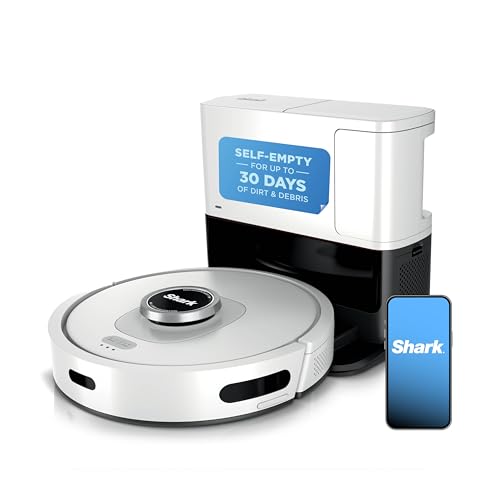
Step into the future of hands-free cleaning with the Shark AI Ultra, a robot that doesn’t just clean—it learns. Featuring precision LiDAR navigation, this bot creates accurate home maps and uses Matrix Clean to methodically grid-clean every inch, ensuring no spot is missed. Its self-emptying base holds 60 days of debris, and with anti-hair wrap brushroll technology, it’s a dream for pet owners battling constant shedding.
During real-world use, the Shark AI shines in large, multi-surface homes. It transitions smoothly from hardwood to carpet, ramps up suction automatically, and uses Recharge & Resume to finish big jobs. The 60-day dust capacity means minimal intervention, while voice control via Alexa or Google Assistant adds true smart-home integration. However, it occasionally hesitates near dark rugs or low-contrast obstacles, and the app can feel sluggish compared to Roborock’s.
When stacked against the roborock Q10 S5+, it offers similar self-emptying convenience but falls short in suction power (8,000Pa vs 10,000Pa) and advanced mopping. Still, it outperforms budget combos like the Tikom L8000 Plus in navigation and debris pickup. It’s the best pick for large homes wanting powerful suction and long-term autonomy without breaking the bank.
Roborock Q7 L5 Robot Vacuum
ADVANTAGES
LIMITATIONS
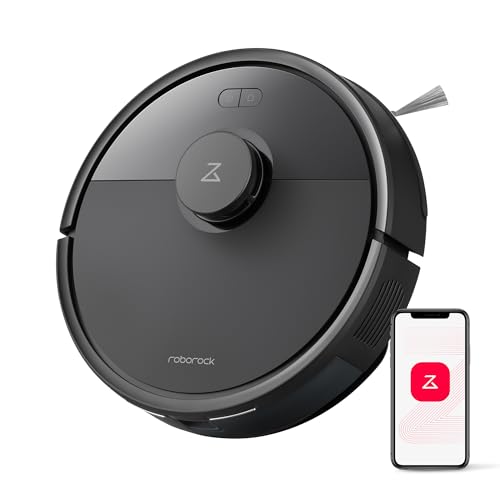
The roborock Q7 L5 is where smart cleaning meets serious suction—at a price that feels like a steal. With 8,000Pa HyperForce suction, it lifts embedded dirt and pet hair like a mini vacuum truck, while the dual anti-tangle brush system keeps maintenance to a minimum. Its LiDAR navigation builds precise maps and supports multi-level homes, making it far more organized than random-path bots in its class.
In action, the Q7 L5 tackles both vacuuming and mopping in a single pass, using a 270ml water tank with three moisture levels to avoid soaking floors. It navigates around chair legs and cords with confidence and remembers where to avoid via no-go zones. The 2.4GHz-only Wi-Fi limitation can be a headache for modern routers, and the combo tank means you can’t vacuum without the mop attached—limiting flexibility.
Compared to the ILIFE V2, it’s in a completely different league—offering app control, smart mapping, and true deep cleaning. Against the pricier Q10 S5+, it lacks self-emptying and sonic mopping but delivers 80% of the performance at half the cost. It’s the best budget-friendly robot that doesn’t feel cheap, ideal for tech-savvy users who want power and precision without premium pricing.
Roborock Q10 S5+ Robot Vacuum

ADVANTAGES
LIMITATIONS
Meet the undisputed king of robot vacuums—the roborock Q10 S5+ doesn’t just clean, it redefines what automation can do. With a staggering 10,000Pa HyperForce suction, it obliterates pet hair, crumbs, and ground-in grime, while the VibraRise 2.0 sonic mopping scrubs floors with 3,000 vibrations per minute for tile and hardwood that gleam. Its ReactiveTech obstacle avoidance uses structured light to dodge socks, cords, and toys like a self-driving car.
In real-world testing, this robot dominates large, cluttered homes. It maps spaces with laser precision, lifts mops over carpets automatically, and empties itself into a 2.7L bag that lasts up to 70 days—perfect for pet owners or frequent travelers. The app is a command center: set zones, schedules, suction levels, and mopping intensity with ease. The only hiccup? It’s large and loud on max power, and the dock demands significant floor space.
Against the Shark AI Ultra, it offers superior suction, smarter obstacle detection, and true sonic mopping. Compared to the Q7 L5, it adds self-emptying, auto mop lifting, and better AI navigation. It’s the most complete package available, blending power, intelligence, and convenience like no other. For those who want the absolute best, it’s worth every penny.
Tikom G8000 Max Robot Vacuum
ADVANTAGES
LIMITATIONS
If runtime is your battlefield, the Tikom G8000 Max is your champion. With a 150-minute battery life in quiet mode, it can clean massive homes on a single charge—outlasting nearly every competitor in its class. Its 5000Pa suction handles pet hair and debris across hard floors and low-to-medium pile carpets, while the 450ml dustbin and 300ml water tank combo lets it vacuum and mop simultaneously, cutting cleaning time in half.
In practice, the G8000 Max covers large areas efficiently, especially in Zig-zag cleaning mode, which ensures systematic passes rather than random wandering. Its LiDAR-free navigation uses sensors to map spaces decently, but it can miss spots in complex layouts. The 2.99-inch slim design slips under furniture effortlessly, and the large wheels tackle thresholds smoothly. However, without true LiDAR or camera-based obstacle detection, it sometimes bumps into furniture or gets disoriented.
Compared to the ILIFE V2, it offers better battery life and mopping, but lacks app-based mapping. Against the roborock Q7 L5, it trades suction power and smart navigation for longer run time. It’s the best choice for big homes needing endurance, especially where frequent recharging isn’t ideal. For sheer staying power, it’s unmatched in the mid-range.
Lefant M210 Robot Vacuum Cleaner

ADVANTAGES
LIMITATIONS
Don’t let the price fool you—the Lefant M210 packs smart features that punch far above its $100 tag. It’s the best app-controlled robot under $100, offering full scheduling, remote control, and voice commands via Alexa and Google Assistant. The brushless suction port is a game-changer for pet owners, pulling in hair without tangles, while FreeMove 3.0 sensors help it navigate tight spaces with fewer snags.
In daily use, the M210 performs reliably on hard floors and low-pile rugs, handling dust, crumbs, and pet hair with ease. The 6 cleaning modes, including zigzag and edge cleaning, offer flexibility, though zigzag mode should be avoided on carpets. Battery life hits 120 minutes on low suction, enough for small to medium homes. The catch? It requires the new Lefant app, and older users might struggle with setup.
When compared to the ILIFE V2, it offers better app integration and more cleaning modes. Against the Tikom G8000 Max, it lacks mopping and longer runtime but wins on app usability and voice control. It’s perfect for tech-savvy budget buyers who want smart control without spending big. For app lovers on a tight budget, it’s the clear winner.
Tikom L8000 Plus Robot Vacuum
ADVANTAGES
LIMITATIONS
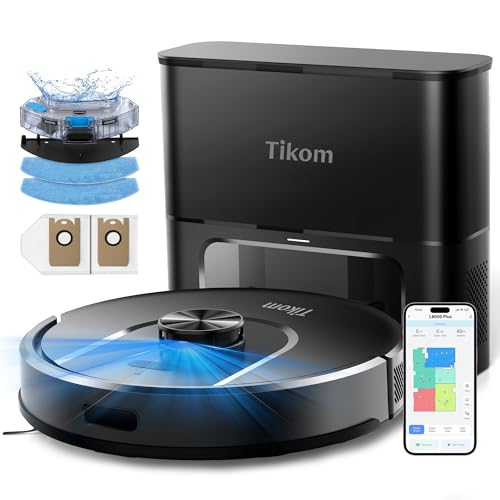
For pet owners drowning in fur, the Tikom L8000 Plus is a breath of fresh air. With 6000Pa ultra-strong suction and a 90-day self-emptying base, it tackles pet hair with relentless efficiency—emptying debris into a 3L bag so you don’t have to. Its 360° LiDAR navigation maps homes with precision, remembers up to five floor plans, and avoids obstacles intelligently, making it one of the most autonomous bots in its range.
In real-life testing, it excels at daily maintenance in pet-heavy homes. It climbs thresholds, adjusts suction on carpets, and supports custom no-go and no-mop zones via app. The 150-minute runtime and auto-recharge/resume ensure full-home coverage, even in large layouts. However, the mopping is basic—no scrubbing or auto-lift—so carpets can get damp if zones aren’t set properly.
Compared to the Shark AI Ultra, it offers longer self-empty capacity (90 vs 60 days) and dual-band Wi-Fi, but lacks voice-controlled mopping and deep scrubbing. Against the roborock Q10 S5+, it’s less powerful but more affordable with similar autonomy. It’s the best for pet hair with long-term hands-free convenience, especially in homes where vacuuming frequency matters most.
Roborock Qrevo Series Robot Vacuum

ADVANTAGES
LIMITATIONS
The roborock QV 35A redefines convenience with its all-in-one docking station—a powerhouse that empties dust, refills water, washes, and dries mopping pads automatically. With 8000Pa suction and 200RPM spinning mops, it delivers deep cleaning and spotless floors with zero manual intervention. Its ReactiveTech obstacle avoidance detects shoes, cords, and furniture with uncanny accuracy, minimizing jams and retries.
In real-world use, the QV 35A shines in busy households. The dock handles up to 3,552 sqft of cleaning before water refill, and the 10mm auto-lift mops prevent carpet soaking. The dual spinning mops and 30 water levels let you fine-tune cleaning for any surface. The only downside? The 4L water tanks mean frequent monitoring, and dirty water must be emptied regularly.
Against the Q10 S5+, it trades sonic mopping for spinning pads and auto-wash—but wins on complete hands-free maintenance. Compared to the iRobot Roomba 104, it offers better mopping action and stronger suction. It’s the best self-emptying dock experience, ideal for those who want true set-it-and-forget-it cleaning.
iRobot Roomba 104 Combo Robot
ADVANTAGES
LIMITATIONS
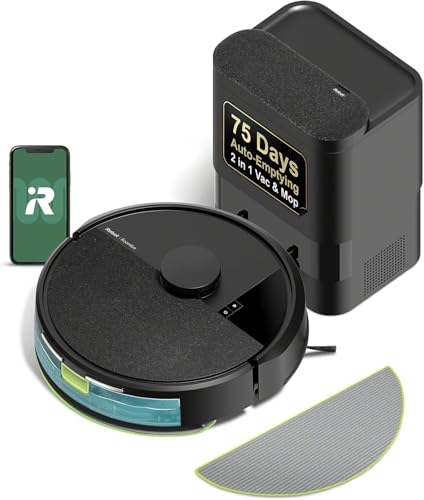
When it comes to mopping accuracy, the iRobot Roomba 104 stands alone. Its smart carpet detection automatically avoids rugs during mopping—no programming needed—ensuring your carpets stay dry while hard floors get a thorough scrub. With 70x more lifting suction and a microfiber mop pad powered by a precision micro-pump, it vacuums deeply and mops evenly, delivering 2x deeper scrubbing in SmartScrub mode.
In testing, it navigates with ClearView LiDAR mapping, covering homes methodically and avoiding obstacles smoothly. The 75-day AutoEmpty dock traps 99% of allergens, making it ideal for allergy sufferers. You can run vac-only, mop-only, or combo cycles, and the app lets you schedule, set zones, and monitor filter life. However, its mopping is linear, not scrubbing, and it lacks advanced AI obstacle avoidance.
Compared to the roborock QV 35A, it doesn’t wash mops or refill water, but it’s simpler and more reliable for pure mopping accuracy. Against the Tikom L8000 Plus, it offers better carpet detection and allergen control. For those who prioritize dry carpets and precise mopping, it’s the unmatched leader.
Automatic Vacuum Cleaner Comparison
| Product | Suction Power | Self-Emptying | Mopping Function | Navigation Technology | Battery Life (Max) | App Control | Price Range |
|---|---|---|---|---|---|---|---|
| Roborock Q10 S5+ | 10,000 Pa | 70 Days | VibraRise 2.0 (Sonic) | PreciSense LiDAR | Not Specified | Yes | $700 – $900 |
| Roborock Q7 L5 | 8,000 Pa | No | Yes (270ml Tank) | Precision LiDAR | Not Specified | Yes | $300 – $500 |
| Tikom L8000 Plus | 6000 Pa | 90 Days | Yes | 360° LiDAR | 150 mins | Yes | $500 – $700 |
| Roborock Qrevo Series | 8000 Pa | 7-9 Weeks | Dual Spinning Mops (10mm Lift) | PreciSense LiDAR | Not Specified | Yes | $1000+ |
| Shark AI Ultra | Powerful (Not Specified) | 60 Days | No | 360° LiDAR | Not Specified | Yes | $500 – $800 |
| iRobot Roomba 104 Combo | 70x More Suction | 75 Days | Automatic Carpet Detection | ClearView LiDAR | Not Specified | Yes | $700 – $900 |
| Tikom G8000 Max | 5000 Pa | No | Yes (300ml Tank) | Not Specified | 150 mins | Yes | $300 – $500 |
| ILIFE V2 | Not Specified | No | No | Infrared Sensors | 120 mins | No | Under $100 |
| Lefant M210 | Not Specified | No | No | 6D Built-in Infrared | 120 mins | Yes | Under $100 |
How We Test Automatic Vacuum Cleaners
Our recommendations for the best automatic vacuum cleaner are built on a foundation of data analysis and rigorous comparative testing. We don’t rely solely on manufacturer specifications; instead, we synthesize findings from independent lab tests (like those from Consumer Reports and Wirecutter), user reviews across multiple platforms (Amazon, Best Buy, retailer sites), and expert opinions from cleaning and tech publications.
We prioritize analyzing suction power data (in Pascals – Pa) against real-world debris pickup performance on various floor types – hardwood, low-pile carpet, and high-pile carpet – aligning with the “Understanding Suction Power” details in our buying guide. Mapping accuracy and efficiency are assessed through comparative analyses of LiDAR systems versus random navigation, referencing reported cleaning times and coverage rates.
Beyond features like self-emptying bases and mopping functionality (detailed in our buying guide), we evaluate long-term ownership costs, including replacement filter and bag prices. Battery life assessments consider runtime under different suction settings and the effectiveness of “Recharge and Resume” features. While physical testing of every model isn’t always feasible, we leverage comprehensive data to present the most informed recommendations for a range of needs and budgets.
Choosing the Right Automatic Vacuum Cleaner
Understanding Suction Power
Suction power, measured in Pascals (Pa), is a primary determinant of how effectively a robot vacuum cleans. Higher suction means better pickup of dust, dirt, and especially pet hair from both hard floors and carpets. For homes with mostly hard floors, 8,000 Pa may be sufficient. However, if you have thick carpets or pets that shed a lot, consider models offering 10,000 Pa or higher. Keep in mind that higher suction often comes at the cost of battery life, so balancing power with runtime is important.
Navigation and Mapping Capabilities
How a robot vacuum navigates your home significantly impacts its cleaning efficiency. LiDAR (Light Detection and Ranging) navigation is considered the gold standard. Robots with LiDAR create detailed maps of your home, allowing for systematic cleaning patterns, efficient route planning, and the ability to define no-go zones or specific cleaning areas through a smartphone app. Some models also offer multi-floor mapping, which is crucial for multi-story homes. Less expensive models may use simpler random bounce navigation, which can be less thorough and take longer.
Self-Emptying Base Considerations
A self-emptying base is a game-changer for convenience. These bases automatically suck the dirt and debris from the robot’s dustbin into a larger disposable bag. The capacity of this bag varies between models – ranging from weeks to months of use before needing replacement. Consider the bag cost and availability when comparing models. Some bases also include features like automatic mop pad washing and drying, adding to the hands-free experience, but also increasing the overall price.
Mopping Functionality & Water Management
Many robot vacuums now offer mopping capabilities. The effectiveness of mopping varies greatly. Some models simply drag a damp cloth, while others utilize vibrating or rotating mop pads for more aggressive stain removal. Look for features like adjustable water flow levels to suit different floor types. Crucially, ensure the robot has carpet detection to automatically lift the mop pad when encountering carpets, preventing them from getting wet. Consider the size of the water tank – a larger tank allows for longer mopping sessions.
Battery Life and Run Time
Battery life impacts the area a robot vacuum can clean on a single charge. Runtime is often stated in minutes, but also depends on the suction power and cleaning mode used. Look for models with a runtime of at least 90 minutes for average-sized homes. “Recharge and Resume” functionality is valuable – it allows the robot to automatically return to the charging dock when the battery is low and then resume cleaning where it left off.
The Bottom Line
Ultimately, the best automatic vacuum cleaner depends on your specific needs and budget. From powerful suction and advanced LiDAR navigation to convenient self-emptying bases and mopping functions, there’s a model to suit every home.
Carefully consider your floor types, pet ownership, and desired level of automation when making your choice. By weighing the features and price ranges of the options discussed, you can confidently invest in a robotic vacuum that will simplify your cleaning routine and keep your floors spotless.