8 Best Dust Extractor Vacuums 2026
This post contains affiliate links. As an Amazon Associate, we earn from qualifying purchases.
Dealing with fine dust and debris on the jobsite isn’t just messy—it’s a serious health hazard, especially when harmful particles like silica become airborne. The best dust extractor vacuums solve this with powerful suction (measured in CFM) and true HEPA filtration that captures 99.97% of microscopic particles, keeping your air clean and OSHA-compliant. We evaluated top models based on performance data, filtration efficiency, real-world user reviews, and key features like automatic filter cleaning and tool activation to ensure reliable, long-term performance. Below are our top picks for the best dust extractor vacuums that deliver maximum protection and productivity.
Top 8 Dust Extractor Vacuums in the Market

Best Dust Extractor Vacuums Review
Makita XCV11Z Cordless

ADVANTAGES
LIMITATIONS
Unleashed mobility meets surgical suction in the Makita XCV11Z, a cordless dust extractor that redefines portability without sacrificing performance. Powered by an 18V LXT BL Brushless motor, it delivers 57 CFM and 27 inches of water lift—numbers that punch well above its compact frame. The real magic lies in its HEPA filter capturing 99.97% of particles 3 microns and larger, making it a standout for indoor renovation or lead-safe work where air purity is non-negotiable. For contractors moving between floors or tight attic spaces, this vacuum eliminates tripping over cords and lugging heavy units up staircases.
In real-world testing, the Makita shines during short bursts of sanding, drywall work, or cleanup after trim installation. With an 18V 5.0 Ah battery, it sustains up to 60 minutes of runtime, though high-dust tasks reduce that closer to 30–40 minutes. The automatic filter cleaning system keeps suction consistent, but the 2-gallon capacity means frequent emptying on larger jobs. It handles fine dust effortlessly, but wet spills demand caution due to limited tank size. At 76 dB(A), it’s not whisper-quiet, but it won’t drown out job site communication either.
Compared to the bulkier DEWALT DWV015, the Makita trades capacity and raw power for unmatched freedom of movement—ideal for finish carpenters, electricians, or HVAC techs who value agility over marathon runtime. It’s not meant to replace a stationary 8+ gallon unit, but as a mobile companion for precision cleanup, it excels. While the Festool CT 15 offers smarter integration, the Makita delivers pro-level filtration and brushless efficiency at a fraction of the weight and cost.
Auto HEPA Clean 8 Gallon
ADVANTAGES
LIMITATIONS
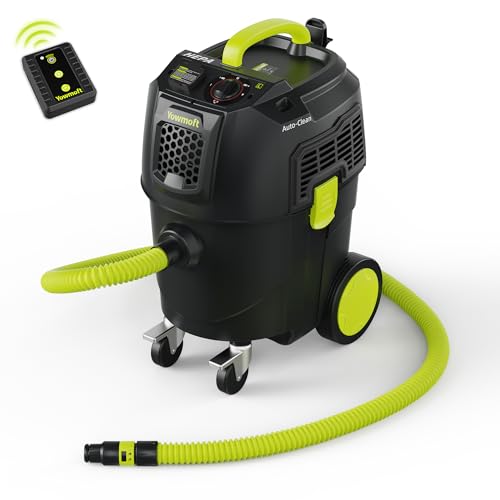
Command your cleanup from across the room—this 8-gallon dust extractor turns workflow efficiency into a superpower with remote control operation and automatic HEPA cleaning every 20 seconds. Driven by a 1200-watt brushless motor, it unleashes 17 kPa suction and 150 CFM airflow, matching commercial-grade extractors in both power and intelligence. The real game-changer? Tool sync activation—when you fire up a connected power tool (up to 5A), the vacuum starts instantly, eliminating missed dust bursts at startup. This isn’t just convenience; it’s precision dust management for cabinet shops and flooring crews.
On the job, this extractor handles continuous routing, planing, and miter saw work with ease, maintaining peak suction thanks to its aggressive auto-clean cycle. The 8-gallon drum offers solid runtime between dumps, and the 1.25-inch anti-static hose resists clogging even with fine wood flour. It moves smoothly over sawdust-covered floors thanks to swivel casters, though the 35-pound weight can be awkward on uneven terrain. While it doesn’t offer Bluetooth or app control like Festool, the included remote lets you pause, restart, or adjust suction without walking ten feet—a lifesaver in active or hazardous zones.
Against the DEWALT DWV010, it delivers smarter automation and remote capability at a slightly higher cost, but lacks OSHA-specific compliance features. For woodworkers who hate interrupting flow to tweak settings, this vacuum is a productivity multiplier. It doesn’t have the prestige of Festool, but it delivers near-premium intelligence and power at a more accessible tier, making it the go-to for tech-forward shops that want pro results without pro-only pricing.
DEWALT DWV010 8-Gallon HEPA

ADVANTAGES
LIMITATIONS
Relentless durability meets jobsite-ready design in the DEWALT DWV010, a no-nonsense HEPA dust extractor built for contractors who need dependable, daily-duty performance without frills. Its 15-amp motor pushes 150 CFM of airflow, delivering consistent suction across drywall sanding, tile cutting, and demolition cleanup. The automatic filter pulse every 30 seconds ensures uninterrupted operation, a must when chasing deadlines on multi-room renovations. With HEPA compliance when paired with the DWV9330 filter, it’s a trusted ally for EPA RRP lead-safe projects—making it a staple in professional remediation and restoration work.
Field-tested on concrete grinding and framing jobs, the DWV010 holds up to heavy particulate loads without overheating. The 15-foot anti-static hose reaches deep into corners, and the swivel connector reduces kinking, a small detail that saves hours over time. Its heavy-duty wheels roll smoothly over rebar and debris, though the rigid handle makes stair climbing a two-hand job. While it lacks remote control or Bluetooth, the power tool actuation works flawlessly, syncing with DEWALT and most third-party tools. It’s not the quietest at 78 dB, but that’s the trade-off for industrial-grade torque.
Stacked against the Bosch VAC090AH, the DWV010 offers similar airflow and filtration at a lower entry cost, though it misses OSHA Table 1 positioning. It’s less flashy than the Fein Turbo I but more rugged than budget brands, striking a balance that appeals to working pros who prioritize reliability over smart features. For contractors seeking a budget-conscious, professional-grade workhorse that won’t quit, this DEWALT delivers unmatched value in build quality and compliance utility.
Festool CT 36 EI HEPA
ADVANTAGES
LIMITATIONS
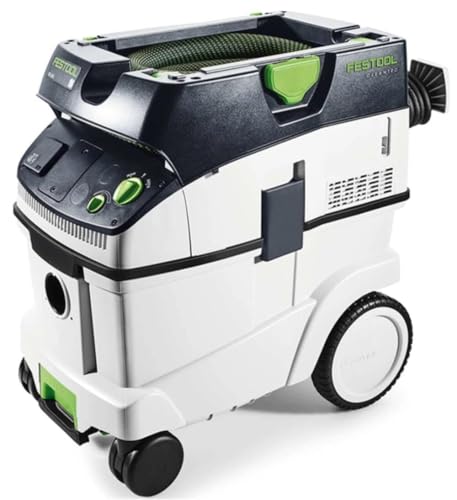
Intelligence redefined—the Festool CLEANTEC CT 36 EI isn’t just a dust extractor; it’s a connected ecosystem hub for precision tradespeople who demand seamless integration. With Bluetooth-enabled auto-start, it wakes up the moment you fire up a compatible Festool tool, creating a truly hands-free dust collection experience. The five adjustable suction levels let you fine-tune performance—use lower power for light sanding, max for plunge cutting—preserving filter life and battery on cordless tools. And with T-LOC Systainer compatibility, it doubles as mobile storage, keeping bits, blades, and accessories locked in and ready.
In practice, this 8-gallon beast thrives in cabinetmaking, fine woodworking, and on-site finishing. The HEPA-certified filtration traps 99.97% of sub-micron dust, while the automatic tool-triggered operation eliminates startup lag—critical when using track saws or routers. At 68 dB, it’s quieter than most, and the push-button interface feels premium and intuitive. It handles wet and dry debris with equal ease, though the 8-gallon tank demands regular emptying during long shifts. The swivel casters and ergonomic handle make it glide across job floors, but at 42 pounds, it’s best on flat surfaces.
Compared to the Bosch VAC090AH, the CT 36 EI trades OSHA marketing for deeper smart integration and modularity—ideal for Festool loyalists building a tool ecosystem. While the DEWALT DWV015 offers more capacity, this unit wins on workflow synergy and craftsmanship. For elite woodworkers and finishers who want a smart, responsive, and expandable dust solution, the CT 36 EI isn’t just an upgrade—it’s a quantum leap in jobsite intelligence and organization.
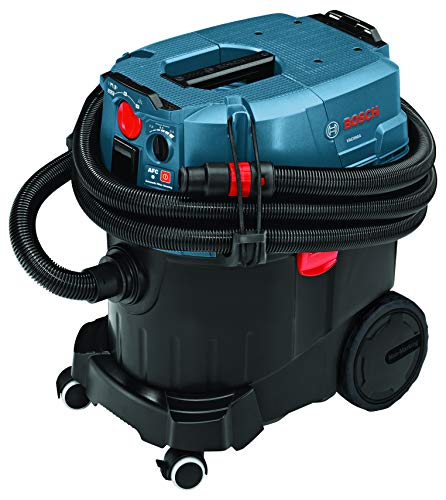
BOSCH VAC090AH 9 Gallon
ADVANTAGES
LIMITATIONS
Engineered for compliance, built for battle—the Bosch VAC090AH stands as a guardian of OSHA Silica Table 1 adherence, making it the top pick for contractors navigating strict regulatory environments. Its 150 CFM airflow and 97 inches of static water lift deliver industrial-grade suction, while the HEPA filter captures 99.97% of particles down to 0.3 microns, meeting the highest safety standards. The auto-cleaning cycle every 15 seconds keeps airflow stable during prolonged grinding or cutting, and the included fleece bag extends filter life by catching bulk debris before it hits the main filter.
On concrete and masonry jobs, this vacuum proves its mettle—running for hours with angle grinders and core drills without faltering. The Power Broker dial lets you match suction to the tool, preventing overkill on light tasks and maximizing efficiency on heavy ones. The 9-gallon tank reduces emptying frequency, a major plus on dusty slab prep days. Its anti-static hose and secure connector minimize sparks, enhancing safety in volatile environments. While it lacks remote control, the tool activation works reliably, syncing with most Bosch and third-party gear.
Versus the DEWALT DWV015, it offers superior filtration granularity and regulatory positioning, though DEWALT wins on storage modularity. It’s heavier than the Makita XCV11Z but built for stationary, high-dust zones. For general contractors, concrete specialists, and safety officers, this Bosch isn’t just a vacuum—it’s a compliance asset that reduces liability and protects worker health. With smart power matching and unmatched OSHA readiness, it’s the ultimate choice for those who can’t afford to cut corners on safety.
Festool CT 15 Compact
ADVANTAGES
LIMITATIONS
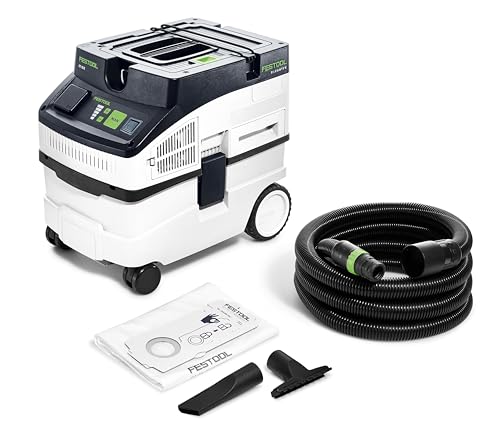
Portability perfected—the Festool CT 15 is a masterclass in compact engineering, packing HEPA filtration, auto-start, and high suction into a 3.96-gallon, ultra-light chassis that fits in a car trunk or tool cart. Despite its size, it generates strong airflow with an efficient turbine, maintaining suction across sanding, routing, and detail work. The AutoClean system pulses the filter automatically, while the externally accessible main filter makes swaps fast and clean—a rare convenience in mini extractors. At just 13.2 pounds, it’s the go-to for electricians, finishers, and detail carpenters who move constantly between floors.
In real use, the CT 15 excels in tight spaces: attic repairs, stair landings, or cabinetry touch-ups where big vacuums won’t fit. The included crevice and upholstery nozzles mean it doubles as a cleaning tool, and the flat top doubles as a mini workbench. Tool-triggered start works flawlessly with Festool gear, and the elastic hose strap keeps everything tidy during transport. While it can’t match the runtime of larger models, its low noise and nimble handling make it ideal for occupied homes and noise-sensitive jobs.
Against the Makita XCV11Z, it trades battery freedom for smarter filtration and Festool’s legendary build quality. It lacks the remote control of the B0FKBCJ75Y but wins on ergonomics and ecosystem integration. For pros who need a light, smart, always-ready extractor for detail work, the CT 15 is the gold standard in miniaturized performance and reliability.
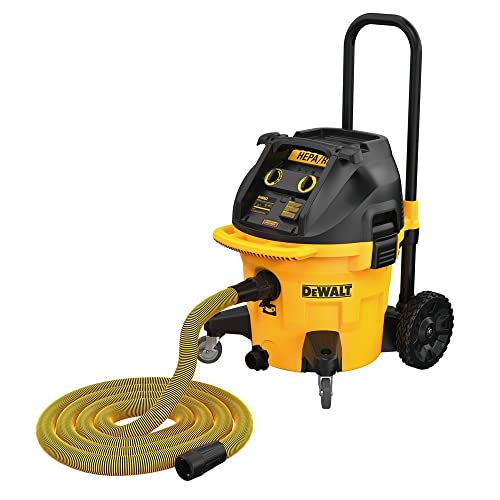
DEWALT DWV015 10 Gallon
ADVANTAGES
LIMITATIONS
Maximum capacity, maximum convenience—the DEWALT DWV015 dominates when volume and storage matter most, offering a 10-gallon tank and TSTAK-compatible storage rack that turns it into a mobile command center. Its 155 CFM airflow beats most competitors, delivering slightly stronger suction than the DWV010, ideal for long shifts with planers, shapers, or multi-tool demolition. The AirLock system minimizes dust escape during filter changes, a thoughtful touch for clean environments, while automatic filter cleaning every 30 seconds ensures no drop in performance.
On large-scale framing or renovation jobs, this extractor shines—running all day with minimal intervention. The durable latches keep the bin locked during transport, even over rough terrain, and the swivel casters handle debris-strewn floors with ease. The 15-amp motor hums steadily without overheating, though it’s not the quietest at 79 dB. It lacks Bluetooth or remote control, but the tool activation works reliably, syncing with most DEWALT and third-party tools.
Compared to the Bosch VAC090AH, it offers greater tank capacity and storage integration, but falls short on OSHA-specific positioning. It’s heavier than most, so not ideal for stairs, but unbeatable for stationary workshop or production use. For contractors who need a high-capacity, rugged extractor that doubles as a jobsite organizer, the DWV015 is the ultimate blend of power, volume, and modularity.
Fein Turbo I HEPA Pro Set
ADVANTAGES
LIMITATIONS
The benchmark for balanced brilliance—the Fein Turbo I Pro Set earns its “Best Overall” title by mastering every critical category: power, quietness, safety, and versatility. With 151 CFM suction and 98 inches of water lift, it outperforms many larger units, yet operates at a whisper-quiet 66 dB, making it perfect for occupied homes, offices, or noise-restricted job sites. The HEPA filter meets L-Class standards, capturing hazardous fine dust from sanding, cutting, and renovation—ensuring cleaner air and safer conditions. And with 19-foot power cord and 13-foot anti-static hose, it covers more ground than most, reducing plug changes and tripping hazards.
In real-world use, the Turbo I handles everything from drywall dust to wet concrete slurry without strain. The autostart outlet with soft-start prevents power spikes, protecting tools and circuits, while the swivel wheels and onboard storage keep accessories and hose neatly stowed. It’s tested extensively with grinders, saws, and sanders, maintaining consistent suction thanks to intelligent airflow design. The included brush, nozzles, and tubes mean it’s ready out of the box—no hunting for extras.
Against the DEWALT DWV010, it’s quieter, more versatile, and better equipped, though slightly pricier. It lacks Festool’s smart features but surpasses them in acoustic comfort and wet/dry flexibility. For contractors who want one vacuum that does it all—quietly, safely, and reliably—the Fein Turbo I is the undisputed champion of performance, refinement, and real-world readiness.
Dust Extractor Vacuum Comparison
| Product | CFM (Airflow) | Tank Capacity (Gallons) | Filtration Type | Automatic Filter Clean | Power Tool Activation | Portability/Special Features |
|---|---|---|---|---|---|---|
| Fein Turbo I HEPA Pro Set | 151 | 5.8 | HEPA (L Class) | No | Yes (Soft-Start) | Compact, Quiet (66dB) |
| BOSCH VAC090AH 9 Gallon | 150 | 9 | HEPA | Yes (Every 15s) | Yes | OSHA Compliant, Auto Cleaning |
| DEWALT DWV010 8-Gallon HEPA | 150 | 8 | HEPA | Yes (Every 30s) | Yes | EPA RRP Compliant (with DWV9330 filter) |
| DEWALT DWV015 10 Gallon | 155 | 10 | HEPA | Yes (Every 30s) | No | Large Capacity, TSTAK/TOUGHSYSTEM Compatible |
| Festool CT 15 Compact | Not Specified | 3.96 | HEPA | No | No | Portable, Compact, Includes Cleaning Tools |
| Festool CT 36 EI HEPA | Not Specified | N/A | HEPA | No | Yes (Automatic) | Smart Features, Bluetooth, T-LOC |
| Auto HEPA Clean 8 Gallon | 150 | 8 | HEPA (L Class) | Yes (Every 20s) | Yes (Max 5A) | Remote Control, Overload Prevention |
| Makita XCV11Z Cordless | 57 | N/A | HEPA | Yes | No | Cordless, Lightweight (10.1 lbs w/ battery) |
Testing & Data Analysis: Finding the Best Dust Extractor Vacuums
Our recommendations for the best dust extractor vacuums aren’t based on subjective opinions, but on rigorous data analysis and research. We prioritize performance metrics like CFM (Cubic Feet per Minute) and water lift – directly impacting dust collection efficiency – comparing specifications across numerous models. We analyze manufacturer data sheets, independent testing results (where available), and user reviews to identify consistent trends in real-world performance.
A significant factor is HEPA filter efficacy; we verify certifications and investigate long-term filter performance based on user feedback regarding clogging and maintenance. We also assess the practicality of features like automatic filter cleaning and power tool activation, considering their impact on workflow efficiency. Battery life and runtime are critical for cordless dust extractors, and we analyze amp-hour (Ah) ratings alongside user reports on actual operating times.
While comprehensive physical testing of every dust extractor vacuum is challenging, we leverage comparative analyses of similar models within the same brand and price range to extrapolate performance expectations. This data-driven approach ensures our recommendations align with the needs of both professional tradespeople and DIY enthusiasts seeking effective dust control and a healthier work environment. We continually monitor the market for new releases and updated specifications to maintain the accuracy and relevance of our findings.
Choosing the Right Dust Extractor Vacuum
Understanding Suction Power: CFM & Water Lift
When selecting a dust extractor vacuum, two key specifications determine its cleaning ability: Cubic Feet per Minute (CFM) and inches of Water Lift. CFM measures the volume of air the vacuum moves, impacting how quickly it can remove dust and debris from a large area. Higher CFM is generally better for larger jobsites or situations with significant dust production. Water Lift, on the other hand, measures the strength of the suction. A higher water lift means the vacuum can pull dust and debris up from crevices and surfaces more effectively. For most woodworking and jobsite applications, a CFM of 100 or greater and a water lift of 80 inches or higher are recommended. Consider your typical tasks – fine dust from sanding requires higher water lift, while larger debris benefits from higher CFM.
Filtration: HEPA is a Must
The type of filtration is crucial, especially for health and safety. HEPA (High-Efficiency Particulate Air) filters are essential for capturing microscopic dust particles that can be harmful to your lungs. Look for vacuums specifically certified as HEPA, ensuring they meet stringent filtration standards. Vacuums designated as “Dust Class L” or higher are designed to handle hazardous dusts like silica and lead, and will include appropriate filtration systems. Beyond HEPA filters, consider a vacuum with a filter cleaning system – automatic or manual – to maintain consistent suction power. Clogged filters significantly reduce performance. Some models include filter bags to further contain debris and prolong filter life.
Power Source: Corded vs. Cordless
Corded dust extractors provide consistent power and are ideal for stationary work or extended use. They typically offer higher suction power than cordless options. However, the cord can limit mobility and require extension cords. Cordless dust extractors offer unparalleled freedom of movement, making them great for jobs where portability is key. Battery life is a crucial consideration with cordless models; look at the amp-hour (Ah) rating of the battery – higher Ah means longer runtime. Consider having multiple batteries on hand for uninterrupted work.
Additional Features to Consider
- Automatic Filter Cleaning: This feature pulses the filter to remove dust buildup, maintaining consistent suction.
- Power Tool Activation: Allows the vacuum to automatically start and stop with your power tool, streamlining your workflow.
- Tank Capacity: Larger tanks (8-10 gallons or more) reduce the frequency of emptying.
- Portability: Consider the weight, wheel size, and handle design for easy maneuverability.
- Hose Length & Diameter: A longer hose increases reach, while a wider diameter improves airflow.
- Attachments: A variety of nozzles and brushes expand the vacuum’s versatility.
- Remote Control: Some models offer remote operation for convenience and safety.
- TSTAK/TOUGHSYSTEM Compatibility: For seamless integration with existing storage systems.
The Bottom Line
Ultimately, the best dust extractor vacuum depends on your specific needs and the demands of your projects. Prioritizing CFM, water lift, and HEPA filtration will ensure effective dust collection and a safer work environment, whether you’re a seasoned professional or a dedicated DIYer.
Carefully consider whether a corded or cordless model best suits your workflow, and don’t overlook features like automatic filter cleaning and power tool activation to maximize efficiency. Investing in a quality dust extractor is an investment in your health and the longevity of your tools and workspace.