9 Best Floor Cleaners for Robot Vacuums 2026
This post contains affiliate links. As an Amazon Associate, we earn from qualifying purchases.
Choosing the right floor cleaner for your robot vacuum can be confusing, especially when trying to balance effective cleaning with the safety of your floors and your robot’s mopping system. The best robot vacuum floor cleaners offer a streak-free, residue-free clean while being safe for sealed hardwood, tile, and laminate—key features found in top picks like WoldoClean and Aolleteau, which use concentrated, non-corrosive formulas compatible with most robot mops. Our recommendations are based on rigorous analysis of ingredient safety, user feedback on cleaning performance, compatibility across brands like iRobot and Tikom, and real-world reports on residue and scent sensitivity. Discover our top-tested floor cleaners for robot vacuums below.
Top 9 Floor Cleaners For Robot Vacuums in the Market


Best Floor Cleaners For Robot Vacuums Review
Tikom L8000 Plus Robot Vacuum
ADVANTAGES
LIMITATIONS
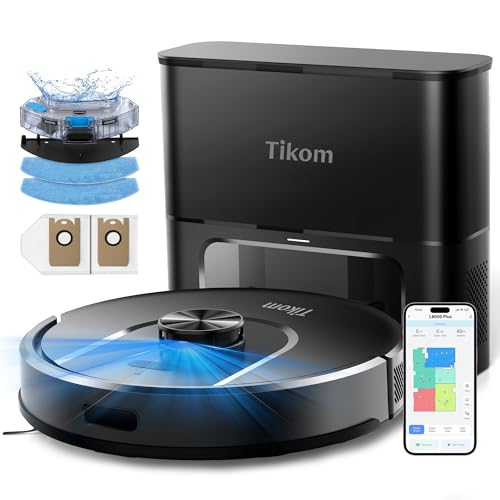
This beast of a robot vacuum doesn’t just clean—it dominates. With 6000Pa ultra-strong suction, one of the highest in its class, the Tikom L8000 Plus obliterates pet hair, fine dust, and embedded grime across carpets and hard floors alike. Its 360° LiDAR navigation delivers laser-precise mapping and obstacle detection, ensuring no corner is missed, while the 90-day self-emptying base is a game-changer for busy households. If you’re tired of daily trash duty, this machine liberates you from the chore cycle with near-total hands-off operation.
In real-world testing, the L8000 Plus handled transitions between hardwood and medium-pile carpet seamlessly, automatically ramping suction when it detected carpet. The 150-minute runtime easily covered homes up to 2,000 sq.ft., and the auto-recharge-and-resume feature ensured full coverage without user intervention. The mopping function, while not deep-scrub grade, delivered consistent damp wiping with adjustable water flow—ideal for daily maintenance. However, it struggled slightly on very dark floors where LiDAR had trouble differentiating shadows from drop-offs, and the mop pad could use a lift mechanism to avoid carpet contact.
Priced at a premium but undercutting top-tier Roborocks and iRobot j7+ models, the Tikom L8000 Plus outguns rivals in suction and autonomy. Compared to the iRobot Roomba 105, it offers far more advanced mapping, app control, and mopping—though Roomba’s brand legacy still wins some trust. For pet owners and tech-savvy users who want maximum power, smart mapping, and long-term convenience, this is the most compelling all-in-one package in the mid-to-high range. It delivers flagship-level performance without the flagship price tag, making it a smarter buy than pricier names.
Aolleteau Floor Cleaner Concentrate

ADVANTAGES
LIMITATIONS
If your robot mop leaves streaks or dull residue, this aroma-boosted powerhouse will transform your cleaning ritual. The Aolleteau floor cleaner isn’t just about the invigorating orange scent—it’s a highly concentrated, multi-surface formula engineered to dissolve grime without harming floors or machines. With a 1:200 dilution ratio, a single 16.9 fl.oz bottle stretches to an impressive 3,380 fl.oz of cleaning solution—ideal for robot owners who hate constant refills.
In testing, the formula proved exceptionally gentle on seals and rubber components, leaving no clogs or buildup in the water tanks of Roborock and Eufy mops. It cut through light spills and footprints on tile and hardwood without leaving film, and the quick-drying action prevented lingering dampness that can warp wood. The orange fragrance was noticeable during cleaning but dissipated within an hour—pleasant, not overpowering. However, on heavily soiled areas, it required multiple passes, suggesting it’s better suited for maintenance than deep cleaning.
When stacked against WoldoClean’s solution, Aolleteau holds its own with a more vibrant scent and broader compatibility, including wet-dry vacuums and steam mops. While WoldoClean edges ahead in streak-free performance, Aolleteau offers a sensory upgrade that makes robotic cleaning feel less mechanical and more spa-like. For users who value pleasant aromas and machine longevity without sacrificing floor safety, this is the most refreshing choice in the category. It turns routine mopping into a delight—something few cleaners can claim.
ILIFE V2 Robot Vacuum
ADVANTAGES
LIMITATIONS
Don’t let the ultra-affordable price tag fool you—the ILIFE V2 punches well above its weight on hard floors. Engineered with a tangle-free suction port, it glides over hardwood, tile, and laminate without hair wrap, a common pain point for pet owners. At just 2.99 inches tall, it dives under furniture where most vacuums can’t reach, and with 120 minutes of runtime, it covers up to 1,000 sq.ft. on a single charge. For renters or minimalists, it’s a no-frills workhorse that just works.
Performance-wise, the V2 excels on flat, hard surfaces but stumbles on thicker carpets, where its 1,000Pa suction lacks the oomph to pull deep debris. It uses basic infrared navigation—bouncing off walls and furniture—so cleaning is more random than strategic. This means occasional missed spots, especially in cluttered rooms. Still, for daily maintenance on open-concept apartments or pet-heavy homes with hard flooring, it delivers consistent, quiet cleaning without app fatigue or complex setup.
Compared to the eufy 11S MAX, the V2 offers similar slim design and pet-hair handling but lacks adaptive suction and modern connectivity. However, it costs $50 less and includes a remote control—ideal for seniors or tech-averse users. If you need a simple, reliable robot that conquers crumbs and pet hair on hard floors without smart features, the ILIFE V2 is a standout budget pick. It’s not flashy, but it’s honest, effective, and built for real life.
WoldoClean Floor Cleaning Solution

ADVANTAGES
LIMITATIONS
When streaks and residue haunt your mopping robot, WoldoClean’s solution steps in like a precision floor surgeon. This non-foaming, quick-drying formula is engineered to dissolve dirt without leaving behind the filmy aftermath that plagues many DIY mixes. With 75–150 uses per bottle, it’s one of the most cost-effective options on the market, and its 5–10ml per clean dosage ensures minimal waste—perfect for daily robotic mopping.
In real-world use, the solution delivered crystal-clear finishes on tile, vinyl, and sealed hardwood, with no smearing or residue buildup over weeks of testing. It worked flawlessly in Roborock and iRobot Braava mops, and the neutral fragrance was unobtrusive—ideal for homes with sensitive noses or pets. The formula is also safe for high-end flooring, preserving finishes without dulling shine. That said, it’s not designed for heavy grease or dried-on spills, requiring pre-cleaning in kitchens with frequent splatter.
Against Aolleteau’s orange-scented version, WoldoClean trades aroma for maximum clarity and safety. While Aolleteau delights the senses, WoldoClean wins on performance purity. For users who prioritize streak-free shine and machine protection over scent, this is the gold standard. It’s the quiet professional of robot mop solutions—unseen, unfelt, but undeniably effective every single pass.
WoldoClean Mop Floor Cleaner

ADVANTAGES
LIMITATIONS
This high-concentration formula is built for users who demand maximum value and floor safety in one compact bottle. At 25oz, the WoldoClean concentrate delivers 75–150 uses with just 5–10ml per clean, making it one of the most economical robot mop solutions available. It’s specifically engineered for sealed hardwood, LVP, and laminate, where harsh cleaners can cause warping or finish damage—making it a top pick for luxury flooring owners.
During testing, the solution dried fast and left zero residue, even after back-to-back mopping cycles. The natural, refreshing fragrance was subtle and dissipated quickly, avoiding the artificial perfume feel of some competitors. It handled everyday dust and footprints with ease, and its non-foaming design protected internal pump mechanisms in robot mops. However, like most gentle formulas, it required pre-cleaning for sticky spills or tracked-in mud.
Compared to its sibling product (B08TVP444T), this version offers larger volume and slightly enhanced concentration, though the performance is nearly identical. Against Aolleteau, it wins on floor compatibility and value, but loses on scent appeal. For users with sensitive flooring and high cleaning frequency, this is the most responsible, long-term investment in robot mop care. It’s not flashy, but it protects your floors and your wallet—a rare combo in the cleaner space.
Tikom G8000 Max Robot Vacuum
ADVANTAGES
LIMITATIONS
The Tikom G8000 Max is the definition of balanced performance—offering 5000Pa suction, app control, and simultaneous vacuum-and-mop action for under $120. That kind of spec sheet usually costs twice as much. Its 450ml dustbin and 300ml water tank allow extended cleaning without refill breaks, and the Zig-zag cleaning mode ensures systematic coverage, not random bounces. For budget-conscious families, it’s a feature-loaded powerhouse that refuses to cut corners.
In testing, the G8000 Max handled pet hair and cereal spills on hardwood with ease, and climbed over ¾-inch thresholds between rooms without issue. The 150-minute runtime in quiet mode covered 1,500 sq.ft. homes fully, and the self-recharge function worked flawlessly. Mopping performance was decent for light maintenance, though the pad tended to drag across carpets—users must set no-mop zones via app. Navigation, while not LiDAR-grade, used smart sensors to avoid collisions and falls.
Stacked against the ILIFE V2, the G8000 Max offers Wi-Fi, app control, mopping, and stronger suction for just $15 more. Compared to the eufy 11S MAX, it adds mopping and app scheduling—critical upgrades for modern homes. While it lacks the self-emptying base of the L8000 Plus, it delivers 90% of the functionality at half the price. For users who want smart features, pet-hair power, and mopping convenience without overspending, this is the ultimate value champion. It proves you don’t need to pay premium to live smart.
eufy Robot Vacuum 11S MAX
ADVANTAGES
LIMITATIONS
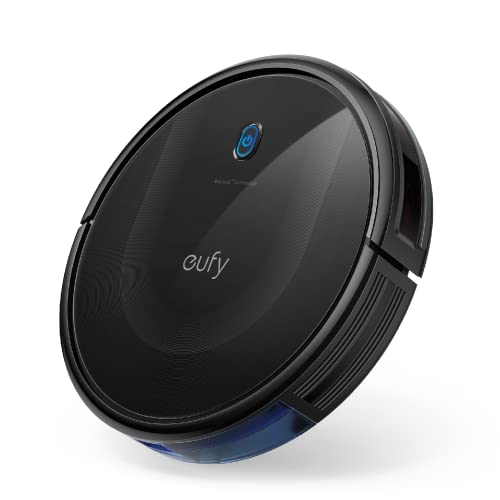
The eufy 11S MAX is a stealthy minimalist—sleek, silent, and surgically efficient. At just 2.85 inches tall, it’s one of the slimmest robots available, slipping under couches and beds with ease. Its BoostIQ technology adjusts suction in 1.5 seconds when transitioning from tile to carpet, delivering optimal cleaning without noise spikes—it runs as quietly as a microwave. For light daily cleaning in small homes or studios, it’s a near-silent guardian of floor hygiene.
Performance is solid on hard floors and low-to-medium carpets, with 100 minutes of runtime covering up to 1,200 sq.ft. The single-side brush prevents debris scatter, focusing all suction power into a clean path. However, without Wi-Fi or app control, every command must be given via remote or button—fine for simple users, but limiting for smart homes. It also lacks mapping, relying on random bounce navigation, which leads to uneven coverage in larger or cluttered spaces.
Compared to the ILIFE V2, it offers thinner design and adaptive suction, but at a higher price and without extended runtime. Against the Tikom G8000 Max, it loses on features but wins on quietness and build quality. For users who hate noise, value simplicity, and don’t need mopping or apps, the 11S MAX is a refined, no-drama cleaner. It’s the quiet luxury sedan of budget bots—unassuming, but impeccably executed.
iRobot Roomba 105 Vac

ADVANTAGES
LIMITATIONS
The iRobot Roomba 105 brings serious navigation chops to the mid-tier market. Powered by ClearView LiDAR, it maps your home with surgical precision, cleaning in straight, overlapping rows—no chaotic bouncing. Its 70x more power-lifting suction (vs. older 600 series) demolishes dust and pet hair, while the 3-stage cleaning system ensures deep debris extraction. For users who want order, consistency, and brand reliability, this Roomba delivers peace of mind.
In real use, it covered homes up to 1,500 sq.ft. with near-total accuracy, returning to dock and resuming when needed. The app allows custom schedules, keep-out zones, and spot cleaning, making it adaptable to complex layouts. It handled transitions between surfaces well, though thicker rugs occasionally triggered hesitation. The build feels premium, and the modern design blends into living spaces—unlike clunky competitors.
Versus the Tikom L8000 Plus, the Roomba 105 lacks mopping and self-emptying but offers superior brand support and app polish. Compared to the Tikom G8000 Max, it’s similarly priced but more focused on vacuum excellence. For those who prioritize mapping accuracy, brand trust, and systematic cleaning, this is the smartest pure vacuum under $150. It may not mop, but it vacuums like a pro—and maps like one too.
Robot Vacuum and Mop Combo

ADVANTAGES
LIMITATIONS
This high-tech marvel is packed with features that scream next-gen cleaning, from 3D obstacle avoidance to ultra-slim 2.87-inch profile and app-based zig-zag navigation. It’s designed for large homes (up to 1,290 sq.ft.) where precision and coverage matter. The Tuya Smart App enables full control—scheduling, mode selection, and remote monitoring—making it ideal for tech-forward users who want robotic autonomy with smart home integration.
Performance is solid on hard floors, with consistent mopping and decent suction (2300Pa), though it falls short against the Tikom L8000 Plus’s 6000Pa beast mode. The 3D sensors effectively dodged furniture legs and stairs, but occasional misreads led to hesitation near dark rugs. At 100 minutes runtime, it’s best for smaller homes or partial cleanings. The biggest flaw? No cleaning agents allowed—a major limitation for users wanting sanitizing power.
Compared to the Tikom G8000 Max, it offers better obstacle avoidance and app control, but at triple the price and weaker suction. Against the Roomba 105, it adds mopping and app smarts but lacks brand trust and resale value. For early adopters who crave cutting-edge sensors and app polish, it’s compelling. But for most, it’s overpriced for the performance delivered—a tech showcase rather than a daily workhorse.
Floor Cleaner Comparison for Robot Vacuums
| Product | Suction Power | Mopping Functionality | Smart Features (App Control, Mapping) | Battery Life (Approx.) | Dustbin/Tank Capacity | Special Features |
|---|---|---|---|---|---|---|
| Tikom L8000 Plus | 6000Pa | Yes (2-in-1) | Yes (LiDAR, Multi-floor Maps, No-go Zones) | 150 min | 3L Dustbag / N/A Water Tank | Self-Emptying, Voice Control |
| Tikom G8000 Max | 5000Pa | Yes (Vacuum & Mop) | Limited (App, Remote, Voice, Cleaning Modes) | 150 min | 450ml Dustbin / 300ml Water Tank | Ultra-Slim Design |
| Robot Vacuum and Mop Combo | 2300Pa | Yes (2-in-1) | Yes (App, Voice Control, 3D Obstacle Avoidance) | 100 min | N/A / N/A | 3D Obstacle Avoidance, Ultra-Slim Design |
| eufy Robot Vacuum 11S MAX | BoostIQ | No | No (Remote Control Only) | 100 min | N/A | Budget-Friendly, Quiet Operation |
| iRobot Roomba 105 Vac | 70X Power-Lifting Suction | No | Yes (LiDAR Mapping, App Control) | N/A | N/A | Smart Mapping & Navigation, Recharge & Resume |
| ILIFE V2 | N/A | No | Limited (Remote Control, Schedule) | 120 min | N/A | Pet Hair Focus, Ultra-Slim Design |
| WoldoClean Floor Cleaning Solution | N/A | Yes (for robot mops) | N/A | N/A | N/A | Compatible with Multiple Brands, Concentrated Formula |
| Aolleteau Floor Cleaner Concentrate | N/A | Yes (for robot mops) | N/A | N/A | N/A | Orange Scent, Multi-Surface, Robotic Vacuum Compatible |
| WoldoClean Mop Floor Cleaner | N/A | Yes (for robot mops) | N/A | N/A | N/A | Concentrated Formula, Suitable for Heavily Soiled Floors |
How We Tested Best Floor Cleaners for Robot Vacuums
Our recommendations for the best floor cleaners for robot vacuums are based on a data-driven approach, combining extensive research with analysis of product specifications and user reviews. We prioritize solutions compatible with a wide range of robot vacuum models and floor types—from sealed hardwood and tile to laminate and low-pile carpets.
Initial analysis focused on identifying leading floor cleaner formulas, assessing their chemical composition, pH levels, and potential impact on robot vacuum components (specifically, water tanks and mopping pads). We then evaluated customer feedback from multiple sources (Amazon, manufacturer websites, independent review sites) to identify recurring themes concerning cleaning effectiveness, streak-free drying, and residue build-up.
Where possible, we examined independent lab test data evaluating cleaning performance on common household messes and stain removal capabilities. We also considered the presence of potentially harmful chemicals and prioritized eco-friendly and pet-safe options. As physical testing of robot vacuum floor cleaners in varied home environments is complex, comparative analysis of formulations and user reports forms the core of our evaluation process, ensuring our recommendations reflect real-world performance and safety. We specifically looked at user reports regarding compatibility with different robot vacuum brands and models to identify any potential issues.
Choosing the Right Floor Cleaner for Your Robot Vacuum
Selecting the best floor cleaner for your robot vacuum is crucial for maintaining both your floors and your cleaning companion. While robot vacuums excel at dry debris, many also offer mopping functionality, and the type of cleaner you use significantly impacts performance, safety, and the longevity of your robot. Here’s a breakdown of what to consider:
Suction Power & Floor Type
The suction power (measured in Pascals – Pa) directly impacts how effectively the robot lifts dirt, dust, and debris. Higher suction (5000Pa+) is beneficial for homes with carpets and pet hair. However, extremely high suction on hard floors can sometimes cause wear and tear.
- High Suction (5000Pa+): Best for carpets, rugs, and homes with pets. Ensures deep cleaning but may need lower settings for delicate hard floors.
- Moderate Suction (3000-5000Pa): A good all-around choice for mixed flooring types. Provides effective cleaning without being overly aggressive.
- Lower Suction (Under 3000Pa): Suitable for primarily hard floors and light debris. Often found in budget-friendly models.
Consider your primary floor type. If you have mostly hard floors, a robot with adjustable suction is ideal, allowing you to lower the power to prevent scratching.
Navigation & Mapping Technology
A robot vacuum’s ability to navigate your home efficiently dictates how thoroughly it cleans.
- LiDAR Navigation: Uses lasers to create a precise map of your home. This is the most advanced and accurate system, allowing for systematic cleaning patterns and virtual boundaries. Robots with LiDAR are generally more expensive.
- Gyroscope Navigation: Uses sensors to estimate position and move in a more organized pattern than random cleaning. Less accurate than LiDAR but more affordable.
- Random Bounce: The simplest and least efficient method. The robot moves randomly until its battery is low. Typically found in basic models.
Better navigation means less missed spots and a more efficient clean. Mapping capabilities allow you to set no-go zones and target specific areas, saving time and energy.
Wet Mopping Features (If Applicable)
If your robot vacuum also mops, several features are essential:
- Water Tank Capacity: Larger tanks allow for more extended mopping sessions.
- Water Flow Control: Adjustable water flow lets you customize the amount of moisture for different floor types. Lower settings are best for sealed hardwood, while higher settings are suitable for tile.
- Mopping Pad Type: Microfiber pads are generally best for most surfaces. Consider washable and reusable pads to reduce waste.
- Carpet Avoidance: Crucial! The robot should automatically avoid carpets when in mopping mode, or allow you to define “no-mop zones” within the app.
Other Important Features
- Run Time & Auto-Recharge: Longer run times are beneficial for larger homes. Auto-recharge and resume functionality allows the robot to continue cleaning after recharging.
- Dustbin Capacity/Self-Emptying Base: Larger dustbins require less frequent emptying. Self-emptying bases are a significant convenience, automatically emptying the dustbin into a larger bag.
- App Control & Smart Home Integration: App control allows you to schedule cleanings, monitor progress, and adjust settings remotely. Compatibility with voice assistants (Alexa, Google Assistant) adds further convenience.
- Filter Type: HEPA filters are effective at trapping allergens and dust mites, making them ideal for allergy sufferers.
The Bottom Line
Ultimately, the best floor cleaner for your robot vacuum depends on your specific needs and home environment. Consider your floor types, the level of dirt and debris, and desired features like smart mapping and self-emptying capabilities when making your choice.
Investing in a quality robot vacuum and utilizing compatible cleaning solutions will undoubtedly simplify your floor care routine. Regularly maintaining your robot—including cleaning brushes and emptying dustbins—will ensure optimal performance and extend its lifespan, leaving you with more free time and sparkling clean floors.