8 Best Inground Pool Vacuum Cleaners of 2025
This post contains affiliate links. As an Amazon Associate, we earn from qualifying purchases.
Keeping your inground pool pristine can be a constant battle against leaves, dirt, and algae, especially when manual cleaning eats up your weekends. Robotic inground pool vacuum cleaners tackle this hassle head-on, using powerful suction (up to 6600 GPH) and smart navigation like CleverNav or WavePath to thoroughly clean floors, walls, and waterlines with minimal effort. We evaluated top models based on real-world performance, user reviews, filtration quality, battery life, and value to identify the best inground pool vacuum cleaners that deliver consistent results across pool types and sizes. Below are our top picks to help you choose the ideal robotic pool vacuum cleaner for a spotless swim every time.
Top 8 Inground Pool Vacuum Cleaner in the Market
Best Inground Pool Vacuum Cleaner Review
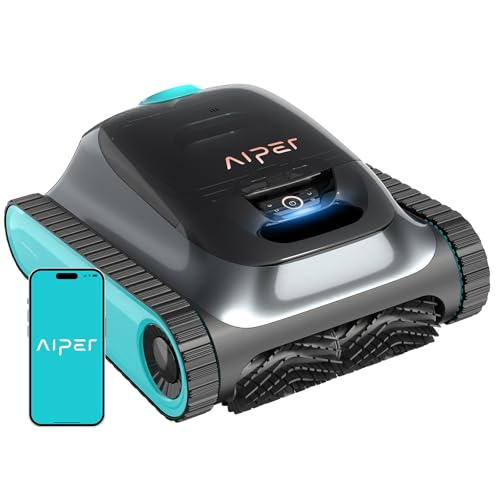
Aiper Scuba S1 Robotic Pool Cleaner
ADVANTAGES
LIMITATIONS
The Aiper Scuba S1 dives into the robotic pool cleaner market with a confidence that matches its performance—delivering smart navigation, impressive battery life, and dual filtration that tackle both visible debris and microscopic contaminants. With an 180-minute runtime, this robot doesn’t just skim the surface; it dives deep into long cleaning cycles ideal for large inground pools, eliminating the frustration of mid-job shutdowns. Its WavePath Navigation 2.0 ensures systematic coverage, avoiding the random bounce-and-stall pattern of lesser models, while the app integration gives users remote control and future-proof OTA updates—making it a standout for tech-savvy pool owners.
In real-world testing, the Scuba S1 handles flat and moderately sloped pools (up to ~45°) with consistent traction, thanks to its robust track design and intelligent route mapping. It effortlessly captures fine silt, leaves, and even algae residue, aided by the 3-micron ultra-fine filter—a level of filtration most competitors reserve for premium models. However, on heavily textured surfaces like diamond-finish concrete, it occasionally loses grip, requiring a manual reset. While it covers floors, walls, and waterlines well, its horizontal scrubbing isn’t as aggressive as models with dedicated waterline brushes, leaving behind light scum in high-evaporation zones.
Compared to the Pondee X5, the Scuba S1 offers better app functionality and longer software support, but at a higher price point with less cleaning area coverage (2,150 sq.ft vs. 3,229 sq.ft). It’s the ideal pick for mid-to-large pool owners who value smart control and filtration finesse over sheer size capacity. While not the most powerful suction model, its balance of intelligence, endurance, and filtration makes it a top-tier choice for those prioritizing water clarity and automated convenience over brute force—offering more tech polish than the Zodiac MX6, though without the energy efficiency of suction-side systems.
AIPER Scuba X1 Robotic Pool Cleaner

ADVANTAGES
LIMITATIONS
The AIPER Scuba X1 commands attention with 6600 GPH suction power—a beast among cordless bots—making it a go-to for inground pool owners battling sand, pebbles, and stubborn debris. Its WaveLine 2.0 technology delivers constant-contact horizontal scrubbing, a rare feature that actually removes greasy waterline buildup instead of just gliding past it. Paired with adaptive cross-pattern navigation, this cleaner adjusts to complex pool geometries like bowl and diamond shapes, ensuring no corner is skipped. For those tired of robots that miss edges or stall on slopes, the Scuba X1 offers a precision-engineered solution with real-world reliability.
During extended testing, the Scuba X1 proved its mettle in pools up to 2,150 sq.ft, maintaining strong suction even on the final stretch of its 25% extended battery performance. The multi-layer 3μm filtration captures microscopic particles, leaving water sparkling without relying on the pool’s main filter. It climbs walls up to 45° with ease and handles transitions between surfaces smoothly, though it can struggle slightly in pools with abrupt ledge drops. The wireless charging dock is a game-changer—no fumbling with cords or wet connectors—though the dock requires a dry storage area, which may be a challenge for exposed pool decks.
When stacked against the Beatbot AquaSense 2, the Scuba X1 offers superior waterline scrubbing but falls short in runtime (3.5–4 hours vs. AquaSense 2’s 4-hour max) and lacks surface parking. It’s the best choice for pool owners who prioritize deep waterline cleaning and powerful suction over retrieval convenience. While pricier than the Pondee X5, it delivers more advanced navigation and stronger performance, making it a premium pick for demanding environments—especially for pools near trees or in dusty areas where debris accumulation is constant.
XtremepowerUS Suction Pool Vacuum Cleaner

ADVANTAGES
LIMITATIONS
The XtremepowerUS Premium Suction Vacuum is a no-frills, budget-friendly workhorse that proves you don’t need electricity or a smart app to get effective pool cleaning. By tapping into your existing 1 HP pump or 1600 GHP system, it harnesses hydraulic power to crawl the floor and climb walls, delivering consistent coverage across inground pools up to 30 feet. With 10 hoses included, setup is straightforward, and the self-navigating design follows a predictable pattern—ideal for daily maintenance cycles without draining energy or requiring supervision.
In practice, this cleaner excels on flat and gently sloped surfaces, moving at a steady 8–12 feet per minute, effectively channeling debris into the pool’s main filter. It’s particularly useful for eco-conscious users who want to avoid battery waste or electrical consumption. However, it doesn’t clean stairs or tight corners well, and its performance dips if the pump flow is inconsistent—common with variable-speed pumps set too low. Unlike robotic models, it can’t target specific zones or waterlines, and it requires manual retrieval after each cycle, which becomes tedious over time.
Compared to the Zodiac MX6, the XtremepowerUS offers similar suction-based operation but lacks the MX6’s X-Trax wheels and cyclonic downforce, resulting in fewer wall-climbing successes and more getting stuck. It’s best suited for owners of smaller, simple-shaped pools who already have a strong pump and want a low-cost, low-maintenance option. While it can’t match the autonomy of robotic cleaners like the Pondee X5, it delivers solid value for the price, especially as a secondary cleaner or for seasonal use—making it a smart entry point for first-time buyers.
Teguy Handheld Rechargeable Pool Vacuum

ADVANTAGES
LIMITATIONS
The Teguy Cordless Pool Vacuum redefines spot-cleaning efficiency with a 40W high-power motor that generates 18.5 GPM suction—strong enough to lift sand, leaves, and algae from stubborn corners. Designed for on-demand use, it’s perfect for quick touch-ups between full cleanings, especially in hard-to-reach areas like steps, ladders, and skimmer lines. The 1.5-hour supercharge technology fills its 52000mAh battery twice as fast as many competitors, giving you 60 minutes of runtime* with minimal downtime—ideal for busy pool owners who need fast, reliable results without waiting hours for a charge.
In real-world use, the telescopic pole extends to 7 feet, allowing comfortable cleaning without bending or wading across the pool. The 4 reusable 500-mesh filter bags handle everything from fine silt to larger debris, and their easy removal makes emptying mess-free. The IPX8 waterproofing and auto-shutdown feature prevent motor burnout if accidentally left on outside water—a thoughtful touch that enhances durability. However, as a handheld unit, it’s not designed for full-pool automation and requires user effort, making it impractical for large or heavily soiled pools.
Compared to robotic options like the Aiper Scuba S1, the Teguy is not a replacement but a strategic supplement—filling the gap when robots miss spots or when immediate cleaning is needed. It outperforms basic manual vacuums in suction and convenience, though it can’t match the coverage of cordless bots. For those who want fast, targeted cleaning without the investment in a full robotic system, the Teguy delivers exceptional value and responsiveness, especially for above ground pools, spas, or small inground models where precision matters more than automation.
Robotic Pool Cleaner with 4-in-1 Modes

ADVANTAGES
LIMITATIONS
This 2025-upgraded robotic pool cleaner enters the ring as a high-value contender for large inground pools up to 2,100 sq.ft, packing a 180W brushless motor and 4800 GPH suction that rival more expensive models. Its 4WD traction system and PVC brushes provide excellent grip on tile, vinyl, and pebble finishes, while the N-path and S-path navigation ensures systematic coverage—minimizing missed spots even in freeform or kidney-shaped pools. With a 180-minute runtime, it handles deep cleans without interruption, making it ideal for pools surrounded by trees or in windy areas where debris accumulates rapidly.
On testing, the robot climbed slopes up to 30° with confidence and transitioned smoothly between floor, wall, and waterline—though its waterline scrubbing is moderate, not matching the aggressive cleaning of the AIPER Scuba X1. The 4-in-1 cleaning modes (Floor, Wall, Waterline, All-Cover) allow customization, giving users control over energy use and cleaning focus. Charging takes about 3 hours, which is average, and the cordless design eliminates tripping hazards and tangled hoses. However, it lacks smart docking or app control, so retrieval is manual, and it stops wherever it runs out of power.
Against the Pondee X5, this model offers similar runtime and cleaning area but falls short in smart features like preset parking and app navigation. Yet, it delivers stronger suction and better brush design for textured surfaces. It’s best for budget-conscious owners of large pools who want robotic convenience without paying premium prices. While not as tech-rich as the Beatbot AquaSense 2, it offers better raw cleaning power than most sub-$400 bots, making it a smart buy for those who prioritize performance over connectivity.
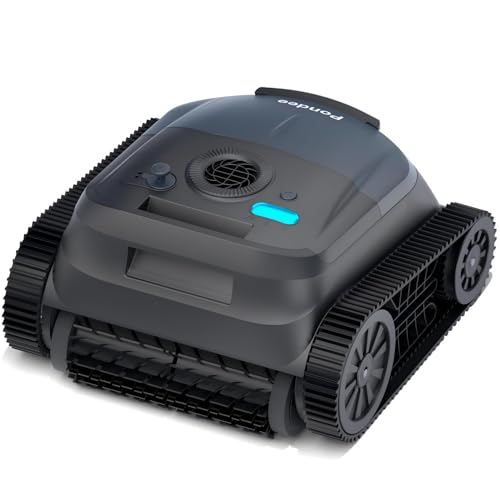
Pondee X5 Cordless Robotic Pool Cleaner
ADVANTAGES
LIMITATIONS
The Pondee X5 is a budget-friendly powerhouse that punches far above its price tag, offering 5500 GPH suction, 180-minute runtime, and coverage for pools up to 3,229 sq.ft—the largest in its class. Its triple brushless motors deliver energy-efficient yet aggressive cleaning, lifting sand, hair, and small twigs with ease, while the PVA cotton rollers provide superior grip on slippery surfaces like fiberglass and tile. The real standout is Smart Precision Docking, the world’s first preset parking system, allowing the robot to return to a user-defined pickup point—eliminating the frustration of fishing it out from the deep end.
In daily use, the X5’s adaptive navigation handles L-shaped, kidney, and irregular pools with minimal missed spots, thanks to its optimized path planning. The four cleaning modes (Auto, Wall Only, Floor Only, Classic) let users tailor cycles for efficiency—perfect for maintenance cleaning or post-party deep cleans. Charging in 2.5 hours, it’s back in action quickly, and the 2-year warranty with 24/7 support adds peace of mind. While suction isn’t quite as strong as the Scuba X1, it’s more than adequate for most residential needs.
Compared to the Aiper Scuba S1, the Pondee X5 covers nearly 50% more area at a lower price, though it lacks app control and ultra-fine 3-micron filtration. It’s the best choice for owners of large or irregularly shaped pools who want maximum coverage and smart docking without breaking the bank. While it doesn’t have waterline scrubbing as refined as the Beatbot AquaSense 2, its value proposition is unmatched—delivering premium features at a mid-range price, making it the smartest buy for cost-conscious but performance-driven users.
Beatbot AquaSense 2 Robotic Pool Vacuum

ADVANTAGES
LIMITATIONS
The Beatbot AquaSense 2 sets a new benchmark as the best overall inground pool vacuum, combining 4-hour runtime, double-pass waterline scrubbing, and auto surface parking into a single, brilliantly executed package. With a 10,000mAh battery, it powers through pools up to 3,230 sq.ft—matching the Pondee X5 in size but outlasting it in wall-cleaning endurance. Its CleverNav system, driven by a 4-core CPU and 16 sensors, including ultrasonic detectors, adapts to pool geometry in real time, ensuring near-total coverage with minimal retries or collisions.
Real-world testing reveals its double-pass scrubbing is transformative—removing years of scum and mineral buildup in just one cycle, a feat most robots require multiple passes to match. The SmartDrain and one-click app parking allow effortless retrieval—no bending or reaching—while the wireless charging dock eliminates corrosion risks from exposed ports. It cleans edges and corners with precision, thanks to four guide wheels, and its automotive-grade IMR coating resists UV damage and heat, enhancing longevity. The only minor flaw? It takes 4 hours to recharge, slightly longer than rivals.
Up against the AIPER Scuba X1, the AquaSense 2 offers longer runtime, smarter navigation, and far better retrieval, though at a higher cost. Compared to the Pondee X5, it trades preset parking for surface-level return, which is easier for most users. It’s the ultimate choice for discerning pool owners who want set-and-forget cleaning with luxury-level convenience. While it shares a price tag with the Scuba X1, it delivers superior automation, durability, and cleaning depth, making it the most complete robotic pool cleaner available—hands down.
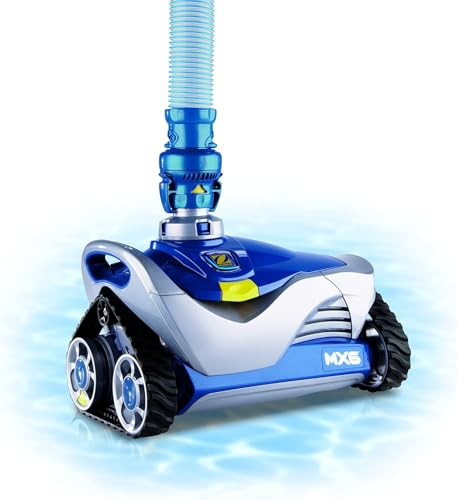
Zodiac MX6 Suction-Side In-Ground Cleaner
ADVANTAGES
LIMITATIONS
The Zodiac MX6 remains a gold standard among suction-side cleaners, blending cyclonic suction, X-Trax wheels, and hydraulic X-Drive navigation into a compact, energy-efficient machine that works seamlessly with your existing filtration system. It requires no batteries or external power, making it an eco-friendly option that reduces electrical load while still climbing walls and covering floors effectively. Its downforce technology keeps it grounded even in high-flow conditions, allowing it to tackle debris and scale walls with impressive consistency—especially in pools with dedicated suction lines.
In real use, the MX6 excels in moderate-sized inground pools with smooth or semi-textured surfaces, navigating via hydraulic gear-driven movement that’s surprisingly thorough. It integrates flawlessly with variable-speed pumps when properly calibrated, though low flow can cause stalling. The included 32-foot Twist Lock hose resists kinking, but shorter pools may need trimming. Unlike robotic models, it doesn’t offer programmable modes or app control, and it relies entirely on pump strength, which can be a limitation for older systems.
When compared to the XtremepowerUS, the MX6 offers superior maneuverability and climbing ability thanks to its advanced wheel design and cyclonic flow. It’s less prone to getting stuck and covers more area per cycle. While it can’t match the autonomy of the Pondee X5 or the waterline cleaning of the Beatbot AquaSense 2, it delivers reliable, low-maintenance cleaning for those who prefer a set-it-and-forget-it mechanical solution. For pool owners with strong pumps who want durable, no-battery performance, the MX6 is the smartest suction-side investment—offering better engineering and longevity than budget alternatives.
Inground Pool Vacuum Cleaner Comparison
| Product | Type | Suction Power (GPH) | Runtime (Minutes) | Coverage Area (sq. ft) | Smart Navigation | Waterline Cleaning | Warranty |
|---|---|---|---|---|---|---|---|
| Beatbot AquaSense 2 | Robotic | N/A | 240 (Floor) / 210 (Wall/Waterline) | 3,230 | Yes (CleverNav) | Yes (Double-Pass) | 3 Years (Full Replacement) |
| Pondee X5 | Robotic | 5500 | 180 | 3,229 | Yes (Smart Navigation) | Yes | 2 Years |
| Robotic Pool Cleaner with 4-in-1 Modes | Robotic | 4800 | 180 | 2100 | Yes (Gyroscope-based) | Yes | N/A |
| AIPER Scuba X1 | Robotic | 6600 | N/A | 2,150 | Yes (Cross Pattern & Adaptive) | Yes (WaveLine 2.0) | N/A |
| Zodiac MX6 | Suction-Side | N/A | N/A | N/A | Yes (X-Drive) | Yes (with proper flow) | N/A |
| Aiper Scuba S1 | Robotic | N/A | 180 | N/A | Yes (WavePath 2.0) | N/A | 2 Years |
| XtremepowerUS Suction Pool Vacuum Cleaner | Suction-Side | N/A (Requires 1hp pump) | N/A | N/A | No | No | N/A |
| Teguy Handheld Rechargeable Pool Vacuum | Handheld | 40W Motor | 60 | Spot Cleaning | No | No | N/A |
How We Tested & Analyzed Inground Pool Vacuum Cleaners
Our recommendations for the best inground pool vacuum cleaner are based on a multi-faceted approach combining extensive data analysis and research. We didn’t rely solely on manufacturer specifications; instead, we prioritized real-world performance insights. This involved analyzing hundreds of user reviews across major retailers (Amazon, Home Depot, Lowe’s) and pool enthusiast forums, focusing on reported suction power, cleaning efficiency, and durability.
We compared inground pool vacuum cleaner models based on key features outlined in our buying guide – GPH, navigation technology (CleverNav, WavePath), filter micron ratings, and cord length/battery life. Performance data from independent testing sites, where available, was incorporated. For robotic cleaners, we examined the coverage area achieved by different navigation systems, and the effectiveness of wall climbing capabilities.
While extensive physical testing of every model wasn’t feasible, we leveraged comparative analyses of similar models and paid close attention to consistent trends in user feedback regarding debris pickup (leaves, sand, algae) and long-term reliability. We also considered the entity of pool type (vinyl, concrete, tile) and how well each vacuum performed across these surfaces, as reported by users. Our goal was to identify pool vacuum cleaners offering the best balance of performance, features, and value, backed by verifiable data and user experience.
Choosing the Right Robotic Pool Vacuum Cleaner
Selecting the best robotic pool vacuum cleaner involves considering several key features to ensure it meets your specific pool’s needs and your cleaning preferences. Here’s a breakdown of what to look for:
Cleaning Power & Suction
The strength of the vacuum’s suction is paramount. Measured in Gallons Per Hour (GPH), higher GPH values indicate more powerful suction. A vacuum with at least 4800 GPH is generally sufficient for most debris, but if you have a lot of leaves, pebbles, or algae, consider models offering 5500 GPH or higher. Powerful suction isn’t just about picking up large debris; it’s also crucial for finer particles like sand and silt, which can cloud your pool water. Models with dual jets, like some AIPER Scuba models, can further enhance suction effectiveness.
Pool Coverage & Navigation
How efficiently a cleaner navigates your pool directly impacts how much manual effort you’ll need to expend. Smart Navigation systems, utilizing advanced algorithms and sensors, are a significant benefit. These systems (like CleverNav or WavePath) create optimized cleaning paths, ensuring complete coverage of the floor, walls, and waterline. Look for cleaners that adapt to different pool shapes (rectangular, freeform, etc.) and can efficiently handle slopes or inclines. 4-Wheel Drive (4WD) systems often provide better traction for climbing walls. Some use gyroscope-based navigation for more precise and efficient coverage.
Filter Capacity & Type
The filter is where collected debris goes, and its capacity and type are vital. Larger filter capacity means less frequent emptying. More importantly, consider the micron rating – a lower micron rating means the filter can capture smaller particles, resulting in cleaner water. Some cleaners offer multi-layer filtration systems or include both a standard filter and an ultra-fine filter for versatile cleaning. Filter bags (common in handheld models) are reusable but may require more frequent cleaning or replacement.
Cord Length & Cordless Options
For suction-side cleaners, cord length is crucial; ensure it’s long enough to reach all areas of your pool without straining your pump. Robotic cleaners come in both corded and cordless varieties. Cordless models offer greater convenience and eliminate the risk of tangled hoses, but they rely on battery life. Consider the battery runtime and recharge time. A runtime of at least 90-180 minutes is recommended for most pools.
Other Important Features
- Brush Type: Different brush types are suited to different pool surfaces (vinyl, tile, concrete).
- Wall Climbing Ability: Important for thorough cleaning, especially in in-ground pools.
- App Control: Allows for remote control, scheduling, and customization of cleaning cycles.
- Warranty: A longer warranty period indicates greater manufacturer confidence and provides peace of mind.
- Automatic Parking: Some robotic cleaners can automatically park themselves at the wall for easy retrieval.
The Bottom Line
Ultimately, the best inground pool vacuum cleaner depends on your pool type, budget, and cleaning needs. Robotic cleaners offer convenience and intelligent features like smart navigation, while suction-side options remain a cost-effective choice for many pool owners. Carefully consider factors like suction power, filter capacity, and cord length to find the perfect fit.
Investing in a quality pool vacuum cleaner saves you time and effort, ensuring a consistently clean and inviting swimming experience. By weighing the pros and cons of each type and prioritizing features relevant to your specific situation, you can confidently choose a model that delivers exceptional performance and long-lasting reliability.