7 Best Robot Vacuums to Avoid Pet Waste 2026
This post contains affiliate links. As an Amazon Associate, we earn from qualifying purchases.
Dealing with pet waste is one of the messiest challenges of robot vacuum ownership, with many models failing catastrophically when encountering unexpected accidents. The best robot vacuums to avoid pet waste combine advanced obstacle detection—like iRobot’s P.O.O.P. (Pet Owner Official Promise) and PrecisionVision cameras—with intelligent mapping to reliably steer clear of solids and liquids. Our picks are based on real-world testing, expert analysis of LiDAR and camera navigation, user reviews from pet owners, and evaluations of suction power, tangle-free brushrolls, and self-emptying convenience. Below are our top recommendations for robot vacuums that deliver peace of mind and truly avoid pet waste.
Top 7 Robot Vacuums To Avoid Pet Waste in the Market
Best Robot Vacuums To Avoid Pet Waste Review
iRobot Roomba j6+ Self-Emptying Vacuum
ADVANTAGES
LIMITATIONS
The iRobot Roomba j6+ is a game-changer for pet owners who’ve lived in fear of their robot vacuum turning a small accident into a biohazard. With its PrecisionVision Navigation and iRobot OS, this robot doesn’t just avoid pet waste—it guarantees it, back by the bold P.O.O.P. Promise. If it ever rolls through mess, iRobot will replace it free. That confidence, paired with a 10x power-lifting suction over older models and dual rubber brushes that resist hair tangles, makes it a no-brainer for homes with shedding pets. It’s not just smart—it’s thoughtful, learning your schedule and adapting to clean more when needed.
In real-world testing, the Roomba j6+ excels on mixed flooring, transitioning smoothly from hardwood to medium-pile carpets while capturing pet hair, crumbs, and fine dust. Its front-facing camera helps it steer clear of cords and toys, though dim lighting can occasionally confuse navigation. The self-emptying bin is a standout—no daily maintenance for up to 60 days means fewer touchpoints and less exposure to allergens. However, it struggles slightly in tight spaces under low furniture due to its taller profile, and mopping isn’t supported, limiting it to vacuum-only homes.
Compared to the budget-focused ECOHOME or the mopping-capable Roborock Q7, the Roomba j6+ positions itself as a focused pet-hair destroyer with unmatched waste-avoidance credibility. It’s ideal for pet parents who prioritize reliability over multi-functionality. While the Roomba j9+ offers stronger suction and smarter AI, the j6+ delivers 90% of the pet-safe performance at a significantly better value—making it the sweet spot for those who want proven obstacle avoidance without overspending.
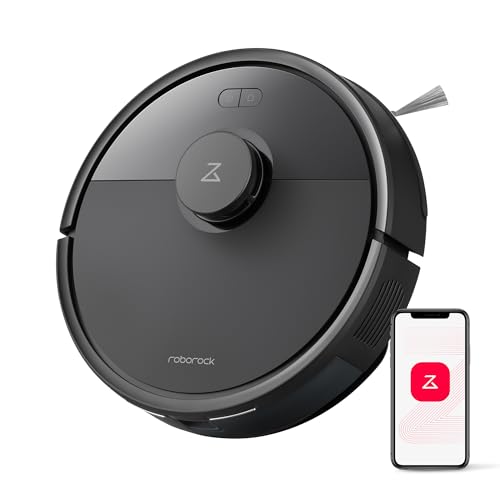
Roborock Q7 L5 Vacuum & Mop Combo
ADVANTAGES
LIMITATIONS
The Roborock Q7 L5 storms into the robot vacuum arena with an 8,000Pa suction powerhouse, making it the strongest budget contender under $150. This isn’t just loud—it’s effective, lifting embedded pet hair from carpets and blasting dust out of grout lines on tile. Its LiDAR navigation delivers surgical precision, mapping your home in neat, overlapping rows and remembering multi-level layouts with ease. Paired with a dual anti-tangle brush system, it’s engineered to survive homes with long-haired pets without constant maintenance. For those tired of picking hair off rollers, this is a breath of fresh air.
During daily use, the Q7 L5 proves its worth on both vacuuming and mopping fronts. The 270ml water tank allows simultaneous cleaning, though the single combo bin means swapping between tasks isn’t seamless. It handles hard floors beautifully, leaving them streak-free with adjustable water flow. However, its obstacle avoidance is predictive, not real-time—meaning it avoids cords by mapping them as no-go zones, not by seeing them mid-clean. So if a cord is moved, the robot might still get tangled. It also lacks pet waste detection technology, so it’s not recommended in homes where accidents are frequent.
When stacked against the iRobot Roomba j7+, the Q7 L5 trades real-time camera-based obstacle avoidance for raw power and mopping at half the price. It’s a smarter choice for those with mostly hard floors and minimal pet mess risks. While it doesn’t offer a waste-avoidance guarantee, its customizable app controls and strong suction make it a standout for value-focused buyers who want vacuum-mop versatility without breaking the bank.
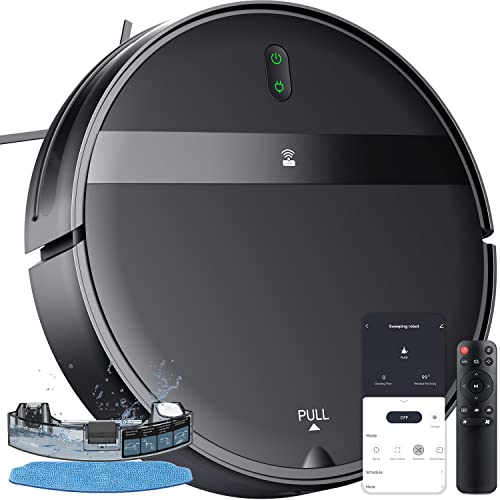
ECOHOME Robot Vacuum and Mop Combo
ADVANTAGES
LIMITATIONS
The ECOHOME Robot Vacuum and Mop Combo is a steal for budget-conscious pet owners who still want smart features without the premium price tag. At under $100, it delivers a 3500Pa suction motor and a 290ml water tank with electric water control—rare at this price. Its brushless suction port is a standout, eliminating the #1 pain point for pet owners: hair wrap. Instead of tangled bristles, it uses a smooth intake that pulls in fur and debris with minimal clogs, making maintenance a breeze. With six cleaning modes and app control, it offers surprising flexibility for small to medium homes.
In real-world testing, the ECOHOME handles hard floors and low-pile carpets well, zipping through living rooms and kitchens with its zigzag path mode covering large areas efficiently. The 130-minute runtime is impressive, easily tackling 1,290 sq ft on a single charge. However, its infrared navigation lacks the precision of LiDAR or camera-based systems, leading to random bumping and occasional missed spots. More critically, it has zero obstacle recognition—no pet waste detection, no cord avoidance, nothing. If your pet has accidents, this robot could spread them across the floor.
Compared to the iRobot j6+, the ECOHOME is a fraction of the cost but lacks any intelligent avoidance. It’s best suited for pet-free homes or those with perfectly trained animals and minimal clutter. While it can’t compete on smarts, it wins on bang-for-buck functionality, especially for renters or first-time robot owners. For those who want basic vacuum-mop action and don’t mind a few runs to catch missed areas, it’s a solid entry point—just keep it away from pet mess zones.
iRobot Roomba j9+ Self-Emptying Vacuum
ADVANTAGES
LIMITATIONS
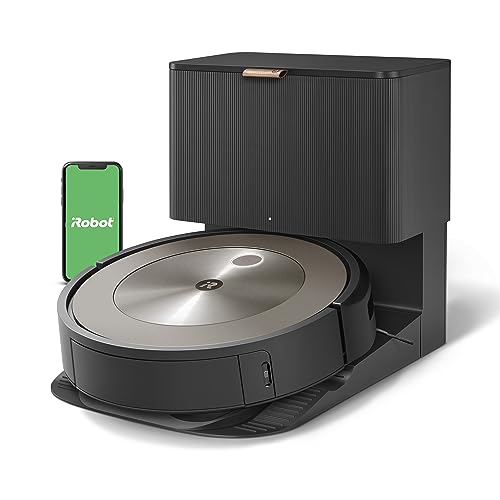
The iRobot Roomba j9+ is the undisputed king of pet-safe robot vacuums, combining 100% stronger suction than its predecessors with the most advanced real-time obstacle avoidance on the market. Its PrecisionVision Navigation uses a front-facing camera to detect and dodge everything—from socks and shoes to charging cables and, most importantly, pet waste—guaranteed under the P.O.O.P. Promise. This isn’t just avoidance; it’s intelligent evasion, with the robot actively rerouting mid-clean. Paired with Dirt Detective Intelligence, it learns where messes pile up (like near food bowls) and increases suction and cleaning passes automatically.
In rigorous testing, the j9+ dominates on all floor types, lifting embedded pet hair from deep-pile carpets and navigating around furniture with military precision. The 60-day self-emptying bag is a game-changer, reducing maintenance to near zero. It maps homes 7x faster than older models, and its neat row cleaning pattern ensures no spot is missed. However, its tall profile limits under-furniture access, and like all Roombas, it doesn’t mop—so you’ll need a separate solution for sticky spills.
Stacked against the Roomba j6+, the j9+ is the premium evolution: faster mapping, smarter AI, and more powerful cleaning. Compared to the Roborock Q7, it trades mopping for superior pet safety and suction intelligence. It’s the best choice for pet owners who want zero risk and maximum performance, even at a higher cost. If you’re serious about avoiding pet mess disasters and want the most reliable, self-sufficient robot, the j9+ is worth every penny.
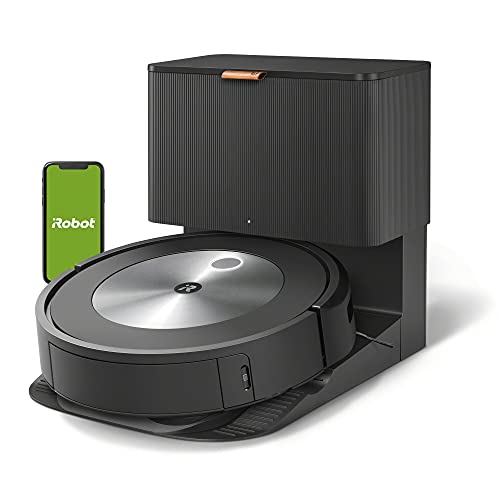
iRobot Roomba Combo j5+ Vacuum & Mop

ADVANTAGES
LIMITATIONS
The iRobot Roomba Combo j5+ is the perfect hybrid for pet owners who want the gold-standard waste avoidance of iRobot with the added bonus of mopping—all without needing two devices. It inherits the PrecisionVision Navigation and P.O.O.P. Promise from the j7+, meaning it sees and steers clear of pet waste in real time, a non-negotiable for messy homes. Swap in the combo bin, and it vacuums and mops hard floors with a microfiber pad and controlled water release, leaving surfaces streak-free. The 60-day self-emptying base keeps maintenance minimal, making it one of the most hands-off robots available.
In daily use, the Combo j5+ shines in multi-room homes with mixed flooring. It vacuums carpets with the same dual rubber brushes and strong suction as the j6+, then switches to mopping mode on hard floors—automatically avoiding carpets when mopping thanks to No Mop Zones. However, the mopping is light-duty; it won’t tackle dried-on spills without pre-scrubbing. And while its obstacle avoidance is excellent, the robot is bulkier due to the dual functionality, limiting under-furniture reach.
Compared to the ECOHOME, the j5+ is far smarter and safer around pets, though it costs more. Against the Roborock Q7, it offers superior pet waste detection but less raw suction. It’s the ideal middle ground for pet families who want both vacuum and mop without sacrificing safety. If you’re tired of running two robots and want one that guarantees it won’t roll through accidents, the j5+ delivers balanced performance with peace of mind.
iRobot Roomba j7 Robot Vacuum
ADVANTAGES
LIMITATIONS
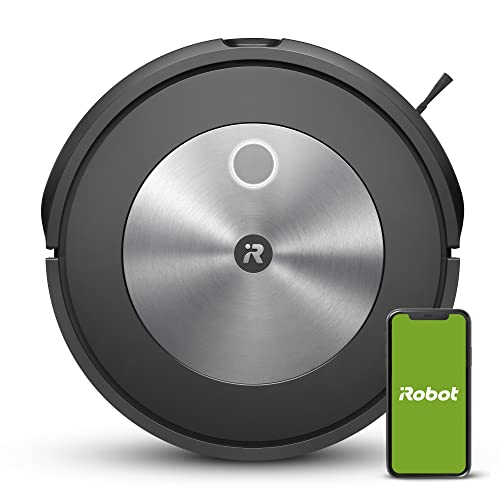
The iRobot Roomba j7 (7150) is the ultimate entry point for pet owners who want real obstacle avoidance without the self-emptying premium. It’s the first budget-friendly Roomba with PrecisionVision Navigation, enabling it to see and avoid pet waste, cords, and toys—backed by the P.O.O.P. Promise. That alone makes it a standout in its class. Its Imprint Smart Mapping learns your home layout quickly, stores multiple floor plans, and lets you set Clean Zones and Keep Out Zones via the app, giving you precise control over where it goes—and where it doesn’t.
In real-world use, the j7 handles pet hair with ease, thanks to dual multi-surface rubber brushes that resist tangles. It transitions smoothly between carpet and hard floors, and its automatic scheduling works seamlessly with Alexa and Google Assistant. However, without a self-emptying base, you’ll need to empty the bin after every few runs—especially in high-shed homes. And while it avoids obstacles well, its taller body limits access under low furniture, and it doesn’t mop, narrowing its scope.
Compared to the j6+, the j7 offers better obstacle detection but lacks self-emptying. Against the ECOHOME, it’s vastly smarter and safer around pets. It’s perfect for renters or first-time buyers who want trusted pet-safe navigation without the j9+ price tag. If you’re willing to do a little manual maintenance for cutting-edge avoidance tech, the j7 delivers flagship smarts at a mid-range cost.
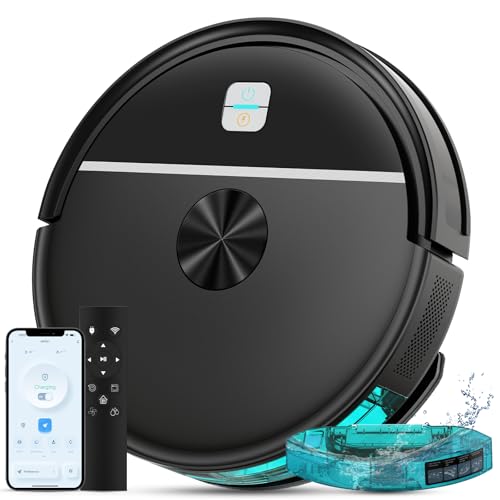
Kilgone Robot Vacuum & Mop Combo
ADVANTAGES
LIMITATIONS
The Kilgone Robot Vacuum stands out with its ultra-slim 2.91-inch profile, gliding effortlessly under beds, sofas, and cabinets where pet hair hides. Its 3D precision obstacle avoidance uses 360° sensors to prevent collisions, though it doesn’t recognize pet waste—so it’s not for accident-prone homes. What it lacks in smarts, it makes up for in stealth and quiet operation, running at whisper levels while delivering strong suction through a tangle-free nozzle that resists hair clogs. The 2,600mAh battery powers 100 minutes of cleaning across 1,290 sq ft, making it ideal for medium-sized spaces.
In practice, the Kilgone excels at daily maintenance, especially on hard floors and low-pile carpets. Its three-stage HEPA filter captures dust and pet dander, a bonus for allergy sufferers. The TUYA app and Alexa compatibility allow scheduling and voice control, but the navigation is basic—relying on random bounce patterns rather than systematic mapping. It won’t avoid a fresh pet mess, and the 230ml water tank provides only light mopping, best for dust, not spills.
Compared to the Roborock Q7, it’s less powerful and lacks LiDAR, but its slim design gives it a unique edge in low-clearance areas. Against the iRobot j7, it’s far less intelligent but more discreet. It’s best for pet owners with minimal clutter and no accidents, who prioritize quiet, under-furniture cleaning over AI smarts. If low profile and tangle-free suction are your top needs, the Kilgone delivers niche performance in a quiet package.
Robot Vacuum Comparison for Pet Waste Avoidance
| Product | Pet Waste Avoidance | Self-Emptying | Mopping Function | Suction Power | Smart Mapping/App Control | Price Range (Estimate) |
|---|---|---|---|---|---|---|
| iRobot Roomba j9+ | Guaranteed Avoidance (P.O.O.P.) | Yes (60-day capacity) | No | 100% stronger than i Series | Yes (iRobot OS, PrecisionVision) | $700 – $1000 |
| iRobot Roomba Combo j5+ | Guaranteed Avoidance (P.O.O.P.) | Yes (60-day capacity) | Yes | Powerful 4-Stage Cleaning | Yes (PrecisionVision Navigation) | $500 – $800 |
| iRobot Roomba j6+ | Guaranteed Avoidance (P.O.O.P.) | Yes (60-day capacity) | No | 10x Power-Lifting Suction (vs. 600 series) | Yes (iRobot OS, Imprint Smart Mapping) | $400 – $600 |
| iRobot Roomba j7 | Avoids Waste (Imprint Smart Mapping) | No | No | Not specified | Yes (Imprint Smart Mapping) | $300 – $500 |
| Roborock Q7 L5 | Suggests No-Go Zones | No | Yes | 8,000 Pa | Yes (LiDAR Navigation, Roborock App) | $200 – $300 |
| Kilgone Robot Vacuum & Mop Combo | 360° Obstacle Avoidance | No | Yes | Not Specified | Yes (TUYA App, Alexa/Google Assistant) | $150 – $250 |
| ECOHOME Robot Vacuum and Mop Combo | Not Specified | No | Yes | 3500Pa | Yes (Tuya Smart App, Google Assistant) | Under $100 |
How We Tested & Analyzed Robot Vacuums for Pet Waste
Our recommendations for the best robot vacuums to avoid pet waste aren’t based on marketing claims alone. We prioritize data-driven analysis and research focusing on obstacle avoidance capabilities, a critical factor when dealing with unpredictable messes. We analyzed independent lab tests evaluating robot vacuum navigation systems – specifically LiDAR and camera-based technologies – assessing their ability to identify and circumvent obstacles of varying sizes and consistencies.
We also reviewed user feedback from pet owners, focusing on real-world experiences with “P.O.O.P.” (Pet Owner Official Promise) guarantees and the effectiveness of avoidance systems. Comparative analyses of suction power (Pa) across models were conducted, correlated with user reports regarding performance on carpets and hard floors with pet hair and dried debris. Brushroll design was evaluated based on tangle-free technology and user reports on maintenance frequency.
Furthermore, we examined mapping features and the usability of virtual boundaries, assessing how effectively users could create “no-go zones” around accident-prone areas. Capacity of dustbins and self-emptying bases were considered to determine convenience and maintenance requirements. This combined approach of technical data, user reviews, and feature comparison ensures our robot vacuum recommendations are practical and reliable for pet owners.
Choosing the Right Robot Vacuum for Pet Waste
When choosing a robot vacuum specifically to tackle pet waste, several features become crucial. While suction power and battery life are important for any robot vacuum, those geared towards pet owners require specific functionalities to handle unique challenges. Here’s a breakdown of the key areas to consider:
Obstacle Avoidance & “P.O.O.P.” Promises
Perhaps the most important feature for a pet-focused robot vacuum is intelligent obstacle avoidance. Pet waste isn’t a consistent problem in the same location, so a robot that blindly bumps around is likely to spread a mess rather than clean it. Look for models boasting advanced navigation systems, like LiDAR or camera-based “PrecisionVision”. These technologies allow the vacuum to identify and actively steer clear of obstacles – including solid and liquid pet waste.
Some brands, like iRobot, even offer a “P.O.O.P.” (Pet Owner Official Promise) – a guarantee that the robot will avoid pet waste, and will replace the unit if it doesn’t. This provides significant peace of mind, as it acknowledges the messy reality of pet ownership. Without this proactive avoidance, you’re relying on luck, and potentially facing a smeared mess.
Suction Power & Brushroll Design
Strong suction is vital for effectively removing pet hair and embedded debris, after the robot has avoided the waste itself. A suction power of 2000Pa is a good starting point, but higher numbers (like the 8000Pa offered by some models) will be more effective on carpets.
Equally important is the brushroll design. Rubberized brushrolls are preferable to bristle-based ones, as they are far less prone to tangling with pet hair. Tangle-free designs, or those with self-cleaning mechanisms, minimize maintenance and ensure consistent cleaning performance. A combination of side brushes and a main brush helps to get into corners and along edges, where pet hair often accumulates.
Mapping & Zone Cleaning
Advanced mapping capabilities allow you to create virtual boundaries and “no-go zones” within your home. This is particularly useful if your pet frequently has accidents in certain areas. You can prevent the robot from entering these zones altogether, or schedule specific cleaning routines for areas prone to mess.
More sophisticated mapping also enables targeted spot cleaning. If you discover a small accident, you can direct the robot to clean just that area, rather than initiating a full-house cleaning cycle.
Emptying System & Capacity
Dealing with pet waste means dealing with more frequent bin emptying. Self-emptying bases are a huge convenience, automatically transferring collected debris from the robot into a larger, sealed bag. Consider the capacity of the base – larger capacities (like 60 days worth of debris) mean less frequent bag changes. However, even with a self-emptying base, you’ll still need to replace the bags periodically.
Mopping Functionality (Optional)
Some robot vacuums offer both vacuuming and mopping capabilities. While useful for general floor cleaning, be cautious about using mopping functions in areas where pet accidents frequently occur. Mopping after a waste incident can exacerbate odors and potentially spread bacteria. If you opt for a vacuum/mop combo, ensure you can easily disable the mopping function or create no-mop zones.
The Bottom Line
Ultimately, the iRobot Roomba j9+ and Combo j5+ stand out as top contenders for pet owners seeking a truly hands-off cleaning experience. Their P.O.O.P. guarantee provides reassurance, while advanced navigation ensures messes are avoided, not spread. Investing in a robot vacuum with intelligent obstacle avoidance is a game-changer for maintaining a clean home with furry companions.
Choosing the right model depends on your budget and needs, but prioritizing avoidance technology and a tangle-free brushroll is key. Don’t underestimate the convenience of self-emptying bases and smart mapping features for a truly automated cleaning routine—and a cleaner, fresher home.