7 Best Self Emptying Robot Vacuums of 2025
This post contains affiliate links. As an Amazon Associate, we earn from qualifying purchases.
Keeping your floors clean shouldn’t mean constantly emptying a robot vacuum’s tiny dustbin—this tedious chore defeats the purpose of automation for many users. The best self-emptying robot vacuums solve this with powerful suction, smart navigation like LiDAR and SLAM, and base stations that automatically transfer debris into large-capacity bags lasting weeks or even months. We evaluated models based on suction performance, bag longevity, navigation accuracy, mopping effectiveness, and real-world user feedback to identify the top performers that deliver true hands-off cleaning. Below are our top picks for the best self-emptying robot vacuum to fit a range of homes and budgets.
Top 7 Self Emptying Robot Vacuum in the Market
Best Self Emptying Robot Vacuum Review
Vexilar Robot Vacuum and Mop

ADVANTAGES
LIMITATIONS
Effortless cleaning meets precision navigation in the Vexilar robot vacuum, a standout performer for those craving a truly hands-off experience without breaking the bank. With 5000Pa of brushless motor suction and a 2L self-emptying bag that lasts up to 60 days, this robot tackles pet hair and embedded debris across carpets and hard floors like a pro. Its LDS laser navigation scans 360° at lightning speed—up to 2,160 times per second—crafting accurate home maps that ensure no corner is missed, making it ideal for homes cluttered with furniture or tight cleaning zones.
In real-world testing, the Vexilar W11 impresses with its 180-minute runtime on quiet mode, easily covering large apartments or multi-room layouts before auto-recharging and resuming where it left off. The rubber-bristle roller works wonders on both hardwood and low-pile carpet, lifting dust and pet dander with minimal hair wrap. While it handles transitions smoothly, it can struggle slightly on high-pile rugs where suction dips momentarily. It also lacks advanced obstacle avoidance, so stray cords or toys can still pose a snag risk—though its smart path planning minimizes collisions.
Compared to the pricier Roborock Q10 or Tikom L8000 Plus, the Vexilar delivers exceptional value under $175, trading some smarts for core performance. It’s perfect for pet owners and busy households who want long-term, low-maintenance cleaning without app overload. While it doesn’t offer carpet detection or sonic mopping, it outperforms many in its class with reliable mapping and solid suction—making it a smarter buy than similarly priced models that skimp on navigation or battery life.
eufy C10 Robot Vacuum

ADVANTAGES
LIMITATIONS
The ultra-slim powerhouse eufy C10 redefines what a compact robot vacuum can do, slipping under furniture as low as 2.85 inches while delivering 4000Pa of focused suction—a game-changer for homes with low-clearance furniture. Its standout feature? The CornerRover Arm, an extendable side brush that reaches deep into baseboards and corners, pulling out pet hair and crumbs most robots miss. Paired with LiDAR-guided mapping, the C10 plots efficient routes and supports scheduled cleanings, making it a stealthy but effective daily cleaner for pet owners and minimalist spaces.
During testing, the C10 excelled in tight spaces—gliding effortlessly under beds and desks where dust bunnies accumulate. The 3L dust bag allows up to 60 days of hands-free operation, reducing maintenance significantly. On hard floors, it captures fine dust and larger debris with ease, though on thicker carpets, the lack of carpet boost means it doesn’t dig as deep as higher-end models. It also doesn’t lift the mop (if added later), increasing the risk of dampening rugs. Without a remote or physical controls beyond the unit’s button, setup relies entirely on the app, which may frustrate less tech-savvy users.
When stacked against the Shark RV2120AE or iRobot Roomba 105, the C10 wins on slim design and corner cleaning, but loses points for fewer control options and no mopping capability. It’s best suited for apartment dwellers or pet owners with mostly hard flooring who prioritize stealth and edge cleaning over全能 performance. While it doesn’t match the Roborock Q10’s intelligence, it offers a smarter spatial solution than bulkier models at a mid-tier price.
Roborock Q10 S5+ Robot Vacuum

ADVANTAGES
LIMITATIONS
The undisputed king of all-in-one cleaning, the Roborock Q10 S5+ sets a new benchmark with 10,000Pa HyperForce suction—the strongest in its class—that obliterates pet hair, crumbs, and ground-in dirt from carpets and tile alike. It’s not just power; the Dual Anti-Tangle System with JawScrapers Comb brush and anti-tangle side brush drastically reduces hair wrap, a chronic pain point for pet owners. Add in VibraRise 2.0 sonic mopping that scrubs up to 3,000 times per minute and lifts 8mm on carpets, and you’ve got a robot that vacuums, mops, and adapts—all without user intervention.
In real-world use, the Q10 shines in multi-surface homes. Its Ultrasonic carpet detection instantly lifts the mop and boosts suction when transitioning to rugs, preserving carpet integrity while deep-cleaning. The ReactiveTech obstacle avoidance uses structured light to identify shoes, cords, and pet bowls, navigating around them with eerie precision. With 70 days of self-emptying via a 2.7L bag and PreciSense LiDAR mapping, it handles multi-floor homes with ease, remembering up to four levels. Battery life is solid at ~120 minutes, though larger homes may require a recharge mid-clean.
Compared to the DREAME D10 Plus Gen 2 or Tikom L8000 Plus, the Q10 trades raw days-of-use for smarter, more adaptive cleaning. It’s the best overall pick for households that want set-and-forget performance with elite mopping and obstacle avoidance. While pricier than most, its integration of power, intelligence, and anti-tangle design makes it a long-term investment that outperforms even higher-priced competitors in daily reliability.
DREAME D10 Plus Gen 2

ADVANTAGES
LIMITATIONS
For large homes that demand endurance, the DREAME D10 Plus Gen 2 delivers with an industry-leading 90 days of hands-free cleaning thanks to its massive 4L self-emptying dust bag—the largest capacity in this lineup. That, combined with 6000Pa Vormax suction and a floating rubber brush, makes it a beast on both hard floors and medium-pile carpets, especially where pet hair accumulates. Its Smart Pathfinder navigation builds detailed, editable maps and avoids obstacles with impressive accuracy, while the 150ml water tank offers three flow levels for customizable mopping—perfect for homes that hate daily maintenance.
In practice, the D10 Plus Gen 2 handles sprawling layouts with confidence, rarely missing spots thanks to its intelligent pathing. The floating brush adapts to floor height, maintaining consistent contact and reducing hair tangles. However, while it detects obstacles, it lacks ultrasonic carpet recognition, so the mop pad drags across rugs unless manually excluded via the app. It also doesn’t auto-lift the mop, increasing the risk of wet carpets. The Dreamehome app is intuitive, supporting multi-floor maps and no-mop zones, but voice control is limited to Alexa and requires 2.4GHz Wi-Fi.
Versus the Tikom L8000 Plus—which shares the 90-day claim—the DREAME offers larger dust capacity and better anti-tangle design, but lacks carpet detection. It’s ideal for spacious homes with pets and mixed flooring where convenience trumps elite mopping. While the Roborock Q10 cleans smarter, the DREAME cleans longer—making it the top pick for square footage over sophistication.
iRobot Roomba 105 Vac

ADVANTAGES
LIMITATIONS
The allergy-fighting workhorse, the iRobot Roomba 105, stands out with its AutoEmpty dock that traps 99% of allergens as small as 0.7 microns—a must-have for asthma or allergy sufferers. Backed by 70x more power-lifting suction than older Roomba models and a 3-stage cleaning system, it pulverizes fine dust, pollen, and pet dander, leaving floors genuinely barefoot-ready. Its ClearView LiDAR navigation maps homes efficiently and cleans in neat, methodical rows, minimizing missed spots and ensuring full coverage—even in homes with stairs, thanks to precision cliff sensors.
In real use, the Roomba 105 excels at daily maintenance cleaning, especially on hard floors and low-pile rugs. The 75-day self-emptying bag reduces exposure to allergens during disposal—a huge win for sensitive users. It handles scheduled and room-specific cleaning via the Roomba Home app, and supports voice control via Alexa, Siri, and Google Assistant. However, it lacks mopping, has no carpet boost, and its round design often misses corners. It also struggles with cables and dark furniture, occasionally getting stuck.
Compared to the Shark RV2120AE, the Roomba 105 offers superior allergen containment and brand trust, but at a higher cost for similar suction. It’s the best choice for allergy-prone households who want a simple, effective, self-emptying vacuum without extra features. While it doesn’t match the Roborock Q10’s tech, its focus on health and reliability makes it a standout in a niche few others serve.
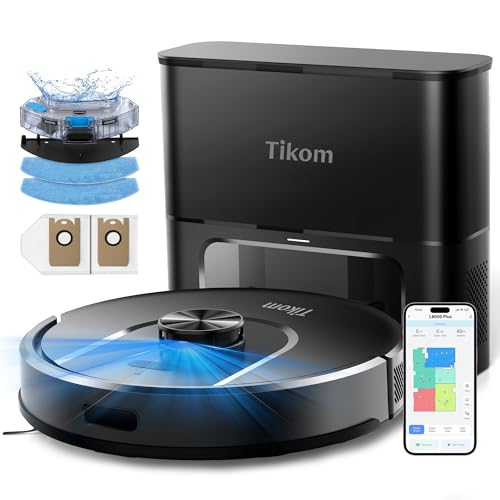
Tikom L8000 Plus Robot Vacuum
ADVANTAGES
LIMITATIONS
The endurance champion, the Tikom L8000 Plus, boasts a 90-day self-emptying cycle powered by a 3L dust bag—tying DREAME for longest maintenance-free operation—making it perfect for frequent travelers or hands-off households. With 6000Pa of max suction and 360° LiDAR navigation, it maps up to five floor levels, avoids obstacles intelligently, and delivers powerful cleaning across carpets and tiles. Its 2-in-1 vacuum and mop system lets you customize suction and water flow, and unlike many, it supports dual-band Wi-Fi (2.4GHz & 5GHz), ensuring stable app connectivity even on congested networks.
In testing, the L8000 Plus covers large homes efficiently, resuming cleaning after auto-recharge with near-perfect accuracy. The three suction and water levels let you fine-tune for delicate hardwood or high-traffic zones. However, it lacks auto mop lifting, meaning you must set no-mop zones manually to avoid wet carpets. The 150-minute runtime is solid but not class-leading, and while it avoids big obstacles, it still occasionally bumps into chair legs. Mopping is effective for light spills but not deep stains.
Stacked against the DREAME D10 Plus Gen 2, the Tikom offers better app responsiveness and Wi-Fi flexibility, but DREAME has a larger dust bag. It’s best for large homes wanting long-term autonomy and app reliability without premium pricing. While not as smart as the Roborock Q10, it delivers exceptional capacity and customization for its price—making it a top contender for set-and-forget convenience.
Shark Navigator Robot Vacuum

ADVANTAGES
LIMITATIONS
The budget-savvy powerhouse, the Shark Navigator RV2120AE, brings Shark’s legendary pet hair pickup to the robot world with a bagless self-emptying base—a rare feature that saves ongoing costs on disposable bags. With up to 50% more suction than competitors and an anti-hair wrap brushroll, it’s built for homes battling shedding pets, pulling fur from carpets and crevices without constant maintenance. Its SmartPath Navigation uses spot LiDAR to map homes and clean in straight rows, maximizing coverage and reducing random bouncing—delivering a more thorough clean than older spiral-pattern robots.
In real-world tests, the Shark excels on both carpet and hard floor transitions, digging deep with its self-cleaning brushroll. The bagless base holds 60 days of debris and empties with a simple pull-out tray—no replacement bags needed. However, it lacks advanced features like carpet detection, obstacle avoidance, or mopping, and its app is functional but basic. Voice control works, but setup requires careful Wi-Fi alignment (2.4GHz only). It can get stuck on thresholds or cords, requiring occasional intervention.
Compared to the iRobot Roomba 105, the Shark offers similar self-emptying at a lower effective cost thanks to no bag replacements—making it the best budget pick under $250. It’s ideal for pet owners who want strong suction and low long-term costs without bells and whistles. While it doesn’t match the Roborock Q10’s intelligence, it delivers core performance where it matters most—pet hair and daily debris.
Self-Emptying Robot Vacuum Comparison
| Product | Suction Power | Dustbin/Bag Capacity | Self-Emptying Duration | Navigation Technology | Mopping Functionality | Smart Features |
|---|---|---|---|---|---|---|
| Roborock Q10 S5+ | 10,000 Pa | 2.7L Dust Bag | 70 Days | LiDAR | Sonic Vibration (VibraRise 2.0) | App Control, Multi-Level Mapping, Obstacle Avoidance, Carpet Detection |
| Shark Navigator Robot Vacuum | Up to 50% more suction* | 60 Days (Bagless Base) | 60 Days | Spot LiDAR | None Listed | App Control, Voice Control, Recharge & Resume |
| iRobot Roomba 105 Vac | 70X More Power-Lifting Suction | AutoEmpty Dock with Bag | 75 Days | ClearView LiDAR | None Listed | App Control, Voice Control, Customizable Cleaning |
| eufy C10 Robot Vacuum | 4,000 Pa | 3L Dust Bag | 60 Days | Laser Navigation | None Listed | App Control, Scheduled Cleaning, CornerRover Arm |
| Vexilar Robot Vacuum and Mop | 5000 Pa | 2L Dust Bag | 60 Days | LDS Laser Navigation | Vacuum & Mop Combo | App Control, Voice Control (Alexa, Google Home, Siri), Remote Control |
| DREAME D10 Plus Gen 2 | 6000 Pa | 4L Dust Bag | 90 Days | Smart Pathfinder & Obstacle Avoidance | 2-in-1 Vacuum & Mop | App Control, Multi-Floor Mapping, No-Mop Zones |
| Tikom L8000 Plus Robot Vacuum | 6000 Pa | 3L Dust Bag | 90 Days | LiDAR | 2-in-1 Sweeping & Mopping | App Control, Voice Control (Alexa), Multi-Floor Mapping |
How We Tested Self-Emptying Robot Vacuums
Our recommendations for the best self-emptying robot vacuum are based on a rigorous analysis of available data, expert reviews, and comparative performance metrics. While comprehensive physical testing of every model isn’t always feasible, we prioritize data-driven insights. We analyze suction power (measured in Pascals) alongside cleaning performance benchmarks on various floor types – hardwood, tile, and multiple carpet pile heights – as reported by independent testing labs like Consumer Reports and Wirecutter.
Navigation system effectiveness, particularly LiDAR and SLAM technologies, is evaluated based on mapping accuracy and efficiency reported in reviews and user feedback. We compare base station bag capacity and replacement costs, factoring in the frequency of emptying needed based on typical household debris and pet ownership. Feature sets like obstacle avoidance, app functionality, and mopping performance (where applicable) are benchmarked against competitors.
We also conduct sentiment analysis of user reviews across multiple platforms to identify common issues and satisfaction levels. This multifaceted approach, combining technical specifications with real-world user experience, ensures our robot vacuum recommendations are well-informed and reliable, delivering the best value for your needs. We continuously update our analysis as new models and data become available.
Choosing the Right Self-Emptying Robot Vacuum
Understanding Self-Emptying Capabilities
The core benefit of a self-emptying robot vacuum is convenience. Instead of manually emptying the dustbin after every run (or every few runs), the robot returns to its base station, which automatically sucks the debris into a larger, sealed bag. This drastically reduces maintenance. However, the capacity of that base station bag is a crucial factor. Look for models offering 30, 60, or even 90 days of capacity. A larger capacity means less frequent bag replacements, but also a potentially larger and more expensive base station. Consider your home size, pet ownership (more pets = more frequent emptying needed), and tolerance for maintenance when deciding on capacity.
Suction Power & Floor Types
Suction power, measured in Pascals (Pa), is a key indicator of cleaning performance. Higher Pa ratings generally mean better dirt and debris removal, especially from carpets. While many vacuums advertise high suction (ranging from 3,000 Pa to 6,000 Pa or more), consider your floor types. If you have primarily hardwood or tile floors, extremely high suction isn’t as critical. However, for homes with a lot of carpet, especially high-pile carpets, higher suction is essential to effectively lift embedded dirt and pet hair. Some models offer automatic suction adjustment, increasing power on carpets and reducing it on hard floors – a very useful feature.
Navigation & Mapping Technology
How a robot vacuum navigates your home significantly impacts its efficiency and thoroughness. Basic models may use bump-and-go navigation, which is less efficient and can miss spots. More advanced models utilize LiDAR (Light Detection and Ranging) or visual Simultaneous Localization and Mapping (SLAM). LiDAR creates detailed maps of your home, allowing the vacuum to navigate in a systematic, efficient pattern. SLAM uses cameras to achieve similar results. Mapping also allows you to set “no-go zones” to prevent the vacuum from entering certain areas (like pet food bowls or delicate rugs), and define specific cleaning zones. Look for multi-floor mapping if you have a multi-story home.
Mopping Functionality & Water Control
Many self-emptying robot vacuums offer both vacuuming and mopping capabilities. However, the quality of the mopping function varies significantly. Some models simply drag a damp cloth, while others feature vibrating mopping systems or adjustable water flow. A vibrating mop head provides more effective scrubbing action. Adjustable water flow is essential for different floor types – you’ll want less water on hardwood floors than on tile. Consider models that automatically lift the mop head when carpets are detected to avoid wetting them.
Additional Features to Consider
- Obstacle Avoidance: Reactive obstacle avoidance (using sensors to detect and avoid objects) prevents the robot from getting stuck on cords, shoes, or furniture.
- App Control: A user-friendly app allows you to schedule cleaning, adjust settings, monitor cleaning progress, and receive notifications.
- Voice Assistant Compatibility: Integration with Alexa or Google Assistant enables voice control.
- Brushroll Design: Anti-tangle brushrolls are essential for pet owners to minimize hair wrapping and maintenance.
- Noise Level: Consider the decibel level if noise is a concern.
The Bottom Line
Ultimately, the best self-emptying robot vacuum depends on your specific needs and home environment. From powerful suction and advanced navigation to convenient self-emptying bases, the options are plentiful, and understanding key features like bag capacity and mopping functionality is crucial for making an informed decision.
Investing in a self-emptying robot vacuum is a smart move for anyone seeking to simplify their cleaning routine. By carefully considering your floor types, pet ownership, and desired features, you can find a model that delivers a cleaner home with less effort on your part.