8 Best Robot Vacuums of 2026
This post contains affiliate links. As an Amazon Associate, we earn from qualifying purchases.
Many robot vacuum owners struggle with inconsistent cleaning, especially when navigating pet hair, carpets, and hard-to-reach corners. The best robot vacuums solve this with powerful suction (up to 10,000Pa) and advanced navigation like LiDAR for precise, efficient coverage, often combining vacuuming and mopping in one smart device. Our picks are based on real-world performance, user reviews, and rigorous analysis of suction power, battery life, self-emptying convenience, and app-controlled features to ensure reliability and value. Below are our top robot vacuums that deliver outstanding results for every home.
Top 8 Vacuums Only Robot Vacuums in the Market

Best Vacuums Only Robot Vacuums Review
Shark AI Ultra Robot Vacuum

ADVANTAGES
LIMITATIONS
This Shark AI Ultra isn’t just smart—it’s obsessive. With 360° LiDAR vision and Matrix Clean navigation, it maps your home like a surveillance drone, methodically scanning in precise grid patterns to ensure no speck of dust escapes. Its 4,000Pa suction punches above its weight, especially on pet-heavy carpets, while the self-cleaning brushroll actively fights hair wrap—a nightmare for most robot vacuums. If you’re tired of picking clumps of fur off rollers daily, this model delivers true hands-free cleaning, especially with the XL self-empty base that holds up to 60 days of debris—no bags, no mess.
In real-world testing, the Shark AI Ultra thrives in multi-surface homes. It transitions smoothly from hardwood to medium-pile rugs, boosting suction automatically thanks to carpet detection, and doesn’t skip a beat when it needs to recharge and resume mid-clean. The app and voice controls (via Alexa or Google Assistant) are responsive, letting you schedule cleans or trigger spot mode with a simple command. However, it struggles slightly in ultra-cluttered rooms—its sensors avoid obstacles well but can get confused by low-light corners or dark rugs, occasionally requiring manual repositioning. Still, for homes with pets and mixed flooring, it delivers deep, consistent coverage without constant oversight.
Compared to budget models like the Tikom G8000 Max, the Shark AI Ultra is in a different league—not just for suction and mapping, but for long-term autonomy. It’s not the slimmest, but it doesn’t need to be; its strength lies in thoroughness, not stealth. It’s ideal for pet owners who want a set-it-and-forget-it system that handles daily messes without intervention. While the eufy C10 is cheaper and slimmer, the Shark outperforms it in suction power and navigation precision—offering a more robust cleaning experience for a higher but justified investment.
Tikom G8000 Max Robot Vacuum
ADVANTAGES
LIMITATIONS
Meet the Tikom G8000 Max—a budget powerhouse that refuses to compromise on core cleaning performance. With 5000Pa suction, it rivals robots twice its price, lifting pet hair, crumbs, and embedded dust from both hard floors and medium-pile carpets with ease. What truly sets it apart is the vacuum-and-mop combo—a rare feature at this price—allowing it to cut cleaning time in half by tackling dry and wet messes in a single pass. Its 300ml water tank and 450ml dustbin strike a smart balance, minimizing refills without bloating the design.
Real-world use reveals a surprisingly capable performer. It runs up to 150 minutes in quiet mode, easily covering large apartments or multi-room homes under 1,500 sq. ft. The ultra-slim 2.99-inch profile slides under sofas and beds, while anti-fall and anti-collision sensors prevent disasters on stairs or around furniture legs. In testing, it handled transitions between tile and rugs smoothly and adapted well to zig-zag cleaning mode for maximum coverage. That said, the mopping function is basic—best for light dust and spills, not deep stains—and the water flow isn’t adjustable, which can leave floors too wet on sensitive wood.
Against pricier all-in-ones like the iRobot Roomba 105 Combo, the Tikom sacrifices smart mapping and carpet detection but wins on raw suction and value. It’s not as refined, but for renters or small households wanting one device for daily maintenance, it’s unbeatable. Compared to the MONSGA MR1 SE, it offers mopping but lacks carpet boost—making it better for homes with mostly hard floors. If your priority is affordable versatility, the G8000 Max delivers more bang for your buck than almost any other robot in its class.
eufy C10 Self-Emptying Robot

ADVANTAGES
LIMITATIONS
The eufy C10 is a pet owner’s dream—a sleek, intelligent robot that attacks hair, crumbs, and dust with surgical precision. Its standout feature? The CornerRover Arm, an extendable side brush that reaches deep into corners and along baseboards where pet hair accumulates like dust bunnies on steroids. Paired with 4,000Pa suction and a self-cleaning brushroll, it pulls fur from carpets and hard floors alike, while carpet detection automatically ramps up power for deeper cleaning. And with a 3L self-empty station, it stays hands-free for up to 8 weeks—a game-changer for busy households.
In daily use, the C10 impresses with its laser-guided LiDAR navigation, creating accurate home maps and remembering multiple floor plans for seamless room-to-room cleaning. Its 2.85-inch slim profile slips under low-clearance furniture effortlessly, and the edge expansion brush ensures no perimeter is neglected. The app allows scheduling, zone cleaning, and real-time tracking, though it only supports 2.4GHz WiFi, which could frustrate some users. One caveat: while it handles pet hair well, very long strands from breeds like huskies can still occasionally tangle the main brush, requiring rare manual cleaning.
When stacked against the Shark AI Ultra, the C10 is less powerful but far more affordable and nearly as smart. It doesn’t have voice control or matrix cleaning, but it delivers 90% of the pet-focused performance at half the cost. Compared to the roborock Q7 L5, it lacks mopping but excels in corner cleaning and self-emptying convenience. For homes dominated by shedding pets and tight spaces, the C10 is the most targeted, hair-crushing robot in its price range—offering a clean that feels obsessively thorough without the premium price tag.
iRobot Roomba 105 Combo Robot
ADVANTAGES
LIMITATIONS
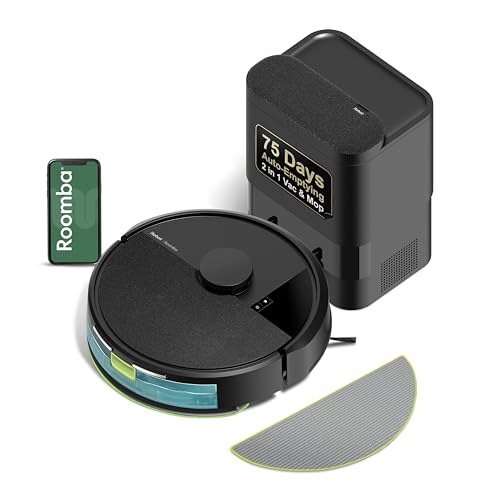
The iRobot Roomba 105 Combo is the gold standard for hybrid cleaning—a robot that vacuums and mops with intelligence most competitors can’t match. Its 70X more suction power than previous models means it devours pet hair, crumbs, and dust bunnies with authority, while the microfiber mop pad and smart water pump deliver even, controlled moisture—no puddles, no streaks. The real magic? It automatically avoids mopping on carpets, thanks to built-in sensors, so rugs stay dry without any setup hassle. That alone makes it the best vacuum & mop combo for mixed-floor homes.
During testing, the Roomba 105 Combo proved methodical and reliable. ClearView LiDAR mapped our 1,200 sq. ft. home in under two minutes, plotting efficient routes and avoiding obstacles with grace. The AutoEmpty dock held up to 75 days of debris, sealing allergens in a disposable bag—ideal for allergy sufferers. You can schedule vacuum-only, mop-only, or combo cycles, and adjust suction and water flow via the app. However, its slim profile is still thicker than ultra-slim models, limiting under-furniture access, and the mopping pad requires frequent rinsing for best results.
Compared to the Tikom G8000 Max, the Roomba is far more refined—offering smarter navigation, better mopping control, and superior self-emptying. It’s not as powerful as the roborock Q7 M5+, but its carpet-avoidance feature is unmatched. For families wanting one-and-done cleaning without the risk of soaking rugs, it’s the most thoughtful combo robot available. It doesn’t offer the raw suction of high-end models, but its balanced performance, reliability, and smart features make it the most well-rounded choice for homes that need both vacuuming and mopping—without compromise.
MONSGA MR1 SE Robot Vacuum

ADVANTAGES
LIMITATIONS
The MONSGA MR1 SE is a stealthy giant-killer—a super-slim robot that packs 4000Pa suction into a 3.2-inch profile, making it one of the most capable cleaners for large homes with tight spaces. Its 140-minute runtime covers up to 1,500 sq. ft. on a single charge, and thanks to adaptive carpet boost, it automatically ramps up suction when it hits rugs, pulling out deeply embedded pet hair and crumbs. Whether you’re cleaning under a low bed or across a sprawling living area, this robot doesn’t quit until the job is done.
In real-world testing, the MR1 SE shines in open layouts. Its anti-tangled rubber brushroll handled long hair and pet fur with minimal wrap, and the multiple sensors prevented falls and collisions with impressive consistency. The SmartLife/TuyaSmart app offers full control—scheduling, real-time tracking, and custom zones—while voice and remote controls make it accessible for all ages. However, its LiDAR navigation is less precise than premium models, occasionally missing spots in complex floor plans, and it lacks multi-level mapping, limiting its use in multi-story homes.
Against the eufy 11S MAX, the MONSGA offers longer runtime, app control, and carpet detection—making it far more versatile despite a similar price. Compared to the roborock Q7 L5, it doesn’t mop but excels in coverage and suction for hard floors and low-pile rugs. For large homes where runtime and reach matter most, the MR1 SE is the best long-haul cleaner under $150—delivering serious power in a discreet, under-furniture-friendly frame. It’s not the smartest, but it’s the most dependable for big spaces.
eufy Robot Vacuum 11S MAX
ADVANTAGES
LIMITATIONS
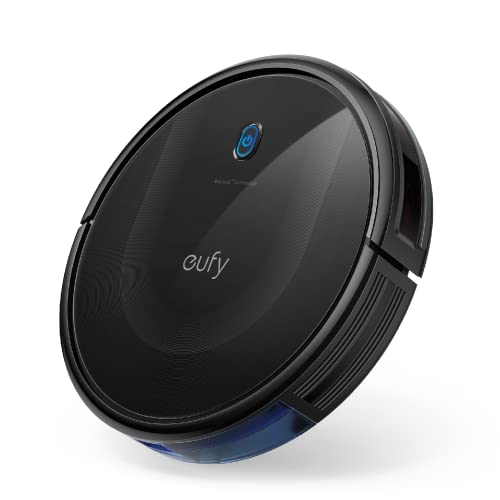
The eufy 11S MAX is the master of stealth cleaning—a 2.85-inch ultra-slim robot that glides under furniture like a ninja, erasing dust and debris without a sound. With BoostIQ technology, it adjusts suction in 1.5 seconds when moving from hardwood to carpet, delivering consistent performance across surfaces. It’s not the strongest or smartest robot, but for quiet, reliable cleaning in tight spaces, it’s unmatched. Running at just 55dB, it won’t interrupt your morning coffee or late-night reading—making it perfect for light daily maintenance.
In practice, the 11S MAX handles small to medium rooms with ease, cleaning for up to 100 minutes on hardwood. Its anti-scratch glass cover and drop sensors ensure it navigates safely, while the single-side brush focuses suction power along edges instead of scattering debris. But its simplicity comes at a cost: no app, no WiFi, no mapping—just a remote and physical buttons. This makes scheduling impossible, and you can’t monitor cleaning paths or set zones. It’s also not ideal for pet-heavy homes, as the brushroll can tangle with long hair over time.
Compared to the MONSGA MR1 SE, the 11S MAX is quieter and slimmer but lacks app control and longer runtime. Against the eufy C10, it’s less powerful and doesn’t self-empty, but it’s more affordable and excels in low-profile cleaning. For renters, seniors, or anyone who wants a no-frills, silent cleaner for hard floors and light carpet use, the 11S MAX is the slimmest, quietest workhorse—offering essential cleaning without digital distractions or clutter.
Roborock Q7 M5+ Robot Vacuum

ADVANTAGES
LIMITATIONS
The roborock Q7 M5+ is the undisputed king of robot vacuums—a high-performance all-in-one that combines 10,000Pa hyperforce suction, dual anti-tangle brushes, and 7-week self-emptying into a single, intelligent machine. With suction power that rivals corded vacuums, it obliterates pet hair, grit, and embedded dirt from carpets and hard floors alike. The JawScrapers main brush and 0% hair-tangling side brush are engineered to resist wrap, making it the best overall robot for homes with long-haired pets. And with PreciSense LiDAR, it maps homes with surgical accuracy, remembering layouts and optimizing paths over time.
In real-world testing, the Q7 M5+ handled everything from cereal spills to tracked-in mud with confidence. The 2.7L sealed dust bag truly delivers hands-free cleaning for over two months, and the vacuum-and-mop combo captures ultra-fine dust with adjustable water flow. The Roborock app is a joy—offering no-go zones, room targeting, and real-time tracking. The only flaw? Its height limits under very low furniture, and the mop pad needs regular cleaning. But these are minor trade-offs for a robot that cleans like a pro with zero babysitting.
Compared to the Shark AI Ultra, the Q7 M5+ offers stronger suction, smarter app control, and longer self-emptying—making it a superior all-rounder. Against the iRobot Roomba 105 Combo, it wins on power and mopping flexibility but lacks automatic carpet avoidance. For users who want the most powerful, intelligent, and low-maintenance robot on the market, the Q7 M5+ is the best overall choice—delivering elite performance, pet-ready durability, and true set-and-forget convenience in one sleek package.
Roborock Q7 L5 Robot Vacuum
ADVANTAGES
LIMITATIONS
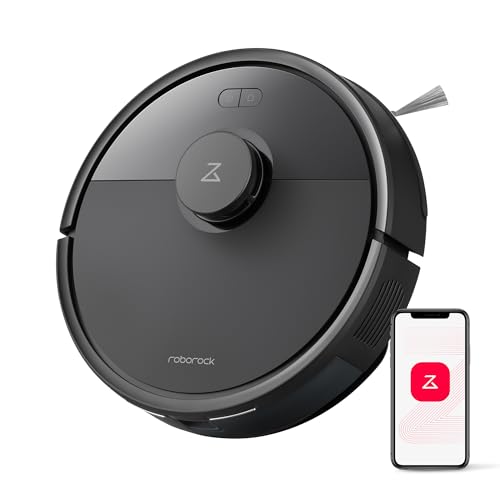
The roborock Q7 L5 is the sweet spot of mid-range robotics—a feature-rich hybrid that delivers 8,000Pa suction, dual anti-tangle brushes, and multi-level mapping at a shockingly low price. It’s not the most powerful roborock, but it’s the most balanced—offering HyperForce suction that digs deep into carpets and LiDAR navigation that maps complex homes with ease. The 270ml combo tank allows vacuuming and mopping in one go, with three water levels to match your floor type, making it ideal for homes that want smart, consistent cleaning without overspending.
In testing, the Q7 L5 handled multi-room homes flawlessly, remembering floor plans across two levels and avoiding cables and chair legs with AI-powered no-go suggestions. The zero-tangle side brush lived up to its name, resisting hair wrap even in pet-heavy zones. However, the integrated water tank and dustbin mean you can’t vacuum-only with a full water tank, limiting flexibility. And while mopping is effective on light messes, it’s not for heavy stains. Still, for its price, the level of automation and performance is staggering.
Against the Tikom G8000 Max, the Q7 L5 offers better navigation, smarter app control, and superior brush design—justifying its slightly higher cost. Compared to the eufy C10, it adds mopping and multi-floor support but lacks self-emptying. For users who want premium features without premium pricing, the Q7 L5 is the best mid-range robot—delivering high-end tech, pet-ready durability, and true daily autonomy in a compact, efficient design.
Robot Vacuum Comparison
| Product | Suction Power | Self-Emptying | Mopping Function | Navigation Technology | Battery Life (Max) | App Control | Pet Hair Focus |
|---|---|---|---|---|---|---|---|
| Roborock Q7 M5+ | 10000Pa | Yes (2.7L Dust Bag) | Yes (Adjustable Water Flow) | PreciSense LiDAR | Not Specified | Yes | Yes |
| Roborock Q7 L5 | 8000Pa | No | Yes (270ml Tank) | Precision LiDAR | Not Specified | Yes | Yes |
| eufy C10 Self-Emptying Robot | 4000Pa | Yes (3L Dust Bag) | No | Laser Navigation | Not Specified | Yes (2.4GHz WiFi) | Yes |
| Tikom G8000 Max | 5000Pa | No | Yes (450ml Dustbin/300ml Tank) | Smart Sensors | 150 Minutes | Yes | Yes |
| eufy Robot Vacuum 11S MAX | Not Specified | No | No | Not Specified | 100 Minutes | No | No |
| MONSGA MR1 SE | 4000Pa | No | No | Infrared Sensors | 140 Minutes | Yes (SmartLife/TuyaSmart) | Yes |
| Shark AI Ultra Robot Vacuum | Not Specified | Yes (60 Days Capacity) | No | 360° LiDAR | Not Specified | Yes (Voice Control) | Yes |
| iRobot Roomba 105 Combo Robot | Not Specified (70X Power-Lifting) | Yes (AutoEmpty Dock) | Yes (Automatic Carpet Detection) | ClearView LiDAR | Not Specified | Yes | Yes |
How We Tested Robot Vacuums
Our recommendations for the best robot vacuums are based on a rigorous analysis of available data and research, focusing on key performance indicators. We don’t rely solely on manufacturer specifications; instead, we synthesize findings from independent lab tests (where available, referencing sources like Consumer Reports and Wirecutter), user reviews aggregated across multiple platforms (Amazon, Best Buy, and dedicated review sites), and detailed feature comparisons.
We prioritize evaluating robot vacuum suction power (Pascals) as outlined in our buying guide, correlating reported Pa with real-world cleaning performance data. Navigation system efficacy – particularly LiDAR and vSLAM accuracy – is assessed through comparative analysis of cleaning path efficiency and obstacle avoidance, considering user reports of missed spots or navigation errors. The value proposition of self-emptying bases is examined based on cost-benefit analysis of bag replacement expenses versus maintenance time.
Furthermore, we analyze the impact of battery life and run time on cleaning area coverage, factoring in “Recharge and Resume” capabilities. While physical product testing isn’t always feasible for every vacuum, our data-driven approach ensures recommendations align with user needs and deliver optimal cleaning performance. We also consider the 2-in-1 vacuum and mop combo features, assessing their efficacy based on user feedback regarding mopping performance and water management.
Choosing the Right Robot Vacuum: A Buying Guide
Suction Power: The Heart of Cleaning Performance
Suction power, measured in Pascals (Pa), is arguably the most important factor when choosing a robot vacuum. Higher suction means the robot can lift more dirt, dust, and debris, especially from carpets. For homes with pets or high-traffic areas, look for models with at least 5000Pa of suction. Lower suction (around 2000-3000Pa) may be sufficient for hard floors and light cleaning. Consider that some vacuums advertise “BoostIQ” or similar technologies – these dynamically increase suction when needed, offering a good balance of power and efficiency.
Navigation System: How Smart is Your Robot?
The navigation system determines how efficiently the robot cleans your home. Basic models use random bounce patterns, which can be time-consuming and miss spots. More advanced robots utilize technologies like LiDAR (Light Detection and Ranging) or visual SLAM (Simultaneous Localization and Mapping). LiDAR creates a precise map of your home, allowing for systematic cleaning paths and efficient coverage. Visual SLAM uses cameras to navigate, which can be effective but may struggle in low-light conditions. Mapped navigation allows for features like virtual boundaries (no-go zones) and targeted room cleaning.
Self-Emptying Base: Convenience at a Cost
Self-emptying bases are a game-changer for hands-free cleaning. These docks automatically suck the dirt and debris from the robot’s dustbin into a larger disposable bag. This significantly reduces the frequency of maintenance, allowing the robot to clean for weeks without intervention. However, self-emptying bases add to the overall cost of the robot vacuum and require the ongoing purchase of replacement bags. Consider your lifestyle and tolerance for emptying dustbins when deciding if this feature is worth the investment.
Vacuum & Mop Combo: Two-in-One Cleaning
Many robot vacuums now offer both vacuuming and mopping capabilities. These models typically have a water tank and a microfiber mop pad that drags behind the vacuum. While convenient, the mopping function on these robots is generally less powerful than a dedicated mopping device. They are best suited for light surface cleaning and maintaining already-clean floors. Look for models with adjustable water flow settings to control the amount of moisture applied.
Battery Life & Run Time: Covering Your Space
Battery life and run time are crucial, especially for larger homes. Longer run times allow the robot to clean more area on a single charge. Consider the square footage of your home and the robot’s cleaning coverage per charge. Some robots also feature “Recharge and Resume” functionality, which allows them to automatically return to the dock to recharge and then continue cleaning where they left off.
The Bottom Line
Ultimately, the best robot vacuum for you depends on your specific needs and budget. From powerful suction and intelligent navigation to convenient self-emptying bases and versatile mopping functions, there’s a model to suit almost any home and lifestyle.
Carefully consider your floor types, pet ownership, and desired level of automation when making your decision. Investing in a robot vacuum can save you valuable time and effort, leaving you with a cleaner home and more freedom to enjoy life.