
Comparing Bagged and Bagless Canister Vacuums | A Full Guide
This post contains affiliate links. As an Amazon Associate, we earn from qualifying purchases.
A bagged canister vacuum wins for most homes. The sealed bag is the primary filter, trapping dust and maintaining suction until full. A bagless model relies on a cyclone and washable filters that require frequent cleaning and still allow fine dust to reach the motor, shortening its life by years. For consistent power and allergen control, the bagged system is mechanically simpler and more reliable.
That mechanical simplicity is the whole argument. A bag is a disposable filter. A bagless vacuum is a complex air separator that depends on perfect owner maintenance to protect its own engine. The difference isn’t a preference. It’s a predictable failure curve documented in repair logs.
What follows is the evidence from the bench: the specific failure modes, the real ten-year math, and the two scenarios where a bagless canister actually makes sense. By the end, you’ll know which system fits your floors, your time, and your budget.
Key Takeaways
- Bagged vacuums maintain peak suction until the bag is nearly full; bagless suction drops as the cyclone and filters clog, which happens within weeks if not cleaned.
- Fine dust bypasses bagless filters and infiltrates the motor bearings, leading to burnout. Repair shops see 3-8 year lifespans for bagless versus 10-20 years for quality bagged brands.
- The “no bag cost” claim is false. Filter replacements for bagless models run $15-$40 yearly, and the shorter machine lifespan means you’ll buy a replacement vacuum sooner.
- Bagged filtration is a sealed system. When you remove a full bag, a flap seals the compartment, dust never re-enters your home’s air.
- Only consider a bagless canister for a workshop, as a secondary quick-clean vacuum, or if your budget is severely constrained and you commit to meticulous weekly maintenance.
The 3-Step Filtration Truth (Why Bags Win)
Filtration is where the two systems diverge completely. It’s not about marketing claims. It’s about the number of barriers between dirt and your motor.
A quality bagged canister uses a sealed three-stage system. The bag itself is the first and main filter, catching everything from cereal chunks to fine powder. The second stage is a pre-motor filter, often a foam sleeve, that catches any microscopic particles that might escape the bag. The final stage is an exhaust filter, like a HEPA filter, that polishes the air leaving the machine. This is the setup in a Miele or a Kenmore 200 Series. The bag does 95% of the work.
A high-quality bagged vacuum with a sealed filtration system captures 99.97% of particles down to 0.3 microns. The bag itself does most of the heavy lifting as a filter, and the sealed housing prevents any unfiltered air from escaping.
A bagless canister inverts this. Its first stage is a cyclone chamber, a plastic labyrinth designed to spin dirt out of the airstream using centrifugal force. Heavier debris falls into the bin. The second stage is a washable pre-motor filter, meant to catch the fine dust the cyclone missed. The third is, again, an exhaust filter. The problem is the cyclone. It’s terrible at catching particles under 10 microns, the kind that clog filters and grind down motor bearings.
The consequence is motor death. Fine dust coats the cyclone walls, reducing airflow. The motor works harder, draws in more dust through imperfect seals, and overheats. A repair shop that has seen thousands of units notes this happens within 1 to 3 years on many models. You can’t wash that damage away.
The Bagless Failure Timeline (What Breaks and When)
Forget “lifespan estimates.” Look at the predictable sequence of failures a repair technician sees when a bagless canister comes in. This isn’t guesswork. It’s the aggregation of thousands of service tickets.
| Component | Failure Mode | Typical Timeline | Outcome if Ignored |
|---|---|---|---|
| Cyclone Assembly | Fine dust & pet hair coat walls, restricting airflow. | 1–3 years | Suction drops noticeably. Motor strains and overheats. |
| Washable Filters | Clogged with fine dust; often reinstalled damp. | 6–12 months | Motor draws unfiltered air; dust escapes into room air. |
| Dust Bin Latches | Plastic fatigues from repeated emptying. | 2–4 years | Bin won’t seal. Suction loss and dust leaks are immediate. |
| Motor Bearings | Infiltrated by fine dust bypassing the cyclone. | 3–8 years | Whining noise, loss of power, eventual burnout. Cost to repair often exceeds value of machine. |
Where this goes sideways: Washing the filter and putting it back damp. A damp filter is a clogged filter. It chokes airflow, forcing the motor to run hot, and mold grows inside the filter media within days. You must let it dry for 24 hours.
The systemic nature of these failures is key. By year four or five, the motor, seals, and filtration are often compromised simultaneously. The repair bill hits $150-$300 on a machine that cost $350 new. Most people junk it. This cycle is why shops like Vacuums and More report bagless lifespans of 3-8 years for most consumer models.
In contrast, the most common repair on a 10-year-old bagged Miele is a cracked hose end. The motor, insulated by the bag, is usually fine. That’s a $50 fix.
Suction Consistency: The Hidden Performance Gap
Manufacturer spec sheets love “peak suction power.” That’s a meaningless number for daily use. The real question is: does suction stay strong from the first pass to the last?
A bagged system wins on consistency. The porous bag allows air to flow freely while trapping particles. Suction remains virtually constant until the bag is about 80% full. At that point, airflow restriction triggers a indicator light or simply feels harder to push. You swap the bag, a 30-second job, and you’re back at 100%.
Bagless suction is a curve that starts high and decays. As the cyclone clogs and the fine dust filter loads, airflow drops. You might lose 30% of your effective cleaning power within a few weeks if you have pets or sandy floors. You must stop, disassemble the unit, and wash the components to restore performance. This is the “convenience” trade-off nobody mentions in the ads.
The Philips Performer Active bagged model cites 99.9% dust pick-up on hard floors with crevices (IEC 62885-2). That’s a specific, repeatable international standard for measuring sustained cleaning performance. Many bagless brands cite “peak airflow” in liters per second, which says nothing about performance after five minutes of use.
The 10-Year Cost Comparison (Bags Are Cheaper)
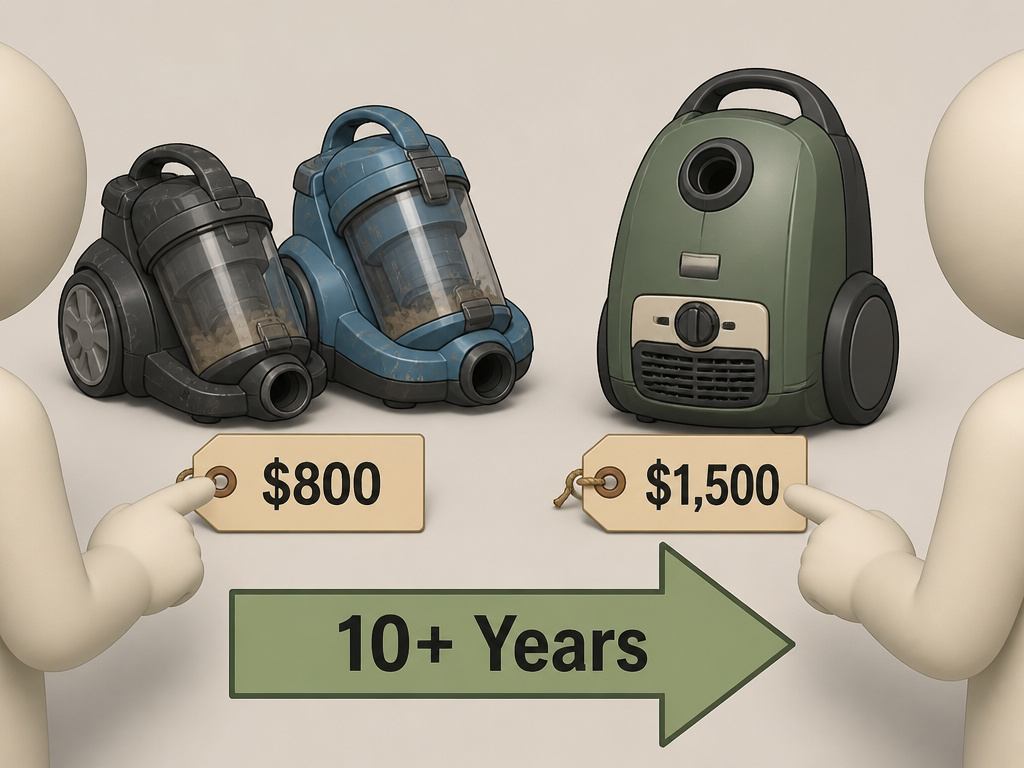
Let’s run the numbers. The “no ongoing cost” claim for bagless is the most persistent myth. You exchange bag costs for filter costs, and you exchange a long-lived machine for a short-lived one.
Scenario: Bagless Mid-Range Canister
- Initial Machine: $300
- Annual Filter Replacements: $25 (pre-motor + HEPA)
- Year 4: Motor fails. Replacement machine: $300.
- Total 8-Year Cost: $300 + (8 x $25) + $300 = $800
Scenario: Bagged Quality Canister
- Initial Machine: $600 (e.g., Miele Classic C1)
- Annual Bag & Filter Cost: $60 (6 bags @ $8, 1 exhaust filter @ $12)
- Total 8-Year Cost: $600 + (8 x $60) = $1,080
At first glance, bagless seems cheaper. But you’ve owned two machines, dealt with declining performance, and breathed more dust. The bagged owner has had one machine with consistent power. Stretch that to 15 years, a realistic lifespan for a bagged Miele, and the bagless owner is on their third $300 vacuum, having spent $1,125 plus filters. The bagged owner has spent $1,500. For a $375 difference, you get a decade and a half of superior, reliable cleaning.
Common mistake: Choosing bagless to “save money” on a tight budget. You often end up spending more per year of reliable service. If funds are truly limited, buy a used quality bagged canister rather than a new cheap bagless one.
When a Bagless Canister Actually Makes Sense
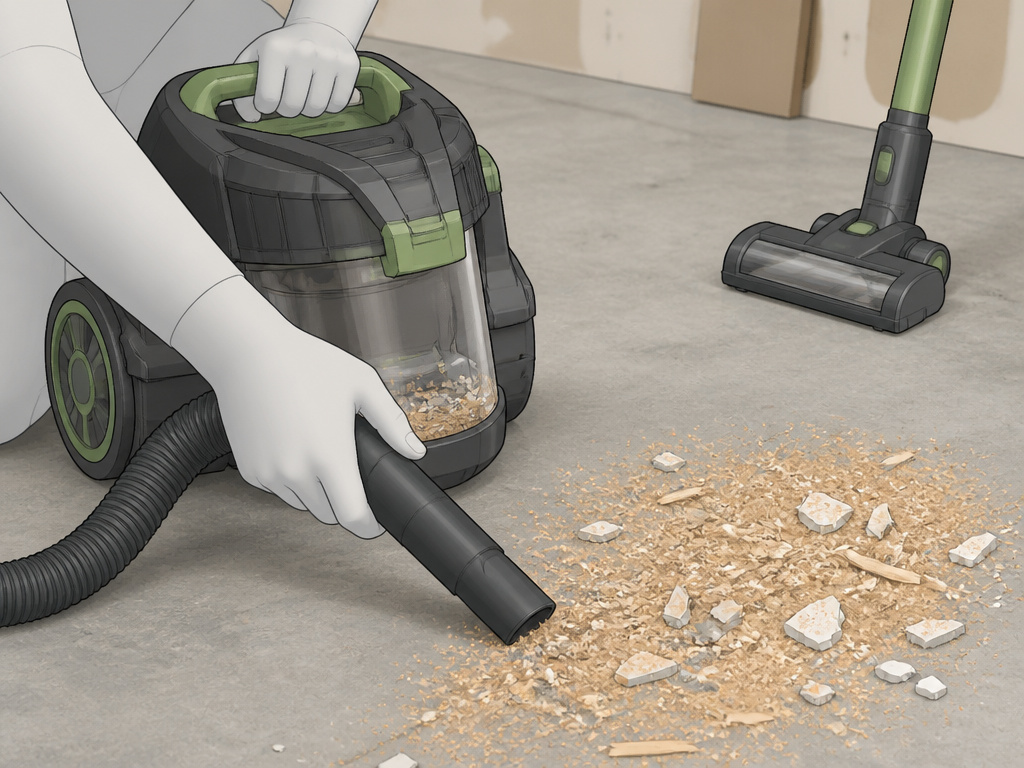
There are two narrow use cases where the bagless design’s drawbacks become acceptable.
- Workshop or Garage Duty. Vacuuming sawdust, drywall dust, or landscaping debris would burn through expensive bags at a ridiculous rate. A bagless shop vacuum or a rugged bagless canister like the Eureka Mighty Mite 3670G is the right tool here. The motor isn’t expected to last 20 years, and you aren’t breathing the air in that space daily.
- Secondary, Quick-Clean Vacuum. A lightweight, bagless stick vacuum for daily kitchen crumb duty is fine. It complements a primary, whole-house vacuum. Its short runtime and limited use won’t stress the cyclone system the way deep cleaning a 2,000 sq. Ft. Home will.
For any other scenario, especially for primary home cleaning, allergy sufferers, or pet owners, the long-term economics and performance point firmly toward a bagged system. Your time has value. Stopping to wash filters every month is a cost.
Head-to-Head: Picking a Machine for Your Floors
This isn’t abstract. Your floor type decides which specific model you should look at first. Here’s the breakdown.
| Your Primary Floor Type | Bagged Canister Pick | Bagless Canister Pick | Why It Wins |
|---|---|---|---|
| Mixed (Carpet & Hard Floor) | Kenmore 200 Series (bagged) | Philips PowerPro Expert FC9747 | The Kenmore’s 2-motor system and sealed allergen filtration handle both surfaces without dust escape. |
| Mostly Hard Floor | Miele Classic C1 Delphi | Eureka Mighty Mite 3670G | The Miele’s gentle brush roll and superb sealing protect hard floors from scratches and dust clouds. |
| High-Pile Carpet & Pets | Miele Compact C2 Electro+ | Rowenta Compact Power XXL | The Miele’s adjustable suction and turbo brush head dig deep into pile without tangling. |
If you have mostly hard floors and want a bagless model for lower debris volume, the data from a Consumer Reports Eureka Mighty Mite review confirms it’s great on bare floors but struggles on carpet. Match the tool to the task.
For a deep dive on the top options, our guide on bagged canister vacuums breaks down the specs that matter. Similarly, if your situation demands a bagless model, our bagless canister vacuum reviews can help you find the most durable design.
The Bottom Line
Buy a bagged canister vacuum. The repair records across three decades are unambiguous. The sealed system delivers consistent suction, protects the motor, and genuinely filters the air in your home. The higher upfront cost pays for itself in longevity and performance.
Ignore the “no bag cost” slogan. It’s a marketing line that ignores filter replacements and the real price of a dead motor in four years. The ongoing cost of bags is the price of reliability.
For one machine to handle everything in a typical home, the choice is clear. Look at a Miele Classic C1, a Kenmore 200 Series, or an Electrolux Ultimate800. Read the Consumer Reports Miele C2 Electro review for third-party validation. Then buy it, use it, and replace the bag when the light comes on. Your floors will be cleaner, and the vacuum will still be working when your neighbor is shopping for their second bagless replacement.
Frequently Asked Questions
Are bagless vacuums really harder to maintain than bagged vacuums?
Yes, meaningfully. Bagged maintenance is a swap: a full bag for an empty one, and an annual filter change. It takes two minutes. Bagless maintenance is a process: empty the bin after each use, wash the pre-motor filter monthly, let it dry for a full day, and clear hair from the cyclone vanes. Skip any step, and performance drops immediately while the motor’s lifespan shortens.
I have allergies. Which type is better?
Quality bagged canister with a sealed HEPA system is the only correct answer. The bag is the primary allergen trap, and the sealed system ensures zero leakage when you remove it. Bagless vacuums can release a cloud of fine dust every time you empty the bin, and their filtration fails if the washable filter is even slightly damp.
Can I convert my bagless vacuum to use bags?
Almost never. The internal airflow paths and motor compartments are designed specifically for one system. A bagless machine lacks the sealed bag chamber and the internal door mechanism that a bagged system requires. It’s not a conversion kit; it’s a different machine.
How often should I replace bags and filters in a bagged model?
Replace the bag when it’s 3/4 full or when suction noticeably drops, usually every 1-3 months for an average home. Replace the exhaust filter (often a HEPA filter) once a year, or as specified in your manual. The pre-motor filter may last longer, but check it every 6 months.
What’s the biggest mistake people make with bagless vacuums?
Putting the washed filter back in while it’s still damp. A wet filter is a brick. It blocks airflow, forces the motor to overheat, and becomes a mold farm. Let it air-dry for at least 24 hours. Keep a spare filter on hand so you can rotate them.