
How to Clean a Couch with the Bissell SpotClean Pro Correctly
This post contains affiliate links. As an Amazon Associate, we earn from qualifying purchases.
To use a Bissell SpotClean Pro on a couch, first verify the fabric has a ‘WS’ or ‘W’ cleaning code. Pre-vacuum thoroughly, mix a capful of Bissell formula per 16 oz of warm water (max 140°F/60°C), and hold the spray nozzle 3-4 inches from the fabric. Work in 12×12 inch sections, scrubbing after each spray, and finish each section with 2-3 dry suction passes to extract excess moisture and prevent mold.
That fabric code check is non-negotiable. An ‘X’ or ‘S’ code means professional dry cleaning only; using a water-based extractor on those fabrics will shrink, warp, or bleed the material permanently. The code is usually on a tag sewn into a seam under a cushion. If it’s missing, contact the furniture manufacturer before you touch the cleaner.
What follows is the full procedure, from the vacuum you must use first to the dry-pass technique that cuts drying time in half. We’ll also cover the one spec where the manual and real-world experience directly contradict each other.
Key Takeaways
- Check the fabric cleaning code first. Only fabrics marked ‘WS’ or ‘W’ are safe for the SpotClean Pro. ‘X’ or ‘S’ codes require a professional dry cleaner.
- Hold the spray nozzle 3–4 inches from the fabric. Spraying closer than 2 inches forces solution deep into the padding, where it can’t be extracted, leading to mold within 24 hours.
- Always finish with 2–3 ‘dry’ suction passes. After cleaning a section, suction without spraying to pull out hidden moisture. This is the single biggest factor in preventing musty odors.
- Use water at or below 140°F (60°C). The manual states this maximum to prevent deforming the clean water tank. However, many stain experts recommend lukewarm water to avoid setting protein-based stains.
- Never store the unit with solution in the tanks or where it can freeze. Residual formula ruins seals, and freezing cracks internal plastic components, voiding the 2-year warranty.
The First Step is Reading the Fabric Tag
Your couch’s material decides everything. The manufacturer sews a tag with a cleaning code into a side or bottom seam. This code is a one- or two-letter code set by the furniture industry.
WS or W: Water-based cleaning is safe. “WS” means use a water-based shampoo or foam; “W” means use a water-based cleaner. The SpotClean Pro works on both. X or S: Professional solvent (dry) cleaning only. Do not use the SpotClean Pro. Water will damage the fabric.
If the tag is missing or illegible, you must contact the furniture maker. Guessing is how a $1,500 sofa becomes unusable. Perform a colorfastness test on a hidden area even with a ‘W’ code. Dampen a white cloth with your cleaning solution, press it firmly for 10 seconds, and check for dye transfer.
A proper couch vacuum is your best friend here. You need to remove all loose debris—pet hair, crumbs, dust—before introducing moisture. That grit turns into mud when wet and grinds into fibers.
Gathering Your Tools and Mixing Solution
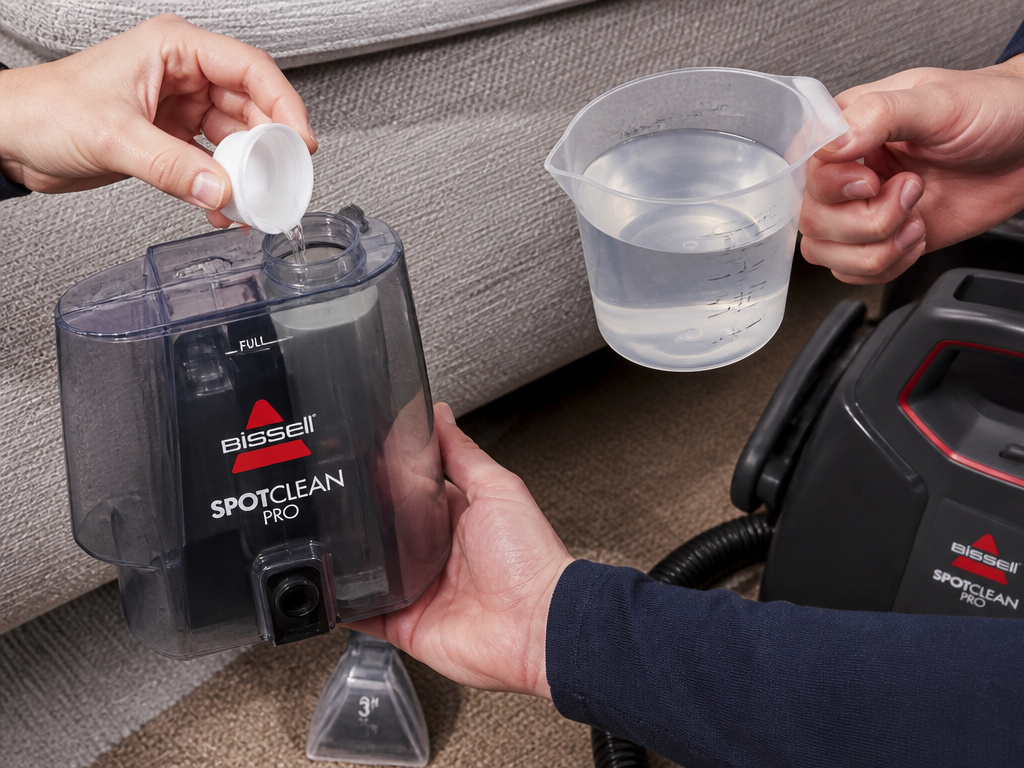 You need the machine, the appropriate cleaning tool (usually the 3″ or 6″ upholstery tool), a genuine Bissell cleaning formula, and a measuring cup. Off-brand formulas can void your warranty and damage internal seals.
The water temperature advice is where things split. The official Bissell SpotClean Pro manual states to use “hot tap water (140°F/60°C MAX).” It warns that hotter water can deform the clean water tank.
Common mistake: Using scalding water on protein stains (milk, blood, pet urine). Heat can cook the proteins, binding them permanently to the fibers. Many professional cleaners use lukewarm water for this reason.
The safe play is to use warm water, well under the 140°F max. For mixing, a standard recommendation is 1 capful of Bissell formula per 16 oz of water. Never exceed the “MAX” fill line on the clean tank. Overfilling causes leaks during operation.
| Tool | Best For | Why It Matters |
|---|---|---|
| 3″ Upholstery Tool | Armrests, tight back cushions, spot cleaning | Small surface area maximizes downward pressure for scrubbing. |
| 6″ Upholstery Tool | Large seat cushions, flat sofa backs | Covers more area faster but requires more passes for even suction. |
| Crevice Tool | Seams, piping, tufted buttons | Directs suction into tight spaces where soil collects. |
| Stain Trapper Tool (if your model has it) | Large liquid spills | Contains mess separately, keeping the main hose and tank cleaner. |
Before you start, unwind the cord and plug the unit in. Press the power button and wait. The pump needs about 30 seconds to prime before it will spray. If you pull the trigger immediately, you’ll hear a straining noise and get no solution.
The Core Cleaning Sequence
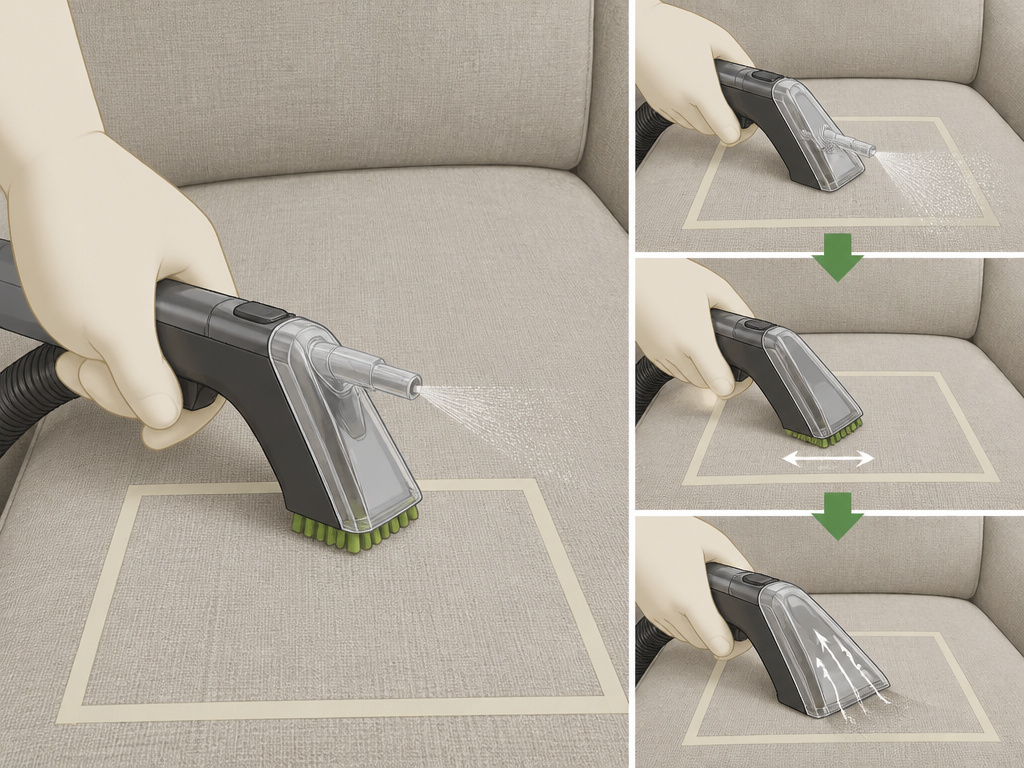 This is the hands-on work. The goal is controlled moisture: apply enough solution to clean, then remove as much as you put in.
1. Pre-Vacuum (Again). Go over the section you’re about to clean one more time with the vacuum. This grabs any debris dislodged during your first pass.
2. Position and Spray. Hold the tool so the bristles touch the fabric. Extend the spray nozzle so its tip is 3–4 inches away. Press the trigger for 1-2 seconds to wet the area—don’t flood it.
Where this goes sideways: Spraying from 1 inch away. This injects solution past the surface fibers into the cushion padding. The machine’s suction can’t reach that deep, and the wet padding becomes a mold incubator.
3. Scrub Immediately. Release the trigger and use the tool’s bristles to agitate the area. Use a back-and-forth motion, applying firm pressure. This mechanical action is what loosens the stain.
4. Extract. With the tool flat on the fabric, slowly pull it toward you. You’ll hear the suction pulling up the dirty water. Move slowly—about one inch per second. Fast passes leave water behind.
5. The Critical Dry Passes. Do not move to a new wet area yet. Make 2–3 more suction passes over the same spot without spraying any new solution. This extracts the moisture that wicks up from deeper in the fabric after the first pull. The water in the dirty tank will go from soapy to nearly clear. This step cuts drying time by at least half.
Work in manageable 12×12 inch sections, moving from the top of the couch (backrests) down to the seats. This prevents dirty runoff from staining cleaner areas below. Place a dry towel under the section you’re cleaning to catch any accidental drips.
If you encounter a complete loss of suction mid-clean, stop. The dirty water tank is likely full. Empty it before continuing.
Why the “Dry Pass” Technique is Non-Negotiable
A portable extractor like the SpotClean Pro cannot generate the same vacuum power as a truck-mounted professional unit. Its suction is strong for its size, but it leaves behind more moisture than you think.
When you spray and extract once, you might remove 70-80% of the moisture you applied. The remaining 20-30% sinks into the mid-layer of the fabric and the top of the cushion. Without a dry pass, that moisture has nowhere to go but sit.
In a humid climate, or on a dense fabric like velvet, that trapped moisture will cause a musty smell within 24 hours. By 48 hours, you risk mold spores taking hold. The dry pass actively pulls that lurking moisture up and out. It’s the difference between a damp couch for 6 hours and a slightly damp couch for 2.
This principle is why maintaining any portable carpet cleaner requires immediate emptying and rinsing. Stagnant water left in the machine causes the same problem internally.
Drying, Cleanup, and Storage
Your job isn’t done when the tank is full. Proper aftercare protects your couch and your machine.
Drying the Couch: Accelerate airflow. Open windows, run a ceiling fan, or point a portable fan at the cleaned areas. In humid conditions, a dehumidifier in the room is a wise investment. Expect a 4-6 hour drying time for most fabrics. You can test by pressing a white paper towel against the fabric; if no moisture appears, it’s dry.
Cleaning the Machine: This is as important as cleaning the couch. Empty the dirty water tank immediately. Rinse both the clean and dirty tanks with warm water. Never store them with formula residue, as it will degrade seals and cause leaks.
Easy to miss: The spray nozzle. Remove it and rinse it under warm water for 30 seconds to prevent clogging. A clogged nozzle leads to uneven spraying and over-wetting in one spot.
For a detailed breakdown, follow our guide on how to clean the SpotClean Pro after use. This routine prevents common issues like a machine that won’t spray water.
Storage: Ensure both tanks are completely dry before reassembling. Store the unit indoors, in a climate-controlled space. The manual explicitly warns against storing it “where freezing may occur,” as ice will crack internal plastic parts and void the warranty.
Troubleshooting Common Problems
Even with perfect technique, you might hit a snag. Here’s the fast diagnosis.
| Problem | Likely Cause | Immediate Fix |
|---|---|---|
| No suction / weak suction | Dirty tank is full or hose is kinked. | Empty dirty tank. Check hose path for sharp bends. |
| Machine not spraying | Pump not primed, clogged nozzle, or clean tank not seated. | Wait 30 seconds after powering on. Rinse nozzle. Remove and reseat clean tank until it clicks. |
| Water leaking from unit | Tanks overfilled, or seals damaged by residual formula. | Empty tanks, dry, and inspect. Ensure you fill only to the “MAX” line. |
| Cleaned area still smells musty | Insufficient dry passes; moisture trapped in padding. | Use fans/dehumidifier. Next time, perform 3+ dry passes per section. |
| Suction power drops during use | Dirty tank is over ¾ full. | Empty the dirty tank. Suction can drop by 60% when the tank is nearly full. |
Many suction issues are shared across Bissell’s portable models. If these steps don’t resolve it, the process to troubleshoot a Little Green is virtually identical.
Before You Go
Using a Bissell SpotClean Pro on a couch is about precision, not power. The machine is capable, but it requires you to follow its logic: check the fabric code, respect the spray distance, and always finish with dry passes. The biggest risk isn’t a broken machine—it’s a couch ruined by trapped moisture.
For general upkeep on similar fabrics, a dedicated vacuum for pet hair is ideal for weekly maintenance. When a spill happens, you now have the protocol to handle it without creating a bigger problem.
Frequently Asked Questions
Can I use the Bissell SpotClean Pro on any couch?
No. You can only use it on couches with a ‘W’ or ‘WS’ fabric cleaning code. If the tag shows an ‘X’ or ‘S’, the fabric requires professional dry cleaning. Using water will likely shrink, bleed, or warp the material.
Why is my SpotClean Pro not sucking up water?
The dirty water tank is probably full. Empty it. Also, check that the hose isn’t kinked and that the clean water tank is properly clicked into place. A full tank reduces suction power by over half.
How long does it take for the couch to dry after using the SpotClean Pro?
With proper dry-pass technique and good airflow, expect 4-6 hours. Dense fabrics like velvet or in humid conditions may take 8-12 hours. Use fans and a dehumidifier to speed it up.
Can I use homemade cleaning solution in my SpotClean Pro?
Bissell’s warranty strongly recommends against it. Non-approved solutions can damage internal seals and pumps, voiding the 2-year limited warranty. Stick with genuine Bissell formulas.
What’s the difference between the SpotClean Pro and a Little Green?
They are very similar; “Little Green” is often the consumer model name, while “SpotClean Pro” denotes the professional-style version. They share the same core operation, parts, and troubleshooting steps. Maintenance for one applies to the other.
How do I clean the SpotClean Pro after using it on a couch?
Empty and rinse both tanks with warm water immediately. Wipe down the exterior, remove and rinse the spray nozzle, and let everything air-dry completely before storage. Never store it with wet tanks or where it might freeze.