
How to Clean a Dyson V7 Motorhead Vacuum Properly & Safely
This post contains affiliate links. As an Amazon Associate, we earn from qualifying purchases.
Clean your Dyson V7 Motorhead vacuum by focusing on three core areas: the filters (wash monthly), the bin and cyclone (wipe weekly), and the motorized brush heads (clear blockages and wipe). The post-filter must dry for at least 24 hours before reinstallation, using it damp damages the motor. Align the black dots on the post-filter housing to lock it correctly.
That 24-hour dry time isn’t a suggestion. It’s a physical guard. The filter’s five layers of advanced filtration trap particles as small as 0.3 microns, and water trapped in those layers blocks airflow completely. The motor strains, overheats, and can fail. Most performance complaints trace back to a filter that went back in damp.
What follows is the full breakdown: the official wash sequence, the one cleaner head you must never submerge, the temperature that locks the machine out, and the simple monthly rhythm that keeps suction at its peak.
Key Takeaways
- The post-filter requires a full 24-hour dry time in a warm, ventilated area. Reinstalling it damp is the single fastest way to kill motor performance.
- Never wash the Motorbar™ cleaner head’s brush bar. If your V7 has this head, wipe it with a damp cloth only; submerging it wrecks the bearings.
- Check for blockages first when suction drops. The machine will pulse to alert you, and a clog in the wand or cleaner head is more common than a filter issue.
- Avoid all detergents, polishes, and air fresheners on any part. They leave residues that attract more dust and can degrade plastic seals.
- The machine will not operate or charge below 5°C (41°F). This is a battery and motor protection feature, not a fault.
The 5-Step Filter Wash & Dry Process (That Actually Works)
Your Dyson V7 uses a two-stage filtration system: a pre-filter in the bin housing and the main post-filter on top. Cleaning them is non-negotiable for maintaining the 79,000g centrifugal force in the cyclones. Dirt buildup here chokes airflow long before the bin is full.
Wash your filter at least once a month under cold running water until the water runs clear. Do not use detergents. Gently squeeze out excess water, never wring or twist, and let it dry for a minimum of 24 hours in a warm, well-ventilated place. Never use a tumble dryer, microwave, oven, or direct heat.
The post-filter is the star. To remove it, grip the colored rim and rotate it anti-clockwise until the two solid black dots on the filter align with the dots on the machine body. Pull straight up. The pre-filter is the gray foam ring seated around the cyclone inside the clear bin; lift it out.
Here is the wash sequence that prevents residue buildup:
| Step | Action | What Happens If You Skip It |
|---|---|---|
| 1. Tap Out Loose Dust | Over a trash can, tap the filter firmly to dislodge dry debris. | Washes fine dust deeper into the filter media, extending rinse time and potentially leaving a mud-like residue inside. |
| 2. Cold Water Rinse | Hold under a cold tap, rotating to rinse the entire surface. Water should flow through the filter, not just over it. | Warm or hot water can warp the plastic filter cage and set protein-based dust (like pet dander) into the material. |
| 3. Rinse Until Clear | Continue rinsing until the water exiting the filter runs completely clear. This can take 1-2 minutes. | Microscopic particles remain trapped, reducing airflow. The next time you vacuum, suction will feel weak within minutes. |
| 4. Gentle Squeeze | Press the filter between your palms to push out water. Do not twist or use a towel inside the pleats. | Twisting misaligns the internal pleats, creating permanent low-flow channels. A towel leaves lint behind. |
| 5. Air Dry for 24+ Hours | Place filter upright in a warm, airy spot away from direct sunlight or heaters. | A damp filter forces the motor to work against a water lock. It overheats, and the machine may pulse and shut down as a safety measure. |
The short version: cold water, no soap, 24-hour dry. Every time. If you have a second genuine Dyson filter, you can rotate them. Using a knock-off filter voids your warranty and often doesn’t seal, letting dust bypass the system entirely.
Emptying the Bin and Cleaning the Cyclone
A full bin reduces suction because the air has nowhere to go. But the real culprit is the cyclone, the cone-shaped stack inside the bin. Fine dust coats its walls, slowing the spinning air that separates dirt from the airflow.
Empty the bin after every few uses. Press the red release button at the rear of the bin and lift the whole unit off the main body. Hold it over a trash can and press the sliding door at the bottom to open it. Give it a good shake. For a deeper clean, detach the clear bin from the cyclone unit by pressing the two gray buttons on its sides.
Now you can wipe the cyclone’s interior vanes with a dry microfibre cloth. This is where you’ll find the packed, talcum-like dust that causes most Dyson suction problems. A clean cyclone restores that trademark lift immediately.
Common mistake: Washing the entire bin assembly under the tap. While the clear plastic bin is rinseable, water must never enter the cyclone chamber or the red release mechanism. It leads to rust on internal springs and a bin door that sticks shut.
How to Clean the Motorbar™ and Other Brush Heads
This is where models differ. If your V7 came with the Motorbar™ cleaner head, its brush bar is not submersible. The de-tangling vanes work to clear hair, but the bearing assembly at each end of the brush bar isn’t sealed for water. You clean it by wiping the entire head with a damp, lint-free cloth and using the included tool to cut away wrapped hair.
For the mini motorised tool, you can often clear blockages without washing. Look for the soleplate release catch, remove it, and pull out any tangled hair or fibers from the brush bar. If you need to rinse it, ensure the electrical connector end stays completely dry and the whole unit is bone-dry before reconnecting.
Here’s a quick guide to what gets wet and what doesn’t:
| Tool / Head | Cleaning Method | Critical Warning |
|---|---|---|
| Motorbar™ Cleaner Head | Wipe with damp cloth. Use scissor tool to cut wrapped hair from brush bar. | Never submerge or run under tap. The brush bar bearings will corrode, causing a Dyson brush roll problem where it seizes or spins unevenly. |
| Mini Motorised Tool | Remove soleplate to clear debris. Can be rinsed if connector is kept dry. | Must be 100% dry before reconnecting to power. A damp connector can short the motor. |
| Non-Motorised Tools (Crevice, Combination) | Rinse with warm water and air dry. | Ensure no water remains inside hollow tools before storage to prevent mildew. |
A brush head not spinning usually means a severe hair wrap or a foreign object like a zip tie jammed in the mechanism. Always unplug the machine and inspect physically before assuming a motor fault.
Maintaining the Wand, Attachments, and Charging System
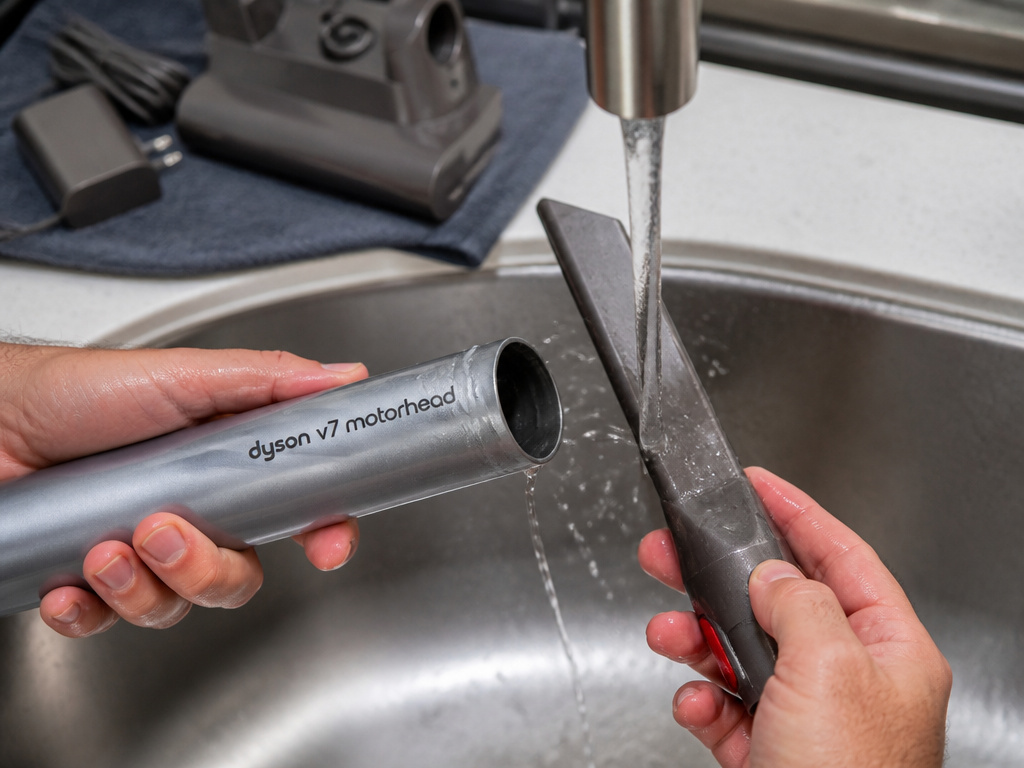
The aluminum wand and plastic vacuum attachments are straightforward. Rinse them with warm water to clear dust, and let them air dry completely. Check the wand for blockages, a common culprit is a compressed piece of paper or a large chunk of debris stuck at the bend.
For the charger and wall dock, just wipe with a dry cloth. Never use any cleaning solutions on the electrical contacts. If your machine won’t charge, remember the ambient temperature limit: the Dyson V7 will refuse to operate or charge if the room is below 5°C (41°F). Move it to a warmer room for an hour before troubleshooting further.
Where this goes sideways: Using air fresheners or detergents inside the bin or on tools. The sweet smell attracts more dust, creating a sticky layer inside the cyclone that regular wiping won’t remove. You’ll need a full disassembly to fix it.
Troubleshooting: After Cleaning, It Still Doesn’t Work
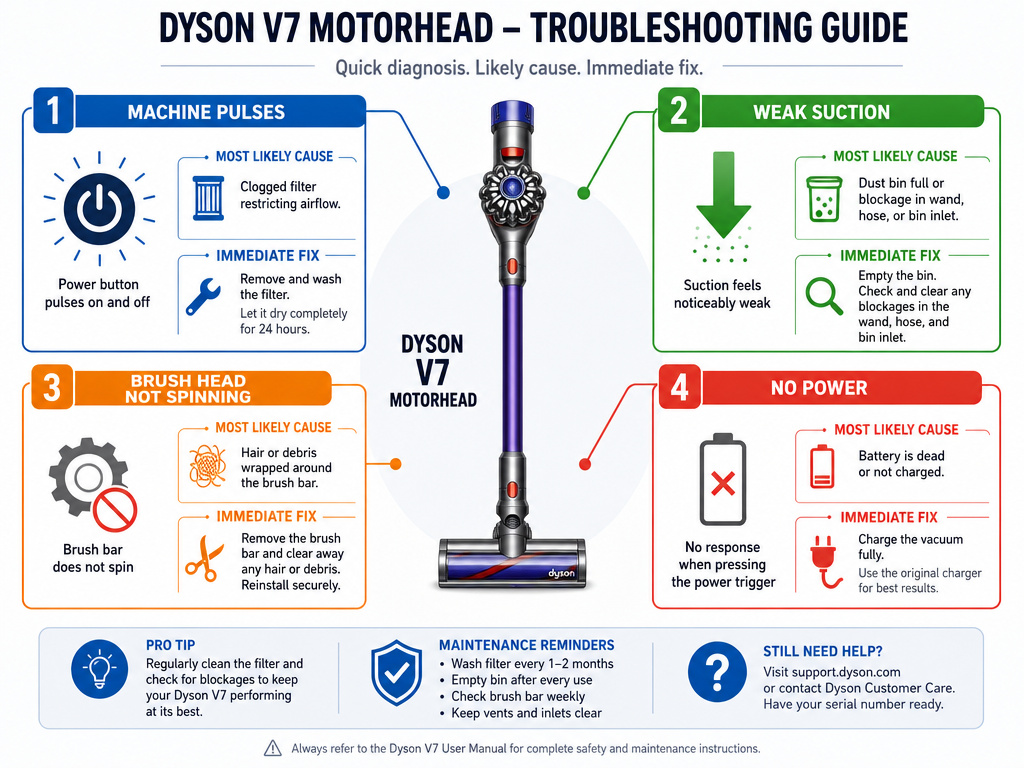
You washed the filter, cleared the bin, and reassembled everything. But the machine pulses, has weak suction, or won’t turn on. Here’s the diagnostic tree.
First, double-check the filter drying issues. Is the post-filter completely, utterly dry? Even slightly damp feels cool to the touch. Leave it out for another 12 hours. A flashing filter light or a machine that won’t work after a filter clean almost always points to residual moisture.
Second, verify all connections. The wand clicks firmly into the main body and the cleaner head. An incomplete connection breaks the electrical circuit for motorized tools.
Third, listen. A high-pitched whine from the main body with no suction means a blockage downstream of the bin, often in the inlet right behind where the wand attaches. Use a long, flexible object (like a straightened coat hanger) to gently probe.
| Symptom | Most Likely Cause | Immediate Fix |
|---|---|---|
| Machine pulses / shuts off | Damp filter or major blockage in wand/head. | Let filter dry another 24 hours. Check for blockages. |
| Weak suction, clean filter | Clogged cyclone or leak in system (misaligned filter, bin not latched). | Clean cyclone vanes. Ensure post-filter dots are aligned and bin is clicked into place. |
| Brush head not spinning | Hair/thread wound tightly around brush bar ends. | Unplug, remove soleplate, and cut away all debris. |
| No power / won’t charge | Ambient temperature below 5°C (41°F), faulty charger, or dead battery. | Warm the machine for 1 hour. Try a different outlet. |
If you’ve done all this and problems persist, you’re likely facing a component failure. The 12-month service guarantee covers labor and parts (excluding filters and accessories), so contact Dyson support with your serial number.
Frequently Asked Questions
How often should I clean my Dyson V7 filter?
Clean the main post-filter at least once a month. If you vacuum daily, have pets, or live in a dusty area, you might need to clean it every two weeks. The machine’s performance is your best indicator, when suction drops, check the filter first.
Can I use soap to wash my Dyson filter?
No. Do not use any detergents, soaps, or cleaning chemicals on the filter or any part of the vacuum. They leave residues that clog the fine filter mesh and can damage the anti-microbial coating. Cold water only.
Why does my Dyson have a burning smell after cleaning?
Burning smell almost always means the motor is overheating because it’s struggling against a blockage or a damp filter. Immediately turn off the machine and let it cool. Check for a clog in the cleaner head, wand, or inlet. Ensure your filter is completely dry.
Is it okay to store the vacuum with the filter wet?
Absolutely not. Storing the vacuum with a damp filter promotes mold and mildew growth inside the filter and the machine’s motor housing. It will cause a persistent musty smell and can permanently damage the motor.
What should I do if the brush bar on my Motorbar head stops spinning?
Unplug the vacuum. Turn the cleaner head over and inspect the brush bar ends for tightly wound hair, string, or carpet fibers. Use scissors or the provided tool to cut and remove all debris. If it’s clear and still won’t spin, the bearings may be seized from water damage or wear.
The Bottom Line
Keeping a Dyson V7 Motorhead running strong isn’t about heavy maintenance. It’s about three habits: washing the filter monthly with a strict 24-hour dry, emptying the bin and wiping the cyclone before it gets packed, and clearing hair from the brush heads before it binds. Skip the detergents, respect the temperature limit, and listen when the machine pulses, it’s telling you where the blockage is. Do that, and the vacuum will handle the rest.