
The Ultimate Vacuum Cleaner vs Mop 3-Bucket Method Showdown
This post contains affiliate links. As an Amazon Associate, we earn from qualifying purchases.
A vacuum cleaner picks up dry, loose debris; a mop applies liquid to dissolve and lift stuck-on grime. You cannot substitute one for the other without smearing dirt or leaving a grit-filled slurry. The real decision uses a three-bucket method: separate tasks for large debris, fine dust, and wet stains, then match the tool to the particle size and surface moisture.
The physics of particle size decides which tool fails first. A vacuum’s airflow needs a dry path from floor to bin; introduce water and you clog the filter, stall the motor, and breed mold in the dust cup within days. A mop relies on a wet pad to grab grime; use it on dry sand and you’ll grind the grit into your floor finish, creating micro-scratches that dull the surface permanently. This is about matching the mechanism to the mess, not about cleaning harder.
What follows: a breakdown of the three-bucket method, the hard specs where vacuums and mops actually overlap (hint: it’s the new combo machines), and the documented durability failures that manufacturer manuals don’t highlight. By the end, you’ll stop asking “vacuum or mop?” and start asking “what’s stuck, how big is it, and is it wet?”
Key Takeaways
- Particle size is law. Vacuums move air to capture particles larger than about 10 microns (fine dust). Mops use fluid dynamics to suspend particles smaller than that (dissolved grime). Cross them and you fail.
- Water is the circuit breaker. Introducing significant moisture into a standard vacuum’s airflow path risks immediate motor clog and guaranteed mold growth in the dustbin. Only wet/dry shop vacs or dedicated vacuum mop combos are designed for it.
- The Philips OneUp 5000‘s mop pad ripped in one wash cycle in a professional review, contradicting the “machine-washable” claim. This is the non-commodity reality: integrated fabric-foam pads on electric mops are a durability gamble.
- For hard floors only, a dedicated electric mop like the Kärcher FCV 3 is faster. Its 550 RPM roller scrubs mechanically, uses 93% less water than a traditional mop, and dries floors in two minutes. It still requires vacuuming first.
- Your default pick for a whole-home system is a quality canister vacuum plus a separate spin mop. Combos like the Kärcher FCV 4 are compelling but force a single-battery compromise. Separation gives you dedicated power for each job.
The 3-Bucket Method: Why You Can’t Just Pick One
Forget “vacuum vs mop.” That’s the wrong question. Your floor has three distinct types of dirt, and each requires a different physical removal method. Treating them as one job is how you end up with a damp, gritty paste that ruins both your floor and your tools.
The part nobody mentions: A standard vacuum’s HEPA filter is rated for dry particulate. Introduce the moisture from a “damp mop” pass, and that fine dust turns to mud on the filter media, collapsing airflow and forcing a $30 filter replacement within a month. The motor overheats trying to pull air through the clog.
Bucket 1: Large Debris (Crumbs, Pet Hair, Dust Bunnies)
This is pure vacuum territory. The particles are large enough (typically >500 microns) to be carried by airflow into the dustbin. A mop will just push them around. * Tool: Any vacuum with decent suction. A Bosch Unlimited 8 Gen2 cordless stick works because its AllFloor HighPower Brush agitates and lifts. * Consequence of using a mop: You’ll wad pet hair into damp, impossible-to-remove clumps. Crumbs dissolve into a sticky paste.
Bucket 2: Fine Dust and Allergens (Pollen, Skin Cells, Dirt Tracked In)
This is where filtration matters. These particles (1-100 microns) are small enough to become airborne and bypass a cheap vacuum’s bag, settling back onto your floor. A mop just wets them, turning dust into a thin layer of mud. * Tool: A vacuum with a sealed HEPA system, like the Philips FC9747/09 with its Allergy H13 filter. This captures >99.9% of fine dust per the IEC62885-2 standard, trapping it inside the unit. * Consequence of using a mop: You suspend the allergens in water, then spread that contaminated slurry across the entire floor. It dries as a film.
Bucket 3: Wet, Sticky, or Dissolved Grime (Spills, Dried Mud, Greasy Spots)
This is mop territory, but only after Buckets 1 and 2 are empty. The goal is to dissolve the bond between the grime and the floor using water or cleaner, then lift it away with a clean pad. * Tool: A traditional string mop with a wringer bucket, or an electric mop with a clean/dirty water tank system. * Consequence of using a vacuum: You will clog the filter instantly. At best, the machine shuts down. At worst, moisture reaches the motor and causes a permanent short.
| Dirt Type | Particle Size | Correct Tool | Wrong Tool & Consequence |
|---|---|---|---|
| Large Debris | >500 microns | Vacuum with brush roll | Mop: Creates damp clumps, spreads debris. |
| Fine Dust | 1-100 microns | HEPA-filtered vacuum | Mop: Makes dusty slurry, redeposits film. |
| Wet Grime | N/A (dissolved) | Mop with clean water | Vacuum: Clogs filter, risks motor failure. |
The sequence is non-negotiable: vacuum first (Buckets 1 & 2), mop second (Bucket 3). Doing it backwards is the single most common cleaning mistake. You’re just making mud.
Where the Lines Blur: Vacuum Mop Combos Explained
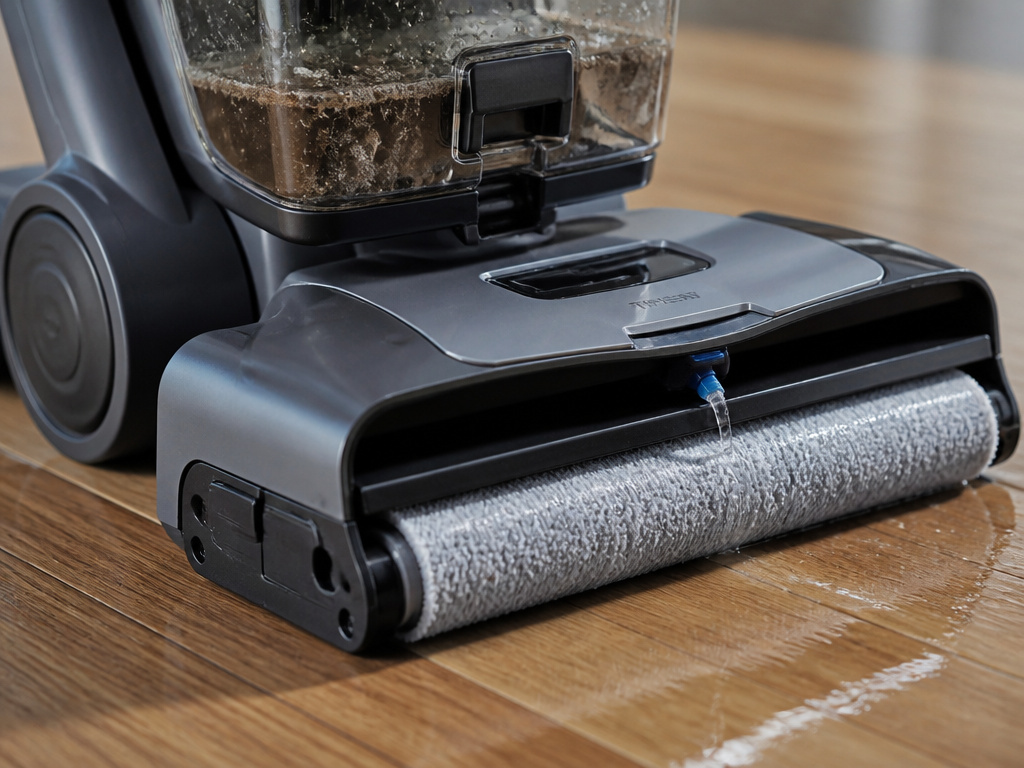
The market heard your frustration and built machines that try to do both. These vacuum and mop combos, like the Kärcher FCV 4 or various **[robot vacuum mop](https://vacuufix.The models at com/best-robot-vacuum-mop-combos-for-pet-hair/ represent a clever engineering compromise with very specific trade-offs.
A vacuum mop combo uses a partitioned system. A dry-air path with a filter handles suction for dust and debris. A separate, sealed wet system pumps clean water to a roller or pad, then vacuums the dirty water into an isolated tank. The two streams never meet inside the machine.
This is fundamentally different from running a wet pad over a floor you just vacuumed. The combo does it in one pass, which saves time. But the compromise is in specialization. The vacuum side is often less powerful than a dedicated unit, and the mop side may lack the scrubbing power of a standalone electric mop.
Combo vs. Dedicated: The Real Choice
- Choose a combo (like a Tineco vacuum mop or Roborock vacuum and mop) if: You have mostly hard floors, prioritize convenience over deep cleaning, and have a small to medium-sized space. The Samsung Jet Bot VR7MD96514G robot is a top performer here, excelling at suction and mopping stains in lab tests.
- Stick with dedicated tools if: You have carpets, require medical-grade allergen removal (HEPA), deal with large wet spills, or simply don’t want a single point of failure. A canister vacuum and a separate spin mop will out-clean and outlast any combo.
The battery is the other hard limit. A robot vacuum mop combo might have a 150-minute runtime for vacuuming but only 60 minutes for mopping, as the water pump and roller motor draw significant extra power. Check the spec sheet for “mopping runtime,” not just overall battery life.
Electric Mop Reality Check: Convenience vs. Durability
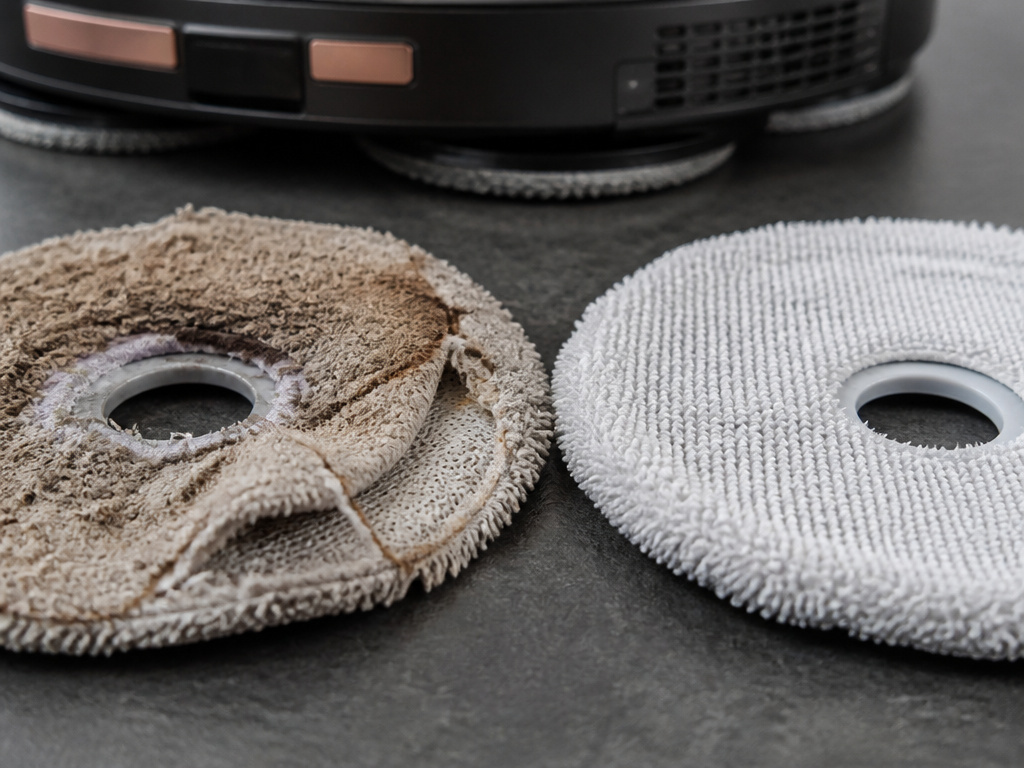
The modern electric mop, epitomized by the Philips OneUp 5000 Series, sells a dream: no bucket, clean and dirty water tanks, and machine-washable pads. The convenience is real. The durability claims, according to professional testing, are not.
A TechRadar reviewer found the OneUp’s integrated mop pad “ripped apart after a single cycle” in a 40-degree eco wash. The fabric is fused to the foam and plastic backing, making thorough cleaning difficult and replacement the only option when it clogs with grime. Philips officially recommends pad replacement every six months, but the reviewer noted you’d “need to be very gentle with them to make them last that long.”
You won’t find in the marketing copy. The convenience of an all-in-one pad is directly at odds with hygiene and longevity. Once the microfiber pores are packed with grease and soil, the mop just smears instead of cleans.
So Are Electric Mops Worth It?
For their designed job, finished hard floors after vacuuming, yes. A model like the Kärcher FCV 3 is brutally effective. Its roller spins at 550 RPM, providing mechanical scrubbing. It uses precision moisture control that applies 93% less water than a traditional mop, leading to a two-minute dry time.
Their limits are strict:
- They are not vacuums. You must dry-vacuum first. They cannot handle solids like cereal or clumps of pet hair.
- Tank capacity dictates your workflow. The Philips OneUp has a 281ml clean tank. That’s good for about 50 square meters before a refill. For a large home, you’ll make multiple trips.
- They are for hard floors only. Do not use them on carpets, period.
Where this goes sideways: Using an electric mop on a floor with any grit or sand. The abrasive particles get trapped against the spinning roller or pad, acting like sandpaper on your floor’s finish. The result is a network of fine scratches that permanently dull the surface. Vacuum thoroughly first. Every time.
If you want the electric scrub without the pad drama, look at roller-based models like the Kärcher FCV series or a BISSELL SpinWave. Their rollers are designed to be rinsed clean under a tap, avoiding the fabric degradation issue.
Vacuum Cleaner Capabilities: Beyond Just Suction
When evaluating a vacuum for a “vs mop” debate, you’re really judging its fitness for hard floors and its ability to complete Buckets 1 and 2 of the cleaning sequence. Suction power is just one part of the equation.
Airflow and Filtration are the critical duo. Airflow (measured in liters per second) is the volume of air moving dirt from the floor to the bin. The Philips FC9747/09 moves 32.5 l/s. Filtration is what keeps that dirt in the bin. A true HEPA 12 filter (EN 1822:1998), like on the Kärcher VC 6, ensures the exhaust air is cleaner than the room air.
The Philips Performer Silent Bagged vacuum operates at 66 dB, certified by Quiet Mark. That’s library-quiet. For context, most vacuums run between 75-85 dB. This matters if you clean early, late, or with sleeping kids, and it highlights that vacuum technology isn’t just about raw power anymore.
For hard floors, the brush roll or nozzle design matters more than maximum suction. A motorized brush roll can fling debris away from the suction inlet. A good hard floor nozzle, like the TriActive+ LED nozzle on Philips models, uses a combination of channels and seals to direct airflow and capture debris efficiently without scattering it.
The Cordless Question
Cordless vacuums like the Bosch Unlimited 8 Gen2 have closed the performance gap. With two batteries, it can run for 65 minutes on Eco mode. The trade-off is that max suction (Turbo mode) drains the battery in 10 minutes. For the vacuum-then-mop sequence, a cordless model is perfect for the quick dry pickup run. You wouldn’t use it to deep clean a whole-house carpet, but that’s not the task we’re comparing to mopping anyway.
Head-to-Head: Scenario-Based Recommendations
Should you buy a vacuum, a mop, or a combo? It depends on your floors, your messes, and your tolerance for tool swaps. This table cuts through the hype.
| Your Situation | Best Toolset | Product Example | Why It Wins |
|---|---|---|---|
| All hard floors, small apartment | Cordless Stick Vac + Electric Mop | Bosch Unlimited 8 + Kärcher FCV 3 | Lightweight, fast drying (2 min), no buckets. Perfect for sequential cleaning. |
| Mix of carpets & hard floors, large home | Canister Vacuum + Traditional Spin Mop | Miele C3 Cat & Dog + O-Cedar EasyWring | Maximum power and filtration for carpets, efficient wet cleaning for hard floors. No battery limits. |
| Hard floors only, prioritize hands-off convenience | Robot Vacuum Mop Combo | Roborock vacuum and mop (Q Revo Series) | Fully automated daily maintenance. Vacuums and mops in a single programmed cycle. |
| Frequent wet spills, workshop, garage | Wet dry vacuum mop combo (shop vac style) | Vacmaster Beast Series | Can handle liquids, solids, and debris. The only tool that truly merges the functions without fear of damage. |
The steam mop vacuum combo occupies a niche. The steam sanitizes and can loosen grime, but it still requires vacuuming first for dry debris. It’s best for sanitizing bathrooms or kitchens after a standard clean.
The verdict on dedicated combos? A vacuum mop combo like the Kärcher FCV 4 is a fantastic hard-floor-only machine. It vacuums, mops, and dries in one pass. But if you have any carpet, its value plummets. For most homes with mixed flooring, the old-school two-tool approach is still more powerful, more reliable, and cheaper to maintain.
Frequently Asked Questions
Can I use my vacuum cleaner to clean up a liquid spill?
No. Unless it is explicitly marketed as a wet dry vacuum mop or shop vacuum, do not vacuum liquids. Water will ruin the filter, potentially short the motor, and cause mold and mildew growth inside the dustbin. Use towels or a dedicated wet vacuum.
Is a steam mop better than a regular mop?
For sanitization, yes. The high-temperature steam (typically above 130°C) kills most bacteria and dust mites. For removing built-up, greasy grime, a regular mop with a cleaning solution is often more effective. A steam mop vacuum combo adds dry pickup first, which is a major advantage.
Do I need to vacuum before using an electric mop?
Absolutely. This is the most critical step. An electric mop is designed for wet cleaning, not for picking up crumbs, dust, or hair. Running it over debris will grind the dirt into your floor and clog the mop’s pad or roller.
What’s the difference between a vacuum mop combo and a robot vacuum mop?
Vacuum mop combo (like the Tineco vacuum mop) is a manual stick appliance you push. A robot vacuum mop (like a Roomba vacuum and mop**) is autonomous. The manual combo typically has more suction and scrubbing power. The robot provides daily, hands-off maintenance but may lack the deep-cleaning strength for tough messes.
How often should I replace my vacuum’s HEPA filter?
Check your manual. For bagless vacuums under heavy use, it’s often every 3-6 months. A clogged filter destroys suction and airflow. If you can’t see light through the filter media when you hold it up, it’s time for a change. This is a primary reason Consumer Reports vacuum cleaner ratings include long-term performance tests.
Before You Go
Stop thinking of this as a choice between two tools. It’s a sequence driven by physics. Dry debris requires airflow. Sticky grime requires fluid. The vacuum handles the first; the mop handles the second.
The modern compromise, the vacuum and mop combo, works well if your needs fit its narrow design: hard floors, small-to-medium spaces, and a tolerance for battery limits. For everyone else, the classic duo of a quality canister vacuum and a separate spin mop is cheaper, more powerful, and impossible to break by using it for the wrong task.
Your floor is holding three different kinds of dirt. Now you have the buckets to sort them.