
Vacuuming Bean Bag Beans: The Static & Jam Risk Explained
This post contains affiliate links. As an Amazon Associate, we earn from qualifying purchases.
You can vacuum bean bag beans, but you must defeat static electricity first. Expanded polystyrene (EPS) beads cling to everything with a powerful static charge, which will clog your hose and can trigger the vacuum’s motor protection system within 30 minutes. The safe method uses a barrier, a nylon stocking or a removed vacuum bag, to collect the beans before they reach the machine’s internals.
The static charge is a mechanical problem, not just an annoyance. The beads stick to the plastic hose and nozzle, building a blockage that chokes airflow.Your vacuum works harder, the motor heats up, and on models like the Oreck COMPACT, a safety switch trips to prevent burnout.
What follows is the breakdown of why static wins, the two proven collection methods, and the exact warnings from vacuum manufacturers that most guides skip. By the end, you’ll know whether to reach for the vacuum or a dustpan.
Key Takeaways
- Static is the enemy. EPS beads generate a strong charge, causing clogs and potential motor damage, not just mess.
- Never vacuum beans directly into the bag. A standard bag fills instantly, and fine dust can seal the filter, triggering a motor shut-off.
- Use a barrier method. Stretch a nylon stocking over the nozzle or remove the vacuum’s bag entirely and vacuum beans directly into the empty canister.
- Check your vacuum’s manual. Many, like the Bosch BSG8, explicitly warn against vacuuming fine particulate like plaster dust, bean bag dust is similar.
- Humidity helps. Running a humidifier or lightly misting the air reduces static, making the beans less clingy.
Why Vacuuming Bean Bag Filler Is a Unique Problem
This isn’t like vacuuming cereal or pet hair. The material and its physical behavior create a perfect storm for vacuum failure. Understanding the “why” tells you which shortcuts will break your machine.
The filler in most bean bags is expanded polystyrene (EPS), tiny, lightweight plastic beads. They’re designed to be slippery and mobile, which is great for comfort and terrible for cleanup. Two inherent properties turn a simple spill into a complex job: an immense static charge and an overwhelming volume.
The Static Problem That Jams Motors (And How to Beat It)
EPS beads have a considerable static charge, causing them to attract to the vacuum cleaner’s nozzle, hose, and machine. This static can also cause the beans to attract to other home accessories and electrical equipment.
That static charge is the core mechanical issue. As the beads rush through the plastic vacuum hose, they generate friction. This builds a static charge that makes them stick to the hose’s interior walls like magnets.
The blockage starts small. Airflow drops. The vacuum’s motor compensates by drawing more power, which generates heat. For vacuums with a motor protection filter system, a common feature in brands like Oreck, this is the failure point. The system detects overheating and shuts the motor down. According to the Oreck COMPACT manual, if fine materials like plaster dust are picked up, “the bag surface may seal and cause the motor to shut off to avoid over-heating.” The motor needs about 30 minutes unplugged to cool and reset.
You don’t just get a clog. You get a dead vacuum for half an hour.
The fix is to break the static chain before it starts. Increasing room humidity is the simplest pre-game move. Run a humidifier, open a bathroom door after a shower, or lightly mist the air with water. Damp air dissipates static electricity, so the beads lose their grip.
Volume vs. Vacuum: The Capacity Mismatch
The second problem is sheer quantity. A single bean bag can hold thousands of cubic inches of beads. A standard vacuum paper bag or even a large-capacity HEPA media bag is designed for flattened, compressed dust and debris.
| Container | Typical Capacity | Bean Bag Spill Reality |
|---|---|---|
| Standard Vacuum Bag | 1–2 Gallons | Fills within seconds. Creates immediate suction loss. |
| Vacuum Canister (bagless) | 1–3 Gallons | May handle a small spill, but static makes emptying messy. |
| Large Storage Tub | 20+ Gallons | The actual volume you’re likely dealing with. |
Common mistake: Trying to vacuum a large spill directly into the vacuum’s bag. The bag fills and seals against the filter in under a minute, choking the motor. You’ll hear the vacuum’s pitch change from a steady hum to a strained whine.
The takeaway is that your vacuum is not a bulk transfer tool. Its job is to move air, with debris as a secondary passenger. You need a method that separates the collection job from the vacuum’s limited storage.
Step-by-Step: The Safe Vacuum Method
This is a choice between two proven barrier methods, each with a specific use case. Both ensure the beans never enter your vacuum’s delicate internal airflow path.
Before you start: Unplug your vacuum. You’ll be handling the nozzle and possibly the bag compartment. Static shocks are one thing; an accidental start-up is another. Clear a large, open floor area for the spill and have a large storage tub or garbage bag ready.
Method 1: The Stocking Barrier (For Upright and Canister Vacs)
This is the most accessible method. It uses a physical filter you already own.
- Get a nylon stocking or knee-high. A clean, sheer nylon is ideal. The weave is tight enough to trap beads but loose enough to allow strong suction.
- Stretch it over the vacuum nozzle. Pull the stocking completely over the nozzle end and stretch it back along the hose. Secure it with a strong rubber band or hair tie. You want a taut, drum-like surface.
- Test suction on a small patch. Turn the vacuum on low power and hover over a few beads. They should snap onto the stocking and stay there. If suction feels weak, the stocking may be too thick or layered.
- Vacuum the spill. Work systematically. The beans will collect on the outside of the stocking. Periodically stop, turn the vacuum off, and pull the stocking off to dump the collected beans into your storage tub.
- Re-seat the stocking and continue. This method is slow but safe. It completely prevents beans from entering the hose.
Where this goes sideways: Using a thick fabric sock or cheesecloth. The material restricts airflow too much, causing the vacuum to overheat just as if it were clogged. Stick to sheer nylon.
Method 2: The Direct-Canister “Henry” Method (For Bagged Canister Vacs)
This method comes from a user who mentioned using a “Henry” vacuum. It’s brilliant for larger spills because it uses the vacuum’s own large canister as the collection bin.
| Step | Action | Why It Works |
|---|---|---|
| 1 | Unplug vacuum & open bag compartment. | Ensures safety and access. |
| 2 | Remove the vacuum bag entirely. Take out the paper or fabric bag. Leave the motor protection filter in place. | The beans now have a clear path into the empty canister. |
| 3 | Close the compartment. Run the vacuum hose directly into the empty canister. | The vacuum motor pulls beans through the hose and dumps them directly into the large, empty chamber. |
| 4 | Vacuum the spill. | You can collect a huge volume without any bag to fill or clog. |
| 5 | Empty the canister into your storage tub. | Dump the beans, then re-install a fresh vacuum bag before using the vacuum for anything else. |
This method is efficient, but it’s only for vacuums where you can safely operate without a bag for a short period. Always consult your manual first. The Bosch BSG8 manual, for instance, states: “Never use the vacuum cleaner without a dust bag fitted. => This can damage the appliance.”
What Your Vacuum Manual Says (That You Should Listen To)
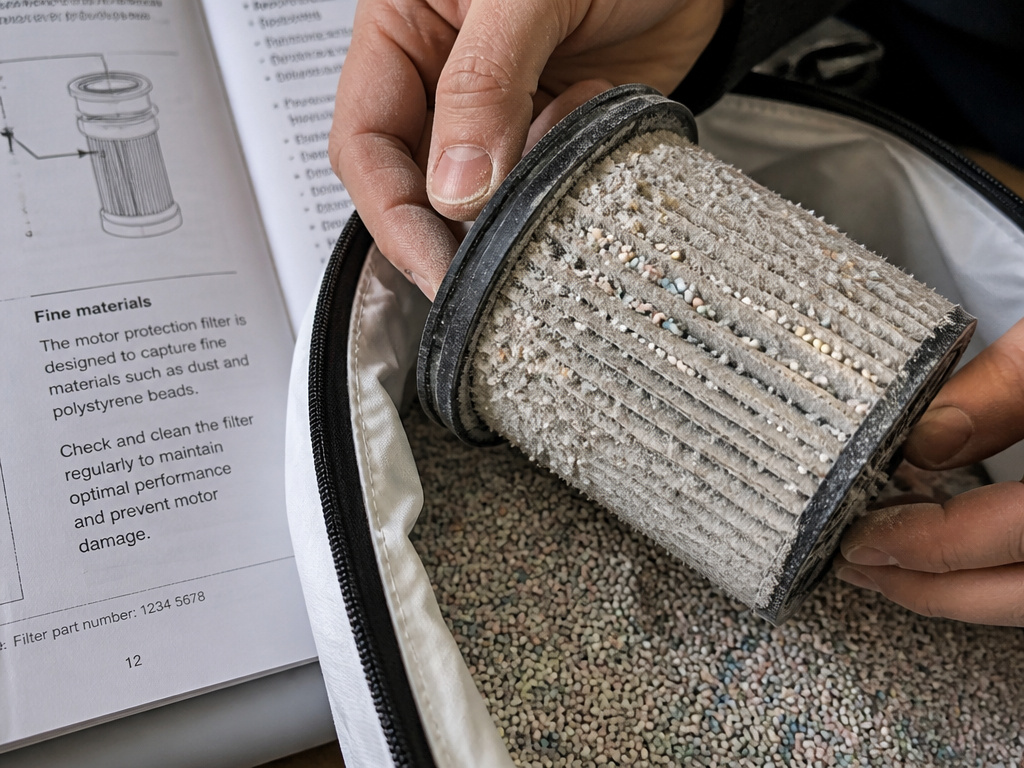
Manufacturer warnings are written after testing what breaks the machine, serving as more than just legal cover. When it comes to fine, granular materials, the manuals are unusually specific.
The Oreck COMPACT manual gives the clearest warning: “If fine materials such as soot, cement, plaster dust, copy machine powder, etc. Are picked up, the bag surface may seal and cause the motor to shut off.” Bean bag dust and micro-beads behave exactly like plaster dust. They’re fine, they’re abrasive, and they will coat the filter surface.
The Bosch BSG8 manual restricts use to “domestic use only” and mandates using only original dust bags and filters. It also warns against vacuuming “toner dust from printers and copiers.” Again, the parallel is fine particulate.
The implication is direct. If your vacuum model warns against these materials, vacuuming bean bag filler is a violation of its intended use. Doing it once with a barrier method might be okay. Doing it repeatedly, or doing it directly, is asking for a repair bill.
The part nobody mentions: After vacuuming fine dust, the motor protection filter needs immediate attention. The Oreck manual says to clean or replace it. The Bosch manual says to clean the filter by tapping it or washing it out, then letting it dry for at least 24 hours. Skipping this leaves a dust-caked filter that strains the motor on its next use.
When NOT to Vacuum: Safer Alternatives
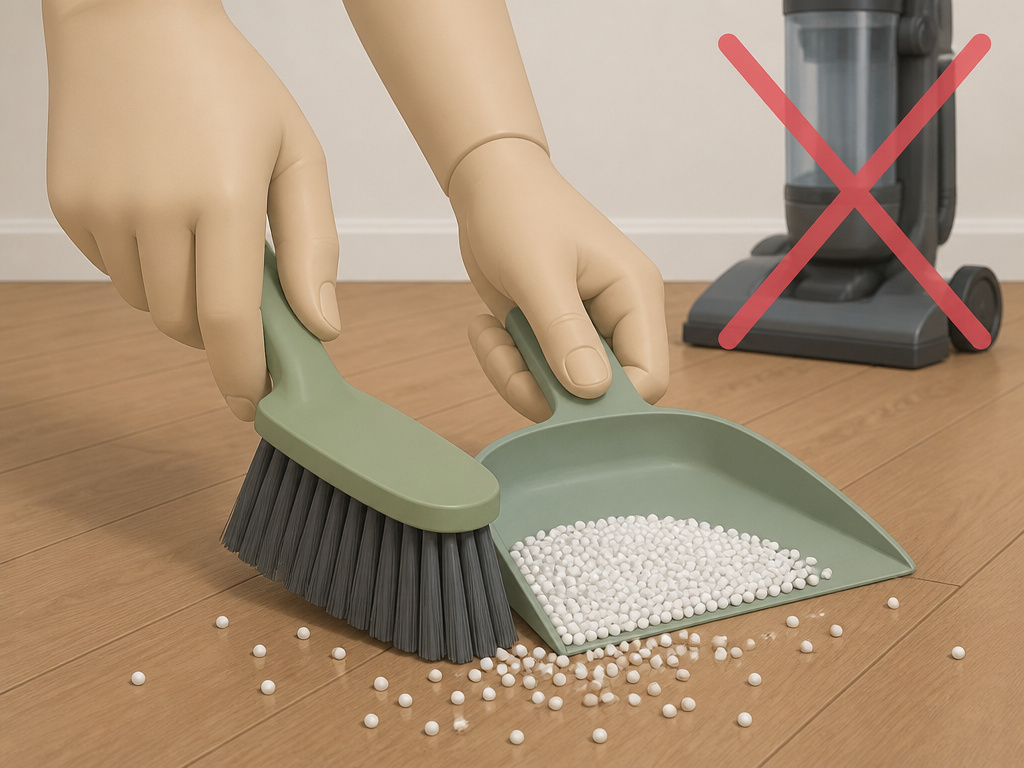
Sometimes the smartest tool is the one you don’t use. Vacuuming is the wrong call in three specific scenarios.
If the spill is mixed with liquids. Even a slightly damp bean is a problem. Moisture turns the dust into a paste that will cement itself inside the hose or onto the motor protection filter. The Miele built-in vacuum drawer manual warns that moisture in the system can impair performance and trigger a required drying cycle. Use a dustpan and brush.
If your vacuum is old or has weak suction. A struggling motor is already near its thermal limit. Adding the extra strain of pulling beads through a hose or stocking can push it over the edge. You’ll smell hot plastic or hear a buzzing sound before it fails.
If the bean bag contains non-EPS filler. Some older or specialty bean bags use shredded foam, natural fibers, or even dried beans. These materials can break down further inside your vacuum, creating a different kind of clog. When in doubt, sweep.
For small, dry spills of standard EPS beads, a handheld vacuum like a Dustbuster can be a better choice than your main upright. The shorter airflow path and smaller motor are less vulnerable to static clogging, and you can usually empty the cup directly into your tub.
Frequently Asked Questions
Can vacuuming bean bag beans break my vacuum?
Yes, in two specific ways. First, the static charge can cause beads to cling and create a solid clog in the hose or nozzle, choking airflow. Second, the fine polystyrene dust can coat the motor protection filter, causing the motor to overheat. Many vacuums have a thermal safety switch that will shut the motor off to prevent burnout.
What’s the best vacuum for bean bag beans?
Canister vacuum is generally better than an upright for this task. The hose provides more flexibility, and models like the Numatic Henry** are famously robust with large-capacity canisters. The key feature isn’t brand, but the ability to use a barrier method (stocking) or the direct-canister method effectively. Avoid bagless models with complex cyclonic pathways, as beans will get stuck.
I already vacuumed beans directly. What should I do now?
Unplug the vacuum immediately. Check and empty the bag or canister, it’s likely full. Then, inspect the hose for blockages. Detach it and look through it toward a light. Finally, locate and clean the motor protection filter. Refer to your manual; most require tapping out the dust or rinsing the filter and letting it dry completely for 24 hours before re-use.
Are bean bag beans toxic if vacuumed?
The expanded polystyrene (EPS) beads themselves are generally considered non-toxic. The primary risk is from the fine dust created as they rub together, which can be an irritant if inhaled. This is another reason to use a barrier method, it contains the dust. Always ensure the room is well-ventilated during cleanup.
How do I clean the static off the beans already clinging to everything?
Increase humidity. Run a humidifier in the room for an hour. The moist air will neutralize the static charge on the beads, your floors, and your furniture. They’ll then release and can be easily swept or vacuumed up using one of the safe methods.
The Bottom Line
You can vacuum bean bag beans, but you’re not just cleaning up a spill, you’re managing a physics problem. Static electricity and volume are your real opponents, not the beans themselves. The winning move is always to interpose a barrier: a nylon stocking over the nozzle or the vacuum’s own empty canister.
Listen to what your vacuum’s manual says about fine dust. Those warnings about plaster and toner powder are there because the same failure mode applies. If your machine has a motor protection filter, clean it the moment you’re done. That filter is your motor’s last line of defense, and coating it in polystyrene dust is a sure way to shorten your vacuum’s life.
For a one-time, small spill, the stocking method is safe and effective. For a major disaster, the direct-canister method is faster but requires knowing your machine. When in doubt, a dustpan and a large storage tub are always zero-risk. The goal is to get the beans off the floor, not to create a repair project for your vacuum.