
How to Fix a Bissell ProHeat That Won’t Spray Water
This post contains affiliate links. As an Amazon Associate, we earn from qualifying purchases.
A Bissell ProHeat won’t spray water when something blocks the liquid path, the pump loses prime, or a critical seal fails. The fix is always a systematic clear-out of clogs from the formula tank to the foot, followed by checking the pump and tank fit. Ignoring the sequence wastes an hour.
The blockage is almost never in one obvious spot. It’s a chain: debris in the tank outlet, hardened formula in the internal hose, a jammed check valve, or a pinched O-ring where the tank meets the base. You have to follow the water’s path.
What follows is the sequence that works on a ProHeat 2X, a Revolution Pet, or an Essential model. We’ll start with the universal five-step check every technician runs, then break into model-specific quirks like the Lift-Off Pod and SmartMix system. By the end, you’ll know whether you’re facing a ten-minute clean-out or a pump replacement.
Key Takeaways
- Start with the simplest cause: an empty or incorrectly seated clean water tank. The tank must click into place with no wobble.
- The spray nozzle at the cleaning foot clogs first. Use a straightened paperclip to clear it before disassembling anything else.
- For ProHeat 2X Revolution models, know your mode: Deep Clean uses 1/4-1/3 gallon per minute; Express Clean uses 2/3-1 cup per minute. A weak spray might be normal for Express.
- If your model has a Lift-Off Pod, you must disconnect it from the base to get spray through the hose. No spray to the hose while it’s docked is by design.
- A warped or cracked clean water tank will never seal. Set it on a flat counter; if it rocks, replace the tank.
The Universal 5-Step Diagnostic Sequence
Skip a step and you’ll chase the wrong problem. This order isolates the most common failures first.
Step 1: Verify Tank and Formula.
Fill the clean water tank with hot tap water, not cold. Hot water dissolves residual formula better. Use official Bissell formula or a plain white vinegar solution (one part vinegar to three parts water) for cleaning. Off-brand detergents leave thicker gums that clog faster. Ensure the tank is clicked fully into the base—listen for the seal hiss.
Common mistake: Using cold water with concentrated formula. The mixture gels in the lines before it reaches the pump, creating a clog that feels like a pump failure.
Step 2: Clear the Spray Nozzle.
Tip the machine back and look at the silver spray nozzle just ahead of the brush roll. You’ll see a tiny hole. Power off and unplug the machine. Straighten a paperclip and gently probe the hole. You’ll often pull out a small, hard plug of lint and dried formula. Run water through the tank afterward to flush the debris out.
Step 3: Check the Tank Outlet Screen.
Remove the clean water tank. Look inside the tank’s outlet port (the part that connects to the base). There’s a small plastic screen. Rinse it under hot water. If it’s brown or black with sludge, scrub it gently with an old toothbrush. This screen catches debris that would otherwise jam the pump inlet.
Step 4: Prime the Pump System.
Air locks stop spray more often than broken pumps. With the tank full and seated, hold the machine over a sink or bucket. Press and hold the spray trigger for 30-45 seconds. You might hear a gurgling or sputtering as the pump pushes air through the lines. Keep holding until a steady stream sprays from the foot. No stream after a full minute points to a clog downstream or pump issues.
Step 5: Inspect the Tank Seal and Base.
Examine the black rubber gasket on the bottom of the tank and the corresponding receiver on the machine base. Wipe both clean. A cracked or flattened gasket won’t seal, so the pump can’t pull water. Also, feel the bottom edges of the plastic tank. It must be perfectly flat.
If the tank rocks on a level counter, it’s warped. A warped tank cannot seal, no matter how hard you press it down. This is a common failure on older ProHeat 2X Revolution models after a drop.
| Step | What to Check | Quick Fix | If Skipped |
|---|---|---|---|
| 1. Tank & Formula | Water temperature, tank seating | Use hot water, ensure click | Pump draws air, not liquid |
| 2. Spray Nozzle | Tiny hole at cleaning foot | Clear with paperclip | All other checks are pointless |
| 3. Outlet Screen | Screen inside tank port | Rinse and scrub | Debris enters pump, causes wear |
| 4. Pump Prime | Air in lines | Hold trigger 30+ seconds | Misdiagnosis as dead pump |
| 5. Tank & Seal | Gasket condition, tank flatness | Clean gasket, replace warped tank | Intermittent or no spray |
Model-Specific Troubleshooting: ProHeat 2X, Revolution, and Lift-Off
Not all ProHeats are the same. Your model number changes where you look.
ProHeat 2X Revolution Pet (Models 1548, 1550, 1551, 1857)
These have two cleaning modes that use wildly different amounts of water. Bissell’s official specs state Deep Clean Mode dispenses 1/4 to 1/3 gallon per minute when the trigger is held. Express Clean Mode dispenses only 2/3 to 1 cup per minute.
If your spray seems weak, make sure you’re not in Express Clean mode. The flow difference is dramatic. What feels like a problem in Express is normal operation.
The clean tank on these models is a frequent failure point. The plastic can warp around the handle area from heat and stress. Perform the flat-surface test. Also, the internal check valve where the hose meets the foot can stick. Access it by removing a few screws on the footplate.
ProHeat 2X with Lift-Off Pod (Models 1560, 1565, 24A4, etc.)
This is a critical design note every owner misses. There is no spray to the hose while the Lift-Off Pod is connected to the base. The water path is directed solely to the foot for upright cleaning. If you’re trying to use the handheld pod and get no spray, you must first detach it from the main unit.
Once detached, ensure the pod’s tank is full and clicked into the pod itself. A separate, smaller pump in the pod handles spraying. If it’s still dead, the pod’s nozzle or the hose connecting it to the base is likely clogged.
ProHeat 2X Series and the SmartMix System
For models like the 8920 or 9500 with a SmartMix tank, the process is similar but with an extra chamber. The SmartMix tank has an internal diaphragm that can fail. If you have no spray but the main tank seems fine, try bypassing the SmartMix system by pouring diluted formula directly into the clean water tank section. If spray returns, the SmartMix assembly is clogged or broken.
When the Pump Is the Problem
You’ve cleared every nozzle, checked every seal, and primed for two minutes. Still no spray. Now you consider the pump.
The pump motor is usually located under the clean water tank area. You’ll need to remove the base plate. Listen closely when you press the spray trigger. You should hear a distinct hum or buzz. A click with no hum means the pump isn’t getting power—a switch or wiring issue. A hum with no water means the pump impeller is jammed or the unit has failed.
Replacing a pump is a moderate repair. You must source the exact part number for your model. For a ProHeat 2X, it’s often cheaper and faster to call Bissell for a warranty check or to order a replacement module than to hunt for the bare motor.
Where this goes sideways: Assuming a hum means the pump is good. A pump can hum with a seized impeller, moving nothing. If you hear a hum but get zero water after all other clears, the pump is your culprit.
The One Thing That Trumps All Troubleshooting
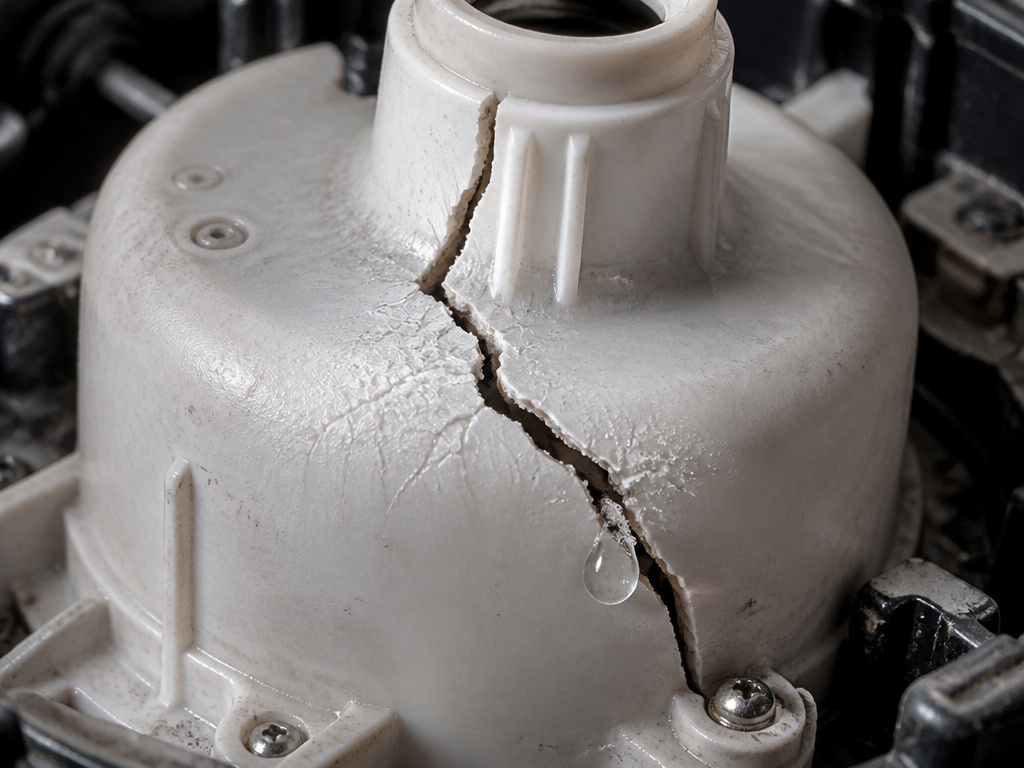
There’s a scenario where all the steps above are irrelevant. If the machine was stored in a garage or shed where temperatures dropped below freezing, water inside the internal lines and pump froze. Expanding ice cracks plastic housings and splits pump volutes.
Bissell manuals explicitly state that freezing voids the warranty and damages internal components. The machine might still run, but it will never spray again because the water path is fractured. The repair cost often exceeds the value of the machine. If you suspect freeze damage, the most economical step is usually replacement.
Frequently Asked Questions
Why does my Bissell ProHeat spray weakly, then stop?
This is a classic symptom of a clog forming in the spray nozzle or inlet screen. As you spray, debris partially blocks the flow until it seals completely. It can also mean the pump is failing and can’t maintain pressure. Do the full 5-step diagnostic, focusing on steps 2 and 3.
Can I run vinegar through my ProHeat to clean it?
Yes. A solution of one part white vinegar to three parts hot water is an excellent descaling and cleaning agent for the internal fluid path. Run a full tank through the machine, spraying it into a bucket. Follow with a tank of clean water to rinse. This clears the mineral buildup that creates clogs.
Is a no-spray issue covered under Bissell’s warranty?
It depends on the cause. Clogs from improper formula use are not covered. Failures due to defective parts (like a pump motor) within the warranty period are. Freezing damage explicitly voids the warranty. Always check your manual and have your model number ready when you call.
How do I know if my clean water tank is warped?
Remove the tank and place it on a known flat surface, like a kitchen counter or glass tabletop. Look for light under the edges or try to rock it. If any corner lifts off the surface or it wobbles, the tank is warped and won’t seal. This is a common ProHeat not picking up water companion issue, as a bad seal also affects suction.
My ProHeat 2X Lift-Off has no spray in the handheld pod. What’s wrong?
Remember, the pod only sprays when detached from the base. If it’s detached and still not working, check that the pod’s own tank is full and sealed. Then, inspect the small spray nozzle on the pod’s tool for a clog. Finally, the hose connecting the pod to the base can kink or clog—detach it and blow through it to check for airflow.
Before You Go
Start with the tank and the tiny nozzle. Ninety percent of “Bissell ProHeat won’t spray water” problems are solved there. If your machine has a special feature like a Lift-Off Pod or SmartMix tank, know its rules—they’re not quirks, they’re design constraints.
When you hear the pump hum but see no water, you’ve eliminated the easy stuff. That’s when you decide if a pump replacement is worth your time versus the cost of a newer model. And if that machine spent a winter in the cold, you likely have your answer. For related issues like a complete ProHeat won’t turn on or other spray failures like those seen in a Turboclean Pro spray issues scenario, the diagnostic mindset is the same: follow the path, check the seals, and listen to the motor.