
Dyson Ball Vacuum Brush Not Spinning: How To Fix Broken Wires
This post contains affiliate links. As an Amazon Associate, we earn from qualifying purchases.
A Dyson Ball vacuum brush not spinning usually means a broken wire inside the ball’s pivot, a jammed brush bar, or a failed motor. Unplug the vacuum, remove the cleaner head, and manually spin the brush roll. If it’s stuck, clear hair and debris. If it spins freely, the problem is electrical: a severed wire in the pivot or a dead motor. The Johnson DF651(2)LG motor in US-model DC24 vacuums is known to fail in about a year.
That broken-wire diagnosis isn’t a guess. It’s the predictable outcome of the vacuum’s own design. Every time you tilt the handle to clean under a couch, the internal wiring harness bends at a sharp radius inside the ball. After hundreds of hours, the copper strands work-harden and snap. The outer insulation often looks perfect, hiding what repair techs call the “invisible fracture.” You’ll have full suction but a dead brush bar.
What follows is the sequence that separates a five-minute fix from a two-hour teardown. We’ll cover the quick checks for hair jams, the definitive test for the broken pivot wire, and the specific motor models that fail on schedule. By the end, you’ll know whether you need a pair of scissors, a soldering iron, or a whole new cleaner head.
Key Takeaways
- The most common electrical cause is a broken wire inside the ball’s pivot, a failure called “pivot-point fatigue.” The brush may work intermittently at certain angles before dying completely.
- The Johnson DF651(2)LG motor used in US-model Dyson DC24 vacuums has a documented failure rate around one year, with no direct US replacement available.
- An aftermarket brush roller for the UP19/UP13 cleaner head is often higher quality than the genuine Dyson part, with better bearings and plastic.
- Always test the simplest cause first: a physical jam. Manually spin the brush bar after removing the cleaner head. If it won’t budge, clear the hair wrap.
- Intermittent operation can point to a failing switch inside the ball or a loose wire on the motor power board, not always a full break.
The Quick-Check Sequence Before You Tear It Down
Start here. This five-minute process rules out the simple fixes and tells you which complex path you’re actually on. Never plug the vacuum in while you’re working on it.
First, recline the vacuum and press the red release catch to detach the cleaner head. Flip it over. Try to spin the brush bar with your hand. Does it turn freely, or is it locked up?
If it’s locked, you have a physical jam. This is good news. Use a pair of scissors or a seam ripper to cut away the hair and string wound around the ends of the brush bar. Pull the debris out from under the plastic housing. The goal is to remove everything binding the axle. Don’t just cut the top layer; dig out the matted material pressed against the bearings. A jammed brush bar is a leading cause of a Dyson vacuum brush not spinning, and clearing it often solves the problem on the spot.
If the brush spins freely by hand, the problem is not a jam. It’s a lack of power. Your next stop is the electrical system.
Common mistake: Assuming a freely spinning brush bar means the motor is good. It doesn’t. It just means the path from the motor to the brush is clear. The motor could be dead, or the electricity might never reach it.
Now, check the obvious. Is the brush bar switch on? On most Ball models, a gray button near the power switch controls the brush. Ensure it’s engaged. For models like the DC15, the brush bar defaults to “on” each time you start the vacuum, but a dedicated button turns it off for bare floors. Verify the setting.
Plug the vacuum back in briefly for a sound test. Turn it on and listen closely at the cleaner head. Do you hear a humming sound from the motor, or just the main vacuum motor in the ball? A humming cleaner head motor that doesn’t turn points to a seized bearing or a bound brush bar you missed. Total silence from the cleaner head means no power is arriving. That points squarely at a switch, a broken wire, or a dead motor.
The Pivot-Point Wire That Breaks Inside
When power isn’t reaching the head, the culprit is usually hiding where all the movement happens. This is “pivot-point fatigue,” and it’s the signature electrical failure of the Dyson Ball series.
The wire harness that carries power from the main body to the cleaner head runs through the ball’s pivot yoke. Every tilt, every turn, every push and pull bends those wires. Over time, the copper strands inside stiffen and crack. The insulation usually stays intact, so the break is invisible. The brush bar might work only when the vacuum is perfectly upright, or cut in and out at certain angles, before failing for good.
If your suction is strong but the brush is dead, the mechanical link has likely been compromised by this repetitive motion fatigue. The break is almost always within two inches of the pivot point.
Diagnosing this requires a multimeter. You’re checking for continuity in the wires that run to the cleaner head motor. You’ll need to partially disassemble the ball housing to access the wire loom near the pivot. It’s a precise job—the plastic clips are tight and can snap. But if you find the break, the fix is a soldered joint insulated with heat-shrink tubing. Electrical tape or crimp connectors will fail again under the constant motion.
This specific internal break is why a vacuum can have perfect suction but a dead brush. The main motor circuit is separate from the brush motor circuit. Before you condemn the motor, you must rule out this wire. It’s the most labor-intensive fix on the list, but it costs pennies in parts if you can solder.
When the Motor Itself Is the Culprit
If power is reaching the cleaner head connector but the motor doesn’t hum, the motor itself has likely failed. Not all motors are created equal, and one has a particularly bad reputation.
For owners of the Dyson DC24 (US model), listen up. This model uses a specific motor: the Johnson DF651(2)LG. Community repair logs are filled with reports that this motor lasts about a year. The kicker? No direct replacement is sold in the US. A 220-240V version exists in the UK, but it’s incompatible and can’t be shipped over. The only official fix is a whole new cleaner head assembly, which is a costly pill to swallow.
For other models, like those with the UP19 or UP13 cleaner head, the motor is more accessible. These heads use a “cogged belt” system, where a toothed belt connects the motor to the brush bar. This belt is designed to last the life of the head and acts as a shock absorber. The motor itself is a separate, replaceable unit. A telltale sign of motor failure here is a burning smell or visible sparking/corrosion on the motor terminals, sometimes caused by water ingress.
| Motor / Model | Failure Mode | Repair Reality |
|---|---|---|
| Johnson DF651(2)LG (DC24) | Fails after ~1 year of use. | No US replacement motor available. Requires entire new cleaner head assembly. |
| UP19/UP13 Cleaner Head Motor | Can rust from water, spark, or burn out. | Motor is replaceable. Aftermarket brush rollers for this head are often superior to OEM. |
| Generic Brush Bar Motor | Seizes from heat or bearing failure. | Usually replaceable if you can find the correct part number for your model. |
Before replacing any motor, do one last check. Unplug the vacuum and open the cleaner head. Inspect the cogged belt (if present). Is it intact, or is it broken or stretched? A broken belt will stop the brush even if the motor runs. Also, trace the wires from the motor back to the connector. A loose spade connector can mimic a dead motor. Push every connection snug.
Specific Failures by Model and Component
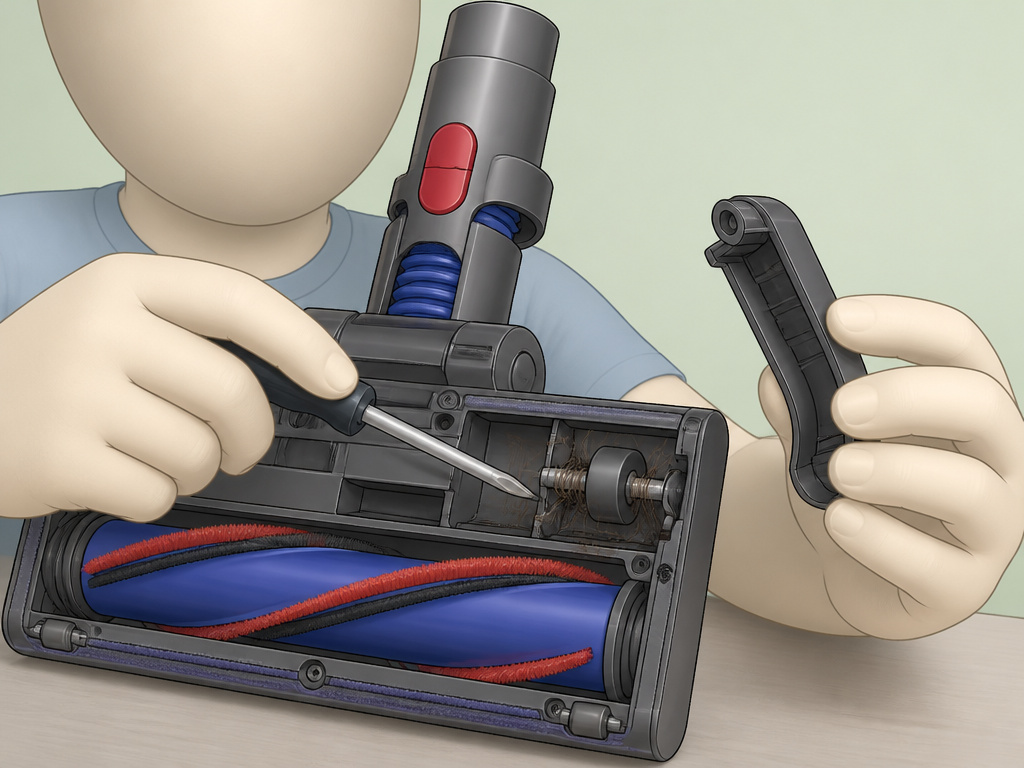
Dyson’s design revisions mean the fix changes based on the plastic under your hands. Here’s where model-specific knowledge saves an afternoon.
The UP19/UP13 Cleaner Head “Hack”: This common head has a known design quirk. An internal piece intentionally restricts airflow to manage suction. Some technicians remove this piece, claiming it “makes the vacuum work a lot better.” If you’re already inside the head for a motor swap, you might consider this modification. The head also has a small wheel for height adjustment that loves to collect hair, causing it to stick and preventing the head from floating properly.
Intermittent Switch Failure (DC24, DC25, DC77): Does the brush bar work sometimes, but not others? The problem might not be a wire. Inside the ball, a small lever switch activates the brush when you tilt the handle. This switch can develop a “dead spot.” One owner found the switch would turn on, then off, then on again as the lever reached its full horizontal position. Cleaning the switch contacts with a small file and applying dielectric grease can restore reliable operation. It’s a simpler fix than a wire repair.
Cold Water Damage Protocol: If you’ve vacuumed up a spill, water can enter the motor housing. The immediate fix is to unplug the vacuum and dry every component thoroughly with a cloth. Let it air-dry for at least 48 hours before testing. Water can cause rust on motor terminals (especially on the UP19 head) or create a short that blows a thermal fuse. Extensive water damage often requires professional service.
The Aftermarket Part That Beats Dyson: For the UP19/UP13 head, the aftermarket brush roller is a rare case where the generic part outperforms the original. Technicians note these third-party rollers use higher-quality plastic, better bearings, and more consistent manufacturing. If your brush bar is worn out, the upgrade path is clear.
Tools and Replacement Parts You’ll Actually Need

You can’t fix this with a butter knife and hope. The right tool prevents broken clips and wrong diagnoses.
- A Multimeter: Non-negotiable for electrical diagnosis. You need it to check for continuity in wires and to see if power is reaching the motor terminals.
- Torx Screwdriver Set (T10, T15): Most Dyson internal screws are Torx. A good set prevents stripping.
- Plastic Spudger or Guitar Pick: For prying apart plastic clips without gouging the housing.
- Soldering Iron & Heat-Shrink Tubing: If you find a broken wire, a soldered joint is the only permanent repair. Heat-shrink provides insulation that won’t unravel.
- Long-Nose Pliers & Scissors: For pulling out hair wraps and trimming debris.
For parts, always search by your full model number (found on the rating plate). Key terms to search: * “Dyson [your model] brush bar motor” * “Dyson [your model] cleaner head belt” * “Dyson [your model] pivot switch”
Where this goes sideways: Using the wrong belt. The UP19/UP13 uses a specific cogged belt. A standard smooth belt will slip and fail immediately. Match the part exactly.
If you’re facing a full motor replacement on a DC24, the parts market is bleak. Your most economical choice might be sourcing a used cleaner head from a parts vacuum. For other models, motor swaps are straightforward. Just remember to disconnect the battery on cordless models first. Following good Dyson vacuum tips for disassembly will keep the process smooth.
Frequently Asked Questions
Why does my Dyson brush bar spin sometimes but not others?
This is the classic symptom of a failing component, not a complete break. The three likely culprits are a broken wire in the pivot that makes contact only at certain angles, a switch inside the ball with a dead spot, or a loose wire connection on the motor’s circuit board. Intermittent problems always point to an electrical connection issue.
I cleared a huge hair jam, but the brush still won’t spin. What now?
You likely have a dual failure. The jam may have overheated and burned out the motor, or it could have stretched and broken the drive belt. After clearing the jam, check the belt if your model has one. Then, listen for a motor hum when powered. No hum means you need to test for power at the motor leads with a multimeter.
Is it worth fixing an old Dyson Ball, or should I just buy a new vacuum?
It depends on the model and the failure. A broken wire is a cheap, if tedious, fix. A replacement motor for a common model like the DC25 or DC33 is affordable and extends the vacuum’s life for years. However, if you have a DC24 with its unfindable Johnson motor, or if multiple systems are failing (loss of suction, strange noises), the repair cost may approach the value of a newer machine. Always price the part first.
Can a clog elsewhere cause the brush bar to stop?
Indirectly, yes. A severe clog in the main hose or cyclone can cause the vacuum to overheat and trigger a thermal cutoff. This might shut down power to the brush motor as well. If your brush bar is dead and suction is weak, solve the Dyson vacuum not sucking issue first. Clear all blockages, wash the filters, and then retest the brush.
What does a grinding noise mean when the brush bar tries to spin?
Grinding noise is a mechanical cry for help. It usually means one of two things: the motor’s internal gears are stripped (motor is toast), or a foreign object like a rock or screw is caught between the spinning brush bar and the housing. Unplug the vacuum immediately. Remove the cleaner head and inspect the brush bar cavity. If you see no debris, the grinding is likely internal motor damage, often accompanied by a Dyson making grinding noise.
How do I prevent this from happening again?
Prevention targets the two main causes: jams and pivot stress. Regularly clean your Dyson upright head by removing the brush bar and cutting away hair before it becomes a solid mat. To reduce pivot fatigue, avoid unnecessarily sharp, jerking motions with the vacuum. Let the ball pivot smoothly. Also, keep the vacuum away from liquids to prevent motor corrosion.
Before You Go
Chase the problem in order: physical jam, then electrical connection, then motor. The hair wrap around the brush bar is the most common stopper, and it’s a five-minute fix. When the brush spins freely but gets no power, your target is the wiring harness inside the ball’s pivot—the “invisible fracture” that plagues these machines.
For DC24 owners, the news is tough. That Johnson motor has a short, documented lifespan and no easy replacement. For everyone else, the repairs are standardized. The UP19 cleaner head is almost modular, designed for service. Whether you need to solder a wire or swap a motor, the answer is in your model number and a methodical test. Don’t let the ball’s complex shape intimidate you. The failures inside are predictable, and the fixes are repeatable.