
Fix a Bissell Little Green Mini That Won’t Spray Water Now
This post contains affiliate links. As an Amazon Associate, we earn from qualifying purchases.
A Bissell Little Green Mini won’t spray water because the pump is dry or air-locked. The fix is a 60-second gravity prime: hold the hose below the clean water tank, squeeze the trigger continuously, and don’t let go. If that fails, a clog lives in the nozzle’s tiny filter or the internal hose from mineral deposits.
That 60-second hold is non-negotiable. The pump needs a full minute of continuous trigger pulls to move water through a dry hose and push any air bubble out. Releasing the trigger resets the prime cycle, which is why people who tap the trigger get nowhere.
What follows is the sequence that works when the manual’s 30-second advice doesn’t. We’ll start with the gravity prime that fixes 90% of cases, then move to the clogs that form in hard water areas, and finish with the one internal part that fails for good. You’ll need a flathead screwdriver, white vinegar, and a sink.
Key Takeaways
- The most common fix is a 60-second gravity prime: hold the hose below the water tank and squeeze the trigger without releasing.
- Hard water causes mineral clogs in the nozzle’s microscopic filter, not the pump. Clear it with a straightened paperclip and a vinegar soak.
- Never use water hotter than 140°F in the clean tank. It warps the plastic and breaks the seal.
- Always empty both tanks and run a clean water flush after each use. Storing the machine wet guarantees a dry-pump air lock next time.
- If water sprays when the hose is low but not when you’re cleaning, the internal check valve is stuck. That’s a factory repair.
The 60-Second Gravity Prime (Before You Disassemble)
Your first move isn’t in the manual. It uses gravity to help the pump move water into a dry hose, and it fixes most new-machine or post-storage failures.
Unplug the machine. Remove the clean water tank and fill it with warm tap water, never exceeding the 140°F maximum printed on the side. Hotter water deforms the tank. Click the tank back into place with firm pressure; a loose seat breaks the vacuum.
Now plug the machine in and turn it on. Place the whole unit on a counter or chair. Hold the cleaning tool and hose so the end is below the level of the clean water tank. This lets gravity assist the pump.
Squeeze the trigger and hold it. Do not pump it. Do not release it. Keep holding for a full 60 seconds. You might hear the motor strain or see a weak sputter after 30 seconds. That’s the air bubble moving. The spray will start as a weak stream and strengthen.
Common mistake: Tapping the trigger. Every release lets air slip back into the line. One continuous 60-second pull moves the water column through the hose without resetting.
If nothing happens after 60 seconds, turn the machine off for 30 seconds, then repeat the cycle. A severely dry pump might need three attempts. This method resolves the air lock that forms when the machine is stored with empty tanks.
Clear the Nozzle Filter. The Hidden Choke Point
When the gravity prime doesn’t work, the clog isn’t in the pump. It’s in the tiny filter inside the nozzle where the spray comes out. Dried cleaning solution and hard water minerals cement themselves here.
Remove the clear plastic nozzle cover. On most Little Green Mini tools, two plastic tabs hold it. Press the tabs inward and pull the cover off. Underneath, you’ll see a small, round plastic filter with a mesh screen.
Pop this filter out with a flathead screwdriver. Hold it up to the light. The mesh should be clear. If it looks cloudy or speckled, that’s your blockage.
| Clog Type | How to Clear It | What Happens If You Skip This |
|---|---|---|
| Dried cleaning solution | Soak in warm water for 5 minutes, then brush gently with an old toothbrush. | Partial spray, uneven fan pattern, leaves residue on your carpet. |
| Hard water minerals (white crust) | Soak in a 50/50 mix of white vinegar and warm water for 15 minutes. | No spray at all. The mineral deposit acts like a plug. |
| Hair/debris | Pick out with tweezers or a straightened paperclip. Insert the paperclip only 1-2mm to avoid damaging the mesh. | Intermittent spraying, machine sounds strained. |
After cleaning, rinse the filter under warm water and snap it back into the tool. Reattach the clear cover until it clicks. Test the spray into a sink before using it on a carpet.
Flush the Internal Hose for Hard Water Areas
If the nozzle filter is clean and the prime worked but spray is weak, minerals have built up inside the small water hose. This is a gradual decline, not a sudden stop.
For this, you need a white vinegar flush. Mix two tablespoons of plain white vinegar into a full tank of warm water. Run this solution through the machine by holding the trigger over a sink or bucket for 30-second bursts until the tank is empty.
Let the vinegar sit in the hose and pump for 30 minutes to dissolve the scale. Then, fill the tank with clean warm water and flush the system completely, keep spraying until you can’t smell vinegar anymore.
Where this goes sideways: Using boiling water or chemical drain cleaner. Boiling water warps internal plastic seals. Drain cleaner eats the rubber hoses and voids your warranty. Vinegar is acidic enough for limescale and safe for the parts.
In regions with very hard water, use distilled water in your clean tank. It costs more per gallon, but it prevents this entire class of clog and extends the pump’s life by years.
Check the Simple Stuff Everyone Misses
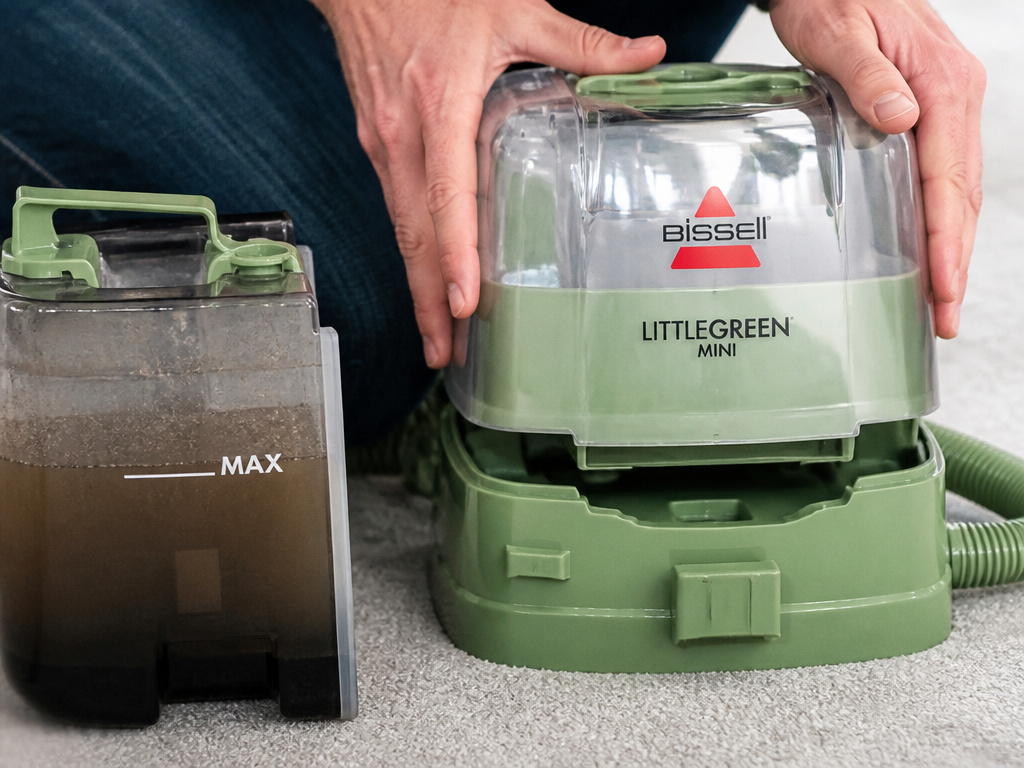
Before you decide the pump is dead, verify three simple things. These account for about 30% of “no spray” complaints.
- The tank isn’t seated. Remove and reinsert the clean water tank, pushing down until you hear a distinct double-click. The machine won’t build pressure if the tank is a millimeter out of place.
- The dirty water tank is full. The machine will stop spraying when the dirty tank reaches its MAX line. Empty it.
- You’re using a working outlet. The Little Green Mini draws a lot of power on startup. Plug it directly into a wall outlet, not a power strip or extension cord.
If you’ve checked these and done the gravity prime, but water only sprays when the hose is held low and not when you’re cleaning the floor, the issue is mechanical. The internal check valve that keeps water in the hose might be stuck open. That’s not a user-serviceable part; it requires contacting Bissell support.
How to Store It So This Doesn’t Happen Again
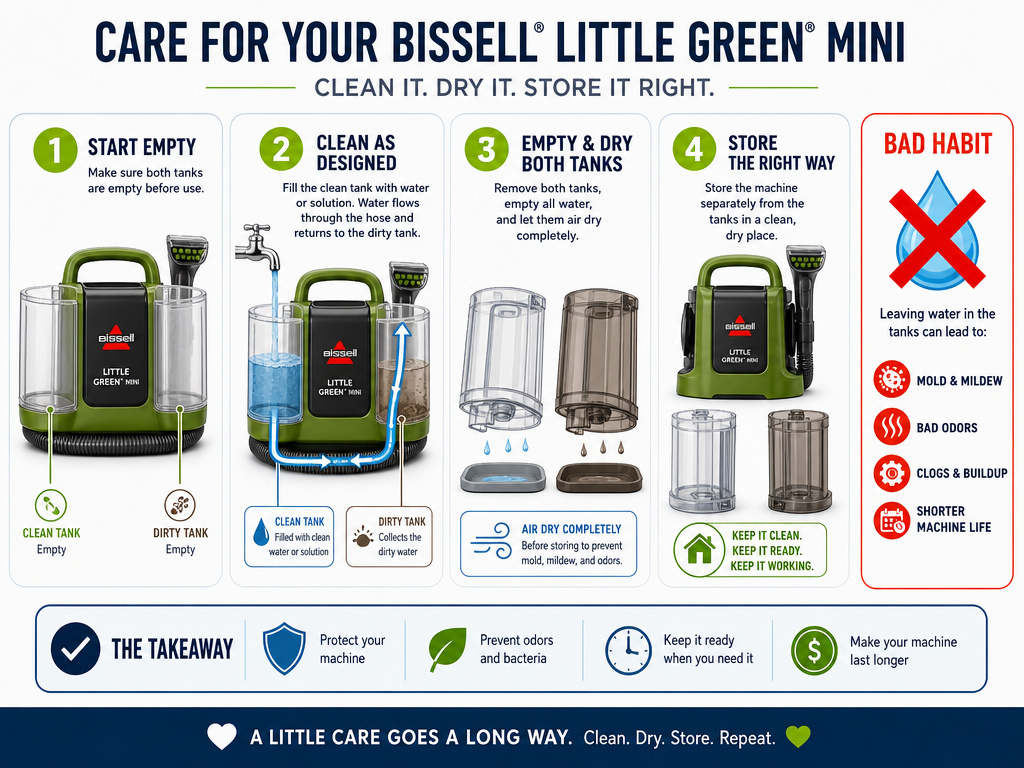
The fix is useless if you put the machine away wet. Proper storage prevents the dry-pump air lock.
- Empty both the clean and dirty water tanks completely.
- Fill the clean tank with plain warm water. Run it through the hose into the empty dirty tank until the clean tank is empty. This flushes out any remaining cleaning solution.
- Remove both tanks and let them air-dry upside down.
- Store the machine with the tanks off to prevent seal compression.
Do you leave a little water in the clean tank “for next time”? That’s the habit that causes the air lock. A dry pump is a happy pump.
Frequently Asked Questions
Why does my Bissell Little Green Mini have suction but no spray?
Suction but no spray means the water path is blocked but the air path is open. The problem is almost always in the nozzle filter or the small water hose, not the main vacuum motor. Follow the nozzle filter cleaning and vinegar flush steps above.
Is the Bissell Little Green Mini repairable if the pump is broken?
Yes, but it’s rarely cost-effective. The pump is integrated into the main chassis. Bissell sells replacement parts like hoses and nozzles, but a confirmed pump failure usually means a warranty claim or recycling the machine. The other fixes on this page are worth exhausting first.
Can I use hot tap water in my Little Green Mini?
You can use hot tap water, but you must check the temperature. Do not exceed 140°F (60°C). Water hotter than that will warp the clean water tank and damage internal seals. If your tap water gets very hot, mix in some cold water first.
How long should the pump last?
With proper maintenance, regular flushing, using water under 140°F, and dry storage, the pump should last for the machine’s usable life (typically 3-5 years of regular home use). The most common cause of premature failure is mineral buildup from hard water, which is preventable.
What’s the difference between a “no spray” issue and a Bissell ProHeat won’t spray issue?
The core problem, a dry pump, clog, or air lock, is similar. But the ProHeat is a full-size carpet cleaner with a more complex dual-tank system and a heating element. Its troubleshooting involves checking the heater and larger internal valves, while the Little Green Mini’s fixes are more mechanical and focused on the portable hose system.
Before You Go
Start with the 60-second gravity prime. It fixes the dry pump that happens after storage. If that doesn’t work, clean the tiny filter in the nozzle, that’s where hard water minerals hide. Finally, a vinegar flush clears out the internal hose scale that weakens spray over time.
The machine is simple. Its failures are usually about maintenance, not manufacturing. Keep water under 140°F, flush it after every use, and store it dry. Do those three things and your Little Green Mini will spray on command for years.