
Cleaning Your Bissell SpotClean Pro After Use | Full Guide
This post contains affiliate links. As an Amazon Associate, we earn from qualifying purchases.
Clean your Bissell SpotClean Pro after use by emptying and rinsing the dirty water tank, flushing the hose and tools with clean water, and letting all three components, the clean tank, dirty tank, and hose, dry completely before storage. The official limit is 140°F (60°C) for water temperature to prevent tank deformation, and the internal thermal protector needs a full 30 minutes to reset if the motor overheats.
That temperature limit is printed on the tank for a reason. Plastic warps. A single cycle with water that’s too hot won’t melt the SpotClean Pro on the spot, but it softens the clean tank’s mounting points. Over a few months, the tank won’t seat as tightly, and you’ll start to smell the solution leaking down the back of the machine during a clean. The post-use routine is about preventing that kind of slow, cumulative damage.
What follows is the seven-step cleanout that matches the manual, plus the two extra moves that stop mold and motor burnout. We’ll cover the tools you need, the exact drying sequence, and what happens when you skip the steps everyone thinks are optional.
Key Takeaways
- Empty the dirty water tank immediately after use, letting soapy water sit breeds bacteria that cause the tank to smell and can clog the internal float stack.
- Flush the hose and tools with clean water while the machine is running; this clears solution from the pump and spray nozzle, preventing the most common cause of “won’t spray” failures.
- Dry three things completely: the clean water tank, the dirty water tank, and the inside of the hose. Storing any one of them wet is how mildew starts.
- The machine’s thermal protector cuts power if it overheats. It requires a full 30-minute cool-down with the unit unplugged before it will reset and allow operation again.
- Always check upholstery fabric tags for a “W” or “WS” code before cleaning. Using the SpotClean Pro on a “Dry Clean Only” fabric can permanently set a stain with moisture.
The 7-Step Post-Use Cleanout (and Why Order Matters)
This isn’t just about tidiness. The sequence here prevents solution from drying inside the pump and the hose, which are the two most expensive parts to replace. You need a sink, a towel, and about two gallons of warm tap water.
Step 1: Power down and unplug. Press the power button off and disconnect the cord from the outlet. This seems obvious, but reaching into the dirty tank with the unit live is a shock risk. Unwrapping the cord from the Quick Release cord wrap now also lets it cool.
Step 2: Empty the dirty water tank. Carry the tank by its handle to a sink or toilet. Press the latches on the sides to release the lid and pour out the wastewater. Rinse the tank interior with warm water, swishing it around to dislodge any hair or debris. Leave the lid off.
Common mistake: Pouring dirty water down a sink without a filter. The hair and grit will clog your drain. Dump it outside or into a toilet instead.
Step 3: Detach and rinse the tool. Press the release button on the Hose Grip and pull the cleaning tool off. Rinse the tool’s bristles and suction openings under warm tap water. Shake off the excess water. If you used the Stain Trapper tool, empty its separate container and rinse it too.
Step 4: Flush the hose with clean water. This is the step that keeps the spray trigger working. Fill the clean water tank with plain, warm tap water, nothing else. Reattach the tank to the machine, plug the unit back in, and turn it on. Hold the open end of the hose over the sink and press the spray trigger for 15-20 seconds. You’ll see clean water flowing through, clearing out any leftover cleaning formula from the pump and internal lines.
The pump needs about 30 seconds to prime when you first turn the machine on. If you don’t hear the motor engage immediately, wait. It will.
Step 5: Dry the tools and hose. Wipe the outside of the hose and the tool with a dry towel. Hang the hose over the edge of a sink or counter so any remaining water inside can drain out. Don’t coil it up wet.
Step 6: Clean the dirty tank’s float stack. Look inside the empty dirty tank. You’ll see a white plastic float inside a clear chamber, this is the float stack that stops the tank from overflowing. If debris is stuck around it, use a damp cloth to wipe the chamber walls. Never submerge the entire tank or run water directly into the float chamber.
Where this goes sideways: A clogged float stack can’t rise. The tank will overfill on the next use, sending dirty water back into the machine’s motor compartment. That repair starts at $150.
Step 7: Air-dry everything before reassembly. Leave the dirty tank’s lid off. Leave the clean tank’s cap off. Let both tanks and the hose air-dry completely in a well-ventilated area. Only snap everything back together when all parts are bone-dry to the touch inside and out.
| Step | Action | Risk If Skipped |
|---|---|---|
| 1. Power Down | Unplug machine | Electrical shock during handling |
| 2. Empty Dirty Tank | Pour out, rinse interior | Bacterial growth, foul odors within 24 hours |
| 3. Rinse Tool | Clean bristles under tap | Dried formula clogs suction ports |
| 4. Flush Hose | Run clean water through system | Pump and spray nozzle clog, causing “no spray” failure |
| 5. Dry Exteriors | Wipe hose and tool | Water spots, mildew on grip |
| 6. Check Float Stack | Wipe float chamber | Float jams, tank overflows into motor |
| 7. Air-Dry | Dry all parts fully | Mold growth inside tanks and hose |
Where This Goes Sideways: The 3-Tank Rule
Most people think of the SpotClean Pro as having two tanks: clean and dirty. For drying purposes, you have three. The hose is the third tank. It’s a long, enclosed tube that stays damp after you flush it. Storing the machine with a wet hose coiled inside the bracket is the single fastest way to introduce a mildew smell that you’ll never get out.
The rule is simple: the clean tank, the dirty tank, and the hose must all be dry before you put the machine away. If one is damp, you might as well have left all three full. Moisture migrates.
Here’s how to dry each part correctly: * Clean Water Tank: Remove it from the machine, unscrew the black cap, and pull out the bottle insert. Rinse both. Stand the tank upside-down on a towel so water drains from the neck. * Dirty Water Tank: After rinsing, prop the lid open. Use a dry cloth to soak up any droplets in the bottom seam. Leave it right-side up so the float chamber can air out. * Hose: After the flush cycle, detach it from the Hose Grip bracket. Shake it vigorously to eject water from the lower loop. Drape it over a door handle or shower rod for an hour.
This process adds twenty minutes to your clean-up. It also adds two years to your machine’s life. The alternative is opening the storage closet next month to the scent of a damp basement, a smell that will transfer to your upholstery on the next use.
The Tools and Formulas That Actually Matter
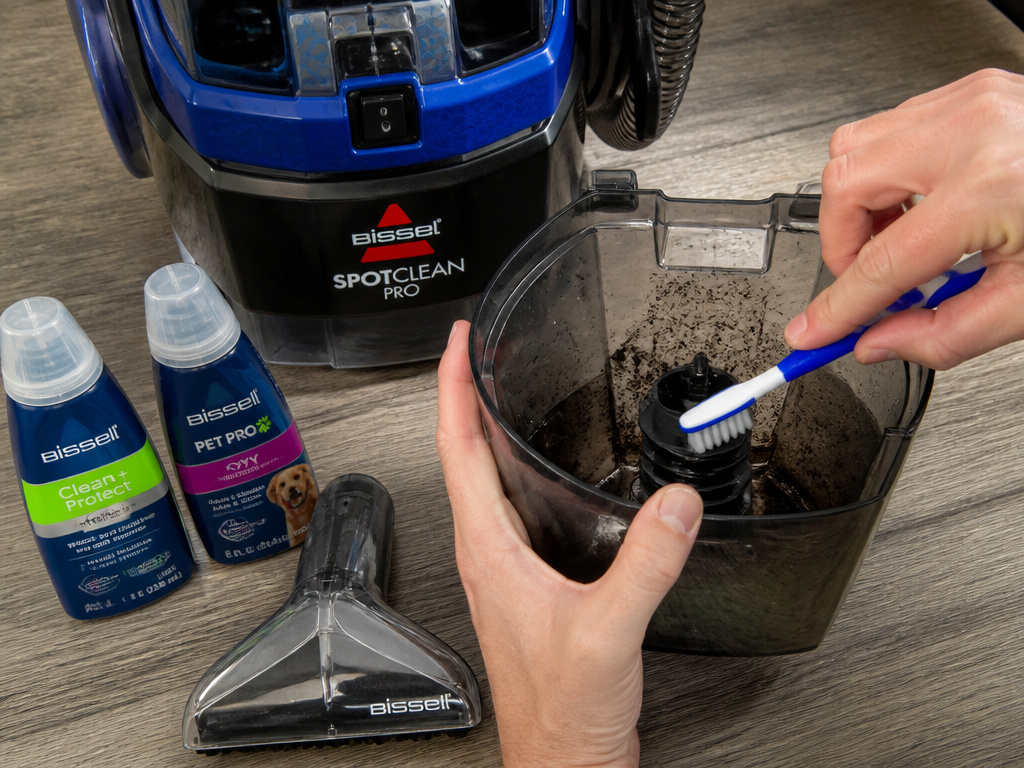
You don’t need a workshop. The right cleaning agents and a simple brush prevent 90% of maintenance calls.
Bissell Formulas Only. The manual is explicit: use only genuine Bissell formulas. Third-party or homemade solutions can foam excessively, damaging the pump, and will void the two-year limited warranty. For general cleaning, the Bissell Clean + Protect formula works. For pet stains, you need the enzymatic action of Bissell PET PRO OXY Urine Eliminator.
Oxy Boost formula continues to react with oxidizable stains for 6-8 hours after application. If you’re cleaning a pet accident, you might see slight foaming reappear hours later, that’s normal, not a malfunction.
The One Tool You Should Buy. The kit that comes with your SpotClean Pro is fine. If you clean upholstery often, invest in the official Bissell 3-inch upholstery tool. Its narrower profile and softer bristles are designed for fabric, not carpet, and reduce the risk of overwetting.
A Small Brush for the Float. Keep a clean, soft-bristled toothbrush or a pipe cleaner nearby. When the float stack in the dirty tank gets a hair wrapped around it, this is the only tool that can gently dislodge the debris without breaking the delicate float mechanism.
Before You Store: Temperature and Fabric Checks
Storage isn’t just a location. It’s a set of conditions. Get one wrong and you’re buying a new machine.
The 40–110°F (4–43°C) Range. The official storage temperature is not a suggestion. Storing the unit in an unheated garage where temperatures drop below freezing can cause residual water in the pump or hoses to expand. This cracks internal seals and leads to leaks you can’t fix. Likewise, attic heat above 110°F can soften plastic and deform the tanks.
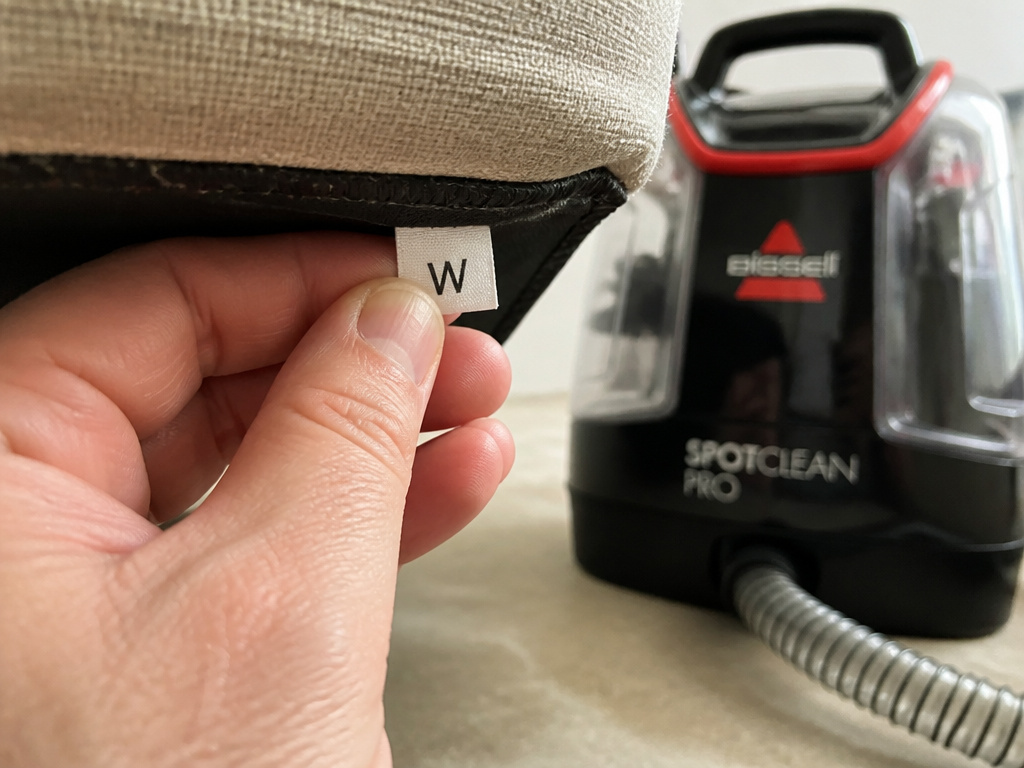
The Upholstery Code Check. This is a pre-cleaning step, but ignoring it guarantees a post-use disaster. Before you ever spray solution, find the manufacturer’s tag on your couch or chair. * “W” or “WS”: Safe to clean with your SpotClean Pro. * “S” with a diagonal strike-through or “Dry Clean Only”: Stop. Do not proceed. Water will likely shrink the fabric or set the stain permanently. * No tag/missing code: Contact the furniture manufacturer. Guessing is how you ruin a $2,000 sofa.
If you’ve cleaned an unsuitable fabric, your post-use routine is irrelevant. The damage is done. This check takes ten seconds and is the most important step in the entire manual.
Troubleshooting: The Motor Quit Mid-Clean
You’re halfway through a stain, and the motor suddenly shuts off. The power light might still be on, but there’s no suction or spray. Don’t panic. You’ve likely tripped the internal thermal protector.
Cause and Reset. The thermal protector is a safety switch that cuts power to the motor if it overheats. This happens during extended use or if an obstruction blocks airflow. The fix is procedural: 1. Turn the power switch OFF and unplug the machine. 2. Check the hose, tools, and dirty tank for obvious clogs. Clear any blockages. 3. Wait 30 minutes. The motor must cool completely before the thermal protector will automatically reset. 4. Plug the machine back in and turn it on.
Do not attempt to bypass this or restart the machine immediately. The 30-minute cooldown is non-negotiable. If the problem recurs after a reset, you may have a deeper clog in the air path or a failing motor, that’s a job for Bissell support.
| Symptom | Likely Cause | Immediate Fix |
|---|---|---|
| Motor stops, light on | Thermal protector tripped | Unplug, clear clogs, wait 30 mins |
| No spray, motor runs | Clogged spray nozzle or pump | Flush hose with clean water (Step 4) |
| Weak suction | Full dirty tank or clogged tool | Empty tank, rinse tool suction ports |
| Water leaking from tank base | Warped clean tank (overheated) | Inspect tank for cracks; may need replacement |
| Foul odor from hose | Mildew from improper drying | Flush with vinegar solution, dry thoroughly |
How This Routine Stacks Up Against Other Bissell Cleaners
The core principles are the same across Bissell’s portable line, but the devil is in the tank design.
Versus the Little Green: The Little Green machine is simpler, often with a single tank system. Its post-use cleanout is faster, but its pump is also less powerful. The SpotClean Pro‘s dual-tank system requires the extra drying step, but it extracts more water, leading to faster drying times for your carpet.
Versus the PowerClean Pro: The Bissell PowerClean Pro has a larger capacity and often a longer hose. The flush cycle is even more critical because there’s more internal tubing to clear. The drying rule, however, is identical.
Versus the ProHeat Pro: The Bissell ProHeat Pro includes a heating element for the solution. This means you must be even more stringent about the 140°F water limit and ensuring the heating chamber is flushed with clean water to prevent limescale buildup. Its maintenance is a tier above.
If you own multiple machines, adopt the most thorough routine, the SpotClean Pro‘s 3-tank rule, for all of them. It’s the highest standard and prevents cross-contamination of smells and residues.
Frequently Asked Questions
Can I use vinegar to clean my Bissell SpotClean Pro?
No. Do not put vinegar or any acidic solution in the tanks. Bissell’s official stance is that only their cleaning formulas are tested and approved. Vinegar can degrade plastic seals over time and will void the warranty. For disinfecting a smelly hose, Bissell recommends a dilute bleach solution (following their specific guidelines) or their own machine-cleaning formulas.
How often should I deep clean the machine?
Perform the full 7-step cleanout after every use. Once a month, or after about 10 cleaning sessions, take an extra step: use a Bissell machine cleaning cartridge or formula designed to descale and sanitize the internal pump and lines. This prevents mineral buildup from hard water.
The dirty tank smells even after rinsing. What now?
You likely have biofilm, a layer of bacteria, stuck to the tank walls or float stack. Make a solution of warm water and a small amount of mild dish soap. Use a soft brush to scrub the entire interior of the tank, especially around the float chamber. Rinse thoroughly and let it air-dry in direct sunlight for a day, which helps kill remaining bacteria.
Is it okay to store the machine with the clean tank full of water?
Never. Always store the machine with both tanks completely empty and dry. Storing with water, even clean water, promotes mold growth and mineral deposits. It also stresses the plastic and increases the risk of leaks.
Why won’t my SpotClean Pro spray after I’ve cleaned it?
You probably skipped Step 4, flushing the hose with clean water. Dried cleaning formula has clogged the spray nozzle or the pump inlet. Try the flush cycle again. If that fails, check for a clog in the small hole at the tip of the tool you were using. Persistent spray problems often trace back to incomplete rinsing.
The Bottom Line
Cleaning your Bissell SpotClean Pro after use isn’t about making it look pretty. It’s a functional reset that protects a $200 investment from its own worst enemies: dried soap, mildew, and mineral scale. The seven-step routine takes fifteen minutes. The 3-tank drying rule is what separates a machine that works in two years from one that smells like a locker room.
Remember the three non-negotiables: flush the hose every time, dry every interior surface, and never, ever use water hotter than 140°F. Your SpotClean Pro is a workhorse for pet stains and sofa spills. Treat its post-battle clean-up with the same seriousness as the fight, and it won’t let you down.