
Troubleshooting a Bissell Little Green Machine Not Suctioning
This post contains affiliate links. As an Amazon Associate, we earn from qualifying purchases.
Your Bissell Little Green machine isn’t suctioning because the sealed vacuum system has a leak. The motor is fine. You’ve lost the airtight seal needed to create suction pressure, and the leak is almost always at one of three points: the dirty water tank gasket, the motor duct connection, or a crack in the hose or tool. Find and seal that leak to restore full suction.
That leak hunt is mechanical, not magical. You are checking a simple pressure system. The machine’s pump creates a partial vacuum; any hole bigger than the pump’s capacity lets in air instead of pulling water from the carpet. Your job is to find where the system is no longer airtight.
What follows is a three-point inspection sequence. We’ll start at the most common failure, the tank, and work backward to the motor, with model-specific notes on float valves and the one gasket every owner replaces eventually.
Key Takeaways
- The duck bill gasket on the bottom of the dirty water tank fails first. Its tall side must face the curved outer wall of the tank.
- Overfilling the dirty tank past the MAX line activates a float valve on some models (HydroSteam Pet, Max Pet SmartMix), which deliberately cuts suction to protect the motor.
- A quick motor duct suction test tells you if the problem is upstream (tank, hose) or inside the machine itself. No suction at the duct means an internal clog or pump failure.
- Always run the machine on a level surface. Tilting it can misalign tank seals and float valves, creating an intermittent leak.
- Cracks in the clear plastic hose or tool housing are common on older units and will destroy suction no matter how perfect the tank seal is.
The 3-Point Leak Test: Dirty Tank, Motor Duct, Hose
Suction loss on a Little Green isn’t a single problem. It’s a diagnosis of exclusion. You check the three seals in the system in order, because fixing the third one won’t help if the first one is blown.
Start with the dirty water tank. Empty it completely. Look for hair, debris, or pet fur jammed into the tank’s outlet port. This is a physical clog, not a leak, but it has the same effect, nothing gets through. Rinse the port under warm water.
Now, check the seal. On most Little Green models (1400, 1425, 50Y6 series), the critical seal is a duck bill gasket on the tank’s underside. It’s a small, flexible piece of rubber. If it’s cracked, hardened, or missing, air rushes in right at the pump’s intake. Even a small crack here is a big leak.
Common mistake: Reinstalling the duck bill gasket backwards. The tall side of the gasket must insert into the right, curved outer-side of the dirty water tank. If it’s flipped, the tank never seals.
If the tank is clean and the gasket looks intact, move to point two: the motor duct. Remove the dirty water tank. Turn the machine on. Place your hand firmly over the round opening where the tank connects, this is the motor duct. You should feel strong, consistent suction pulling against your palm.
| Test Result at Motor Duct | Problem Location | Next Step |
|---|---|---|
| Strong, steady suction | Leak is UPSTREAM | Inspect hose & tool for cracks. |
| Weak or pulsing suction | Leak is INTERNAL | Check for clog in internal air path or pump failure. |
| No suction at all | Pump or internal blockage | Machine needs internal service. |
A good suction test here is your best news. It means the pump works and the leak is in the hose or tool. Point three is a visual inspection. Examine the entire length of the clear hose for hairline cracks, especially near the ends. Check the tool housing for cracks. Even a tiny split will siphon air.
Model-Specific Quirks: Floats, Heat, and SmartMix
Not all Little Greens are the same. Newer models add safety features that can mimic a suction failure. If you have a HydroSteam Pet or a Max Pet SmartMix, your troubleshooting tree has an extra branch.
The Little Green HydroSteam Pet (models 3532, 3618, 3605) and the Little Green Max Pet SmartMix (models 38572, 3857B) have a float in the dirty water tank. When the tank fills to the MAX line, this float rises and engages a valve. The valve’s job is to reduce or cut suction, preventing water from being pulled into the motor. It’s a safety stop.
If your machine suddenly loses suction mid-clean, stop and empty the tank. If the suction returns, the float valve did its job. The fix is to pause and dump the water more often. Never fill past the MAX line.
Where this goes sideways: Using the machine on an uneven floor. The float can engage prematurely if the machine is tilted, cutting suction even when the tank isn’t full. Always use it on a level surface.
The ProHeat and SmartMix models also have more complex internal tubing for heated water and mixing solution. A clog in these small internal lines can cause a loss of pressure that feels like weak suction. If your motor duct test showed weak suction, an internal clog in these lines is a likely suspect before you suspect the pump itself.
The Duck Bill Gasket: The Usual Suspect
This is the part you will replace. On the classic Little Green design, the duck bill gasket is the only wearable seal between the dirty water tank and the powerful suction of the motor. It flexes every time you remove the tank.
The gasket fails in two ways. It can harden and crack with age, losing its flexibility. Or, more commonly, it gets pinched or installed backwards during reassembly. A backwards gasket provides zero seal.
Replacement is a five-minute fix:
- Order part #203-5533 (the common duck bill gasket for most Little Green models).
- Pull the old gasket from the groove on the bottom of the dirty water tank.
- Clean the groove with a cotton swab.
- Insert the tall side of the new gasket into the right, curved outer-side of the tank. This is the step every diagram emphasizes.
- Press the rest of the gasket into the groove, ensuring it’s seated evenly.
A new, correctly installed gasket restores the airtight seal instantly. If your suction problem was intermittent, strong at first, then fading, this gasket was almost certainly the culprit. It would seal briefly under perfect alignment, then leak as the machine vibrated.
When the Problem Isn’t a Leak: Clogs and Blockages
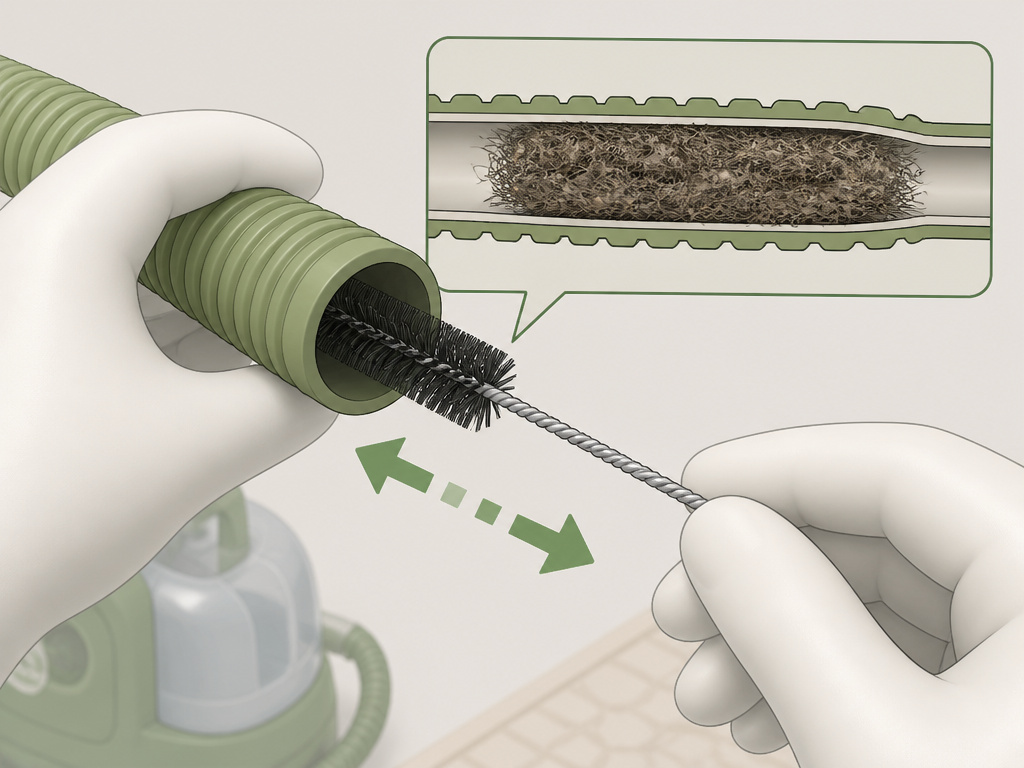 Sometimes the system is sealed but blocked. Suction needs a clear path. Blockages happen in predictable places, and each has a different symptom.
A full clog in the suction hose or tool will give you strong suction sound at the motor duct but zero pickup at the floor. You might hear the motor laboring. The fix is to detach the hose from the machine and blow air through it, or use a long, flexible brush to clear it.
An internal clog in the dirty water tank outlet or the motor duct will fail the hand-over-motor-duct test. You’ll get weak or no suction. For tank outlet clogs, use a straightened paperclip to gently clear debris. For suspected internal clogs behind the motor duct, you’re looking at disassembly, often a job for Bissell suction troubleshooting guides that cover pump access.
The clean water spray system can also be a red herring. If the spray is clogged and not wetting the carpet, the dry fibers can’t release dirt, making it seem like the suction has failed. This is a separate spray nozzle issue, but it changes the outcome on the floor.
Maintenance That Prevents Suction Loss
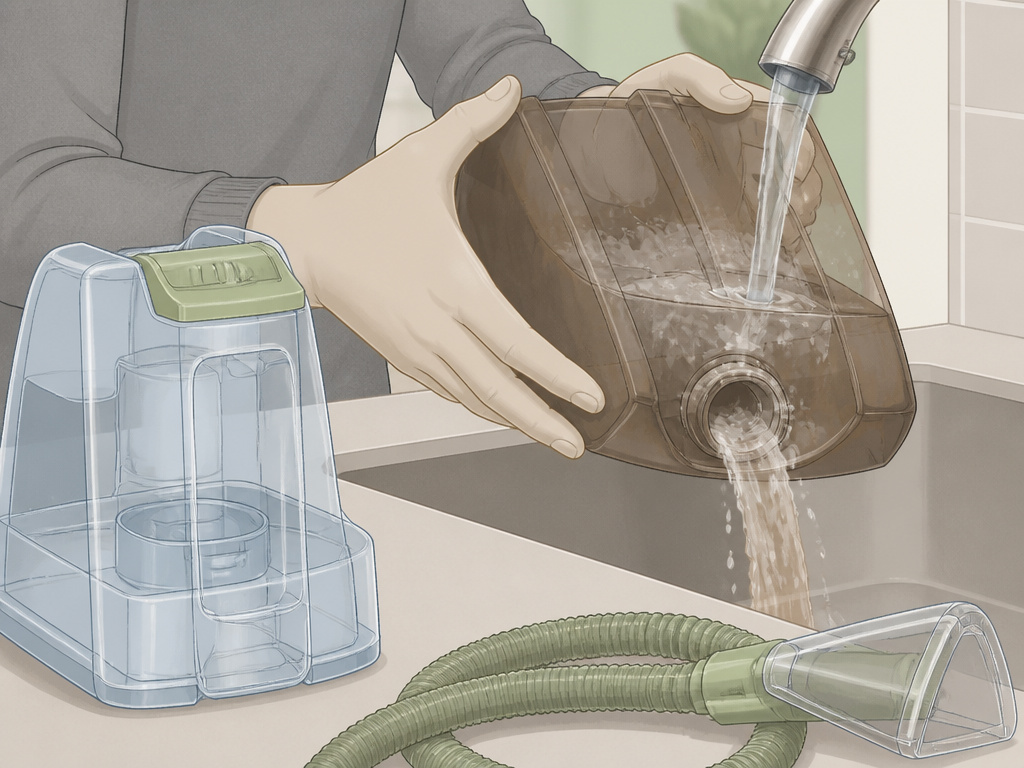 Suction problems are usually failures of maintenance, not failures of the machine. Three habits keep the Little Green running strong.
First, empty and rinse the dirty water tank immediately after every use. Letting dirty, soapy water sit allows residue to harden in the outlet port and on the duck bill gasket, accelerating wear and creating clogs.
Second, run clear water through the suction hose at the end of each session. After emptying the dirty tank, fill the clean tank with plain warm water. Run the machine and suction the clean water through the hose into the dirty tank. This flushes out residual soap and dirt from the hose and internal passages, preventing the gummy buildup that leads to clogs.
Third, inspect the hose and tools periodically. Bend the hose along its length looking for cracks. Check the tool housing for stress fractures. Catching a small crack early with electrical tape can save you from a larger suction failure later. This is the same care you’d give any portable carpet cleaner.
Adopting a simple post-use maintenance routine is the best way to avoid troubleshooting altogether. It keeps the seals clean and the air path clear.
Frequently Asked Questions
Why does my Little Green have suction at first, then lose it?
This is the classic signature of a failing duck bill gasket or an overfilling tank. The gasket seals initially but leaks under vibration. Or, the dirty tank reaches the float valve’s trigger point (on HydroSteam or Max Pet models) and the valve engages, cutting suction. Check the gasket first, then monitor your tank fill level.
I hear the motor running loudly, but no suction. What’s wrong?
Loud motor with no suction almost always means a severe blockage or a major leak. The motor is running unimpeded because there’s no pressure load on it. Perform the motor duct suction test. If you feel no pull, you have an internal clog or a failed pump. If suction at the duct is strong, you have a massive leak or crack in the hose or tool.
Can I use my Little Green without the duck bill gasket?
No. The machine will not create usable suction. The gap left by the missing gasket is a huge air leak, bigger than the pump’s capacity. The motor will run, but it will pull air through that hole instead of pulling water from your carpet. The gasket is not a filter; it’s a critical seal.
How do I know if my dirty water tank float is stuck?
On a HydroSteam Pet or Max Pet SmartMix, shake the empty dirty water tank. You should hear the float rattling inside freely. If you don’t hear it, or if suction never returns after emptying a full tank, the float may be jammed in the “up” position by debris. Rinse the tank thoroughly with warm water, shaking it to dislodge anything around the float chamber.
Is it worth repairing an old Little Green with suction problems?
Almost always, yes. The most common failures, the duck bill gasket, a cracked hose, or a clog, are inexpensive fixes. The pump in these machines is robust. If the motor duct test shows strong suction, your machine is fundamentally healthy. Investing in a new hose and gasket is far cheaper than a new cleaner. It’s a classic case of maintaining your Bissell for long-term service.
The Bottom Line
A Bissell Little Green machine not suctioning is telling you one thing: find the leak. Start at the dirty tank and its duck bill gasket, verify pump health at the motor duct, and finish with a close look at the hose. Model-specific floats and internal clogs add twists, but the core principle is always an airtight seal. Fix that, and the machine goes back to doing what it does best, pulling spills out of the carpet, not air into the motor.