
Bissell Turboclean Pro Not Picking Up Water – The Fast Fix
This post contains affiliate links. As an Amazon Associate, we earn from qualifying purchases.
Your Bissell Turboclean Pro not picking up water means one of three things is blocked: the dirty water tank is full, the hose or tool nozzle is clogged, or the internal suction gate is stuck. Start by checking the tank level and removing the tool nozzle to flush the hose with warm water. If that fails, locate the red suction gate near the bottom of the tank seat, machines made in late 2014 don’t have one, and clean any debris.
The clog is almost always in the first foot of hose behind the tool nozzle. That’s where hair, grit, and dried detergent collect into a plug that feels solid. You’ll know you’ve found it when warm water runs through the hose but won’t pull through the tool.
What follows is the three-step sequence that isolates the problem in under five minutes, plus the two internal failures, the float flap door and the auto-load gasket, that mimic a simple clog but need a parts order.
Key Takeaways
- The most common fix is removing the tool nozzle and flushing the hose with warm water for 30 seconds, then reattaching and sucking the water back through.
- Check the red suction gate near the bottom of the dirty water tank seat; if it’s stuck, clean it. Machines made in late 2014 do not have this gate.
- If the machine sounds different and suction drops suddenly with a half-full tank, the float flap door has failed and needs replacement.
- An missing or misplaced auto-load gasket on the clean water tank creates an air leak that kills suction; it’s a small black rubber ring.
- The Turboclean Pro’s spray system is gravity-fed, so a lack of spray points to a clogged nozzle or empty clean tank, not a pump failure.
The 3-Step Diagnostic Sequence (Start Here)
Skip the guesswork. Follow these steps in order. Most suction failures are solved at step two.
Remove the tool nozzle from the hose. Run warm water through the hose for 30 seconds, then reattach the nozzle and suck the water back through the tool. If water pulls through, the clog is cleared. If not, the blockage is further down.
Step 1: Tank and Hose Check.
First, power off and unplug the machine. Check the dirty water tank, if it’s at or above the MAX line, empty it. The float inside will engage and shut off suction even if the tank isn’t technically full. Next, inspect the hose for obvious kinks or cracks. A cracked tool nozzle is a direct air leak; you’ll need a replacement.
Step 2: Nozzle-Off Flush.
This is the fix for probably seven out of ten “no suction” calls. Pinch the collar on the tool nozzle and pull it off the hose. Take the hose to a sink and run warm (not hot) water through it for half a minute. You’re melting any accumulated detergent and flushing out debris. Reattach the nozzle firmly. Fill the clean water tank with warm water, turn the machine on, and press the spray trigger to wet the floor. Now try to suck the water back up. If it works, you’re done.
Step 3: Internal Gate Inspection.
If flushing doesn’t work, the blockage is between the hose and the pump. Remove the dirty water tank. Look at the right-hand side of the cavity where the tank sits. Near the bottom you should see a red plastic suction gate. It should move freely. If it’s stuck to the right, it’s jammed with debris.
Note: Machines manufactured in late 2014 do not have this suction gate. If your cavity is smooth, skip this step.
For models with the gate, you’ll need a Phillips head screwdriver. Unscrew the two screws holding the gate door, lift it off, and clear any hair or grit from inside. Reassemble it, ensuring the gate closes fully. This is a common fix for a Bissell PowerClean Pro not picking up water as well, as the mechanism is similar across many Bissell deep cleaners.
When the Simple Fixes Fail: Two Internal Parts
You’ve checked the tanks, flushed the hose, and cleared the suction gate. The machine is still not picking up water. Now you’re looking at one of two component failures. Both have specific symptoms.
The Float Flap Door Failure
Inside the dirty water tank is a floating valve. When the tank fills, this float rises and triggers a flap door to close, protecting the pump from a flood. If this door fails prematurely, activating when the tank is only half full, suction will drop to almost nothing and the machine’s sound will change noticeably.
Where this goes sideways: A failing float flap door activates with the tank half-full. Suction drops suddenly, and the machine sounds hollow or strained. The part is not user-serviceable; you must order a new door assembly.
You can test it. Run the machine with an empty dirty water tank installed. Listen to the normal suction sound. Now add water to the tank until it’s about halfway. If the sound changes dramatically and suction dies, the float flap door is the culprit. This failure mode is identical to the one described in guides for a Bissell ProHeat not picking up water. You’ll need to contact Bissell for the replacement part.
The Missing Auto-Load Gasket
This one is easy to miss. On the bottom of the clean water tank is a small black rubber gasket. Its job is to seal the connection where water flows into the pump. If this gasket is missing, cracked, or not seated, air gets in and the pump can’t pull a vacuum. The symptom is weak or non-existent suction from the moment you start, even with a brand-new machine.
First, remove the clean water tank. Check that the gasket is present and seated in its groove. If it’s missing, look inside the tank, it can sometimes stick to the inner wall. A cracked or hardened gasket won’t seal. You can order a replacement directly from Bissell. Ensuring this seal is intact is as critical for suction as proper maintenance is for the machine’s long-term health.
Spray vs. Suction: Diagnosing Related Problems
The Turboclean Pro has two separate systems: a gravity-fed spray and a vacuum-powered suction. A problem with one doesn’t always mean a problem with the other. Use this table to pinpoint which system has failed.
| Symptom | Likely System | Immediate Check |
|---|---|---|
| No water sprays onto carpet | Spray System | Is clean water tank full? Is spray nozzle clogged? |
| Water sprays but isn’t picked up | Suction System | Dirty water tank full? Hose/tool nozzle clogged? |
| Weak spray, weak suction | Both / Pump | Check for power issues or a major clog at the pump inlet. |
| Machine sprays when turned off | Normal (Gravity) | This is correct operation for a gravity-fed system. |
If you have no spray, remember the system is gravity-fed. Pressing the trigger should release solution even with the power off. If nothing comes out, the nozzle is clogged or the clean tank is empty. This is a separate issue from when your Turboclean Pro not spraying is due to a stuck trigger or valve.
If suction is weak but spray works, you’re back to the suction-side checklist: tank, hose, gate, gasket. This separation of systems is why a Bissell PowerClean Pro spray issues guide won’t help your suction problem, and vice versa.
Why Your Machine Might Sound Fine But Pick Up Nothing
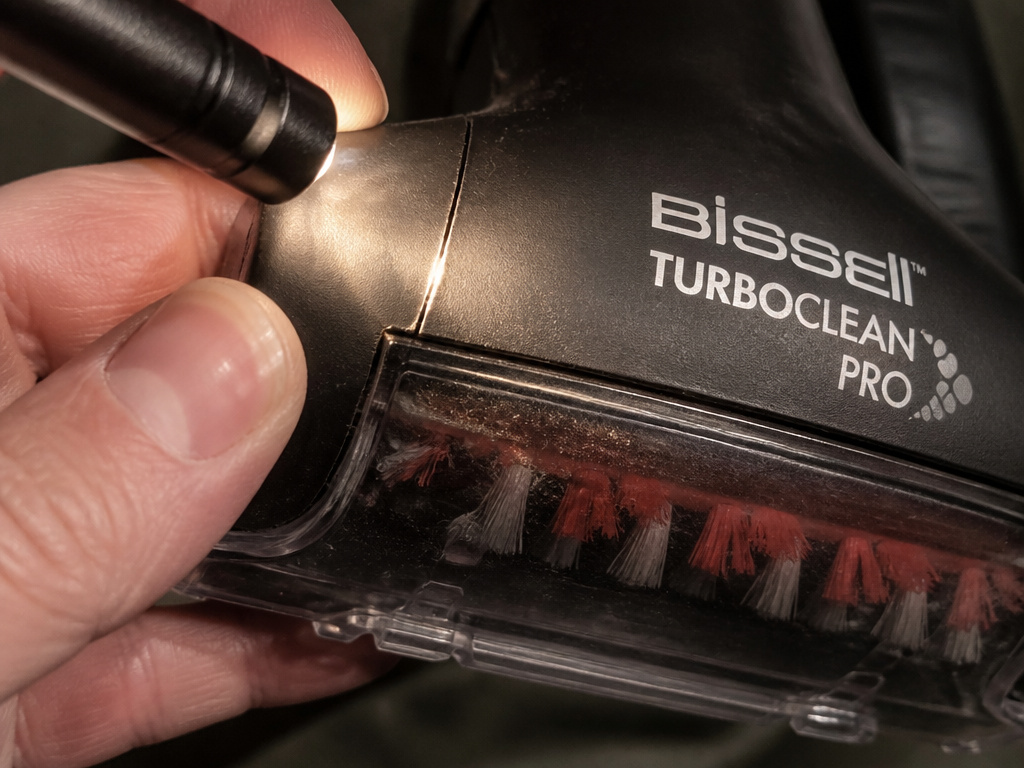 This is the most frustrating scenario. The motor runs, the sound is normal, but no water moves into the tank. The issue is almost always an air leak.
The vacuum pump needs a sealed path from the tool nozzle all the way to the dirty water tank. A single break in that seal, a cracked nozzle, a loose hose connection, a missing tank gasket, lets air in and destroys the pressure differential. The pump still runs, but it’s moving air, not water.
Common leak points, in order of likelihood: 1. Tool Nozzle: Hairline cracks where the plastic meets the brush roll. 2. Hose Connections: Where the hose meets the machine body or the tool nozzle. 3. Tank Seals: The dirty water tank lid or the clean water tank’s auto-load gasket. 4. Suction Gate: If not fully closed after cleaning.
Easy to miss: A tiny crack in the tool nozzle. Hold it up to a light and flex it slightly. You’ll often see the crack open. That’s all it takes.
Diagnosing this requires isolation. Start with the tool off the hose. Put your hand over the end of the hose, you should feel strong suction. If you do, the leak is in the tool. If suction is still weak, the leak is in the hose or machine. This methodical approach is the same one used for general suction issues on any Bissell vacuum.
Troubleshooting Quick-Reference Table
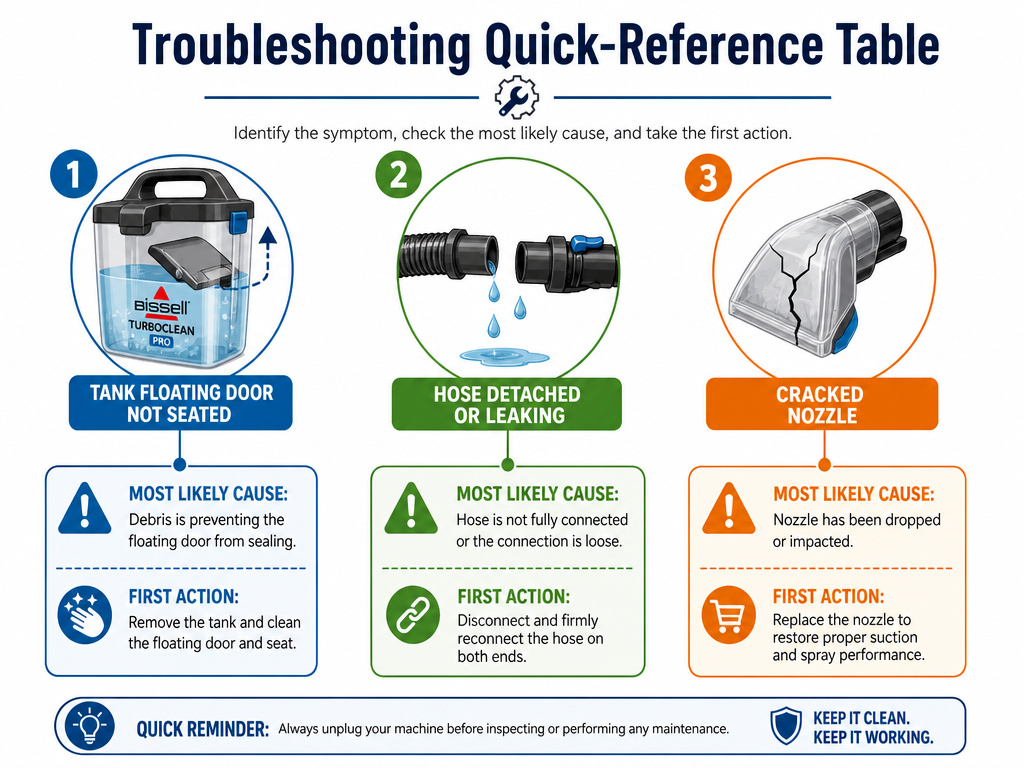 When you need a fast answer, this table maps your symptom to the most probable cause and fix.
| Symptom | Most Likely Cause | First Action |
|---|---|---|
| Sudden loss of suction, tank not full | Float flap door failure | Listen for sound change at half-tank; order part. |
| Never had good suction | Missing auto-load gasket | Remove clean tank, verify black rubber ring is present. |
| Suction weak, spray works | Clog in hose or tool nozzle | Remove nozzle, flush hose with warm water. |
| No suction after cleaning suction gate | Gate not fully closed | Reopen gate cavity, ensure it moves freely and closes. |
| Motor runs, no sound of suction | Major air leak (cracked part) | Inspect tool nozzle and hose for cracks. |
| Machine won’t turn on at all | Electrical fault | Check power cord, outlet, and power issues. |
Before You Call for Service or Parts
Exhaust these final checks. They cost nothing and often solve the problem that feels like a breakdown.
- Dry Filters: If you recently washed the foam or pleated filters, they must dry for a full 24 hours before reuse. A damp filter blocks airflow completely.
- Tank Seating: Push the clean and dirty water tanks firmly onto the machine until you hear a click. A tank that isn’t fully seated is an instant air leak.
- Cap Tightness: Ensure the cap on the bottom of the clean water tank is hand-tight. A loose cap is another vacuum leak.
- Water Temperature: Using cold water can cause detergent to congeal in the lines. Always use warm water in both the tank and for flushing.
If you’ve done all this and the machine still fails, your issue is likely a failed pump or motor. At that point, weigh the cost of the repair part and your labor against the price of a new machine. For many, the similar suction troubleshooting for a portable Little Green is a simpler job than a full Pro model pump replacement.
Frequently Asked Questions
Why does my Bissell Turboclean Pro have suction but no spray?
The spray system is gravity-fed, not pump-driven. Check that your clean water tank is full and the spray nozzle (inside the tool head) isn’t clogged with dried detergent. Run a pin through the nozzle holes.
Is it normal for my Turboclean Pro to spray water when it’s turned off?
Yes. Because the spray is gravity-fed, pressing the trigger releases solution whenever the clean water tank is installed, regardless of power. This is not a defect.
How do I know if my float flap door is broken?
Run the machine with an empty dirty water tank. Add water until the tank is half full. If the suction suddenly drops and the motor sound changes (becomes higher-pitched or hollow), the float flap door is activating prematurely and needs replacement.
My machine is a late-2014 model. Where is the suction gate?
Machines manufactured in late 2014 do not have a red suction gate. If you don’t see one, your model uses a different internal valve system. Focus your troubleshooting on hose clogs, tank seals, and the float flap door instead.
Can I use vinegar to clean the inside of my Turboclean Pro?
Bissell does not recommend vinegar for regular cleaning as it can damage rubber seals and internal components over time. Use the official Bissell Cleaning Formula or a mild, carpet-safe detergent diluted in warm water.
The Bottom Line
A Bissell Turboclean Pro not picking up water is almost never a motor failure. The fix is a clog, a seal, or a stuck gate. Start with the nozzle-off hose flush. Move to the suction gate if you have one. Finally, interrogate the float flap door and the auto-load gasket. This sequence solves ninety percent of cases without a service call. Keep the hose clean after each use, and you’ll likely never see this problem again.