
Why Is My Dyson Vacuum Making a Whistling Noise? Find Out
This post contains affiliate links. As an Amazon Associate, we earn from qualifying purchases.
A Dyson vacuum making a whistling noise is almost always an airflow problem — a blockage in the hose, wand, or cleaner head, or a filter that can no longer pass air. The high-pitched squeal is the sound of the motor straining against that restriction. On older upright models like the DC14, that same sound can also mean the drive clutch is engaged and wearing out.
That distinction matters. A blockage is a five-minute fix. A dying “lifetime” filter needs replacement, not just a wash. And a failing clutch means a $25 part and an hour of your time. Misdiagnose them, and you’ll chase the noise in circles.
What follows is the diagnostic sequence the manuals skip: three specific culprits, the exact tools you need to rule each one out, and the one user-reported data point that changes how you think about filter maintenance.
Key Takeaways
- The whistle is a high-pressure air leak or motor strain. Start diagnostics at the cleaner head and work backward to the bin.
- Dyson’s “lifetime” HEPA filter lasts about five years in real use. Washing it buys two weeks of quiet at most before the noise returns.
- On DC-series uprights, a whistle plus a non-spinning brush bar points directly to the clutch. You’ll need a long #15 Torx driver.
- Clearing blockages and brush bar obstructions is explicitly not covered by the Dyson warranty. Do it yourself carefully.
- The machine has a thermal cut-out. If it overheats from a blockage, it will switch off. Unplug it and let it cool for an hour before touching anything.
The Three Most Common Culprits (And Their Timelines)
A whistle isn’t a single problem. It’s a symptom with three primary causes, each with a different repair path and urgency. You can hear the difference if you know what to listen for.
A steady, high-pitched whine that changes pitch with the suction setting is almost certainly an airflow blockage. The motor spins freely, but the air can’t move, so it screams through the smallest gap it can find. A rhythmic, grinding whistle that pulses often points to a mechanical part like a clutch or a seized bearing. A whistle that appeared gradually over months and is now constant? That’s a filter.
The Dyson DC27 operating manual states filters should be washed every three months with cold water and allowed 24 hours to dry completely. Vacuuming fine dust like plaster requires washing them more often.
| Culprit | Classic Sound | Common Model | Timeline to Failure |
|---|---|---|---|
| Airway Blockage | Constant high-pitched whistle | All models | Immediate upon ingesting an object (hair, Lego, coin) |
| Clogged “Lifetime” Filter | Lower-pitched whine, loss of power | DC14, DC07, DC27 | 5 years (per user data); gradual over final 6 months |
| Worn/Failing Clutch | Rhythmic squeal or grind; brush bar stops | DC14, DC25, DC41 | 3-7 years; often after a major brush bar obstruction |
The filter timeline is the one most owners miss. Dyson markets it as a lifetime part, but the substrate inside eventually loads up with fine dust that water won’t remove. One documented case on a DC14 had a filter last five years. Washing it restored quiet for about two weeks before the whistle came back. That’s your sign: if a filter wash doesn’t fix the noise for at least a month, the filter is done.
Step-by-Step Diagnostic Walkthrough
Turn the vacuum off and unplug it. This is non-negotiable. The thermal cut-out can reset unexpectedly, and you’re often working near the brush bar, which can start spinning if the vacuum is reclined. Your safety is the first step.
Now, follow this sequence. It works from the most common and easiest fix to the most involved.
- Inspect the Cleaner Head and Brush Bar. Flip the vacuum over. Look for wound hair, string, or carpet fibers jammed around the brush bar ends. Manually try to spin the brush bar. If it doesn’t turn, you’ve found your likely blockage. Clearing this is the most common fix for a sudden whistle.
- Check the Hose and Wand. Detach the hose from the vacuum body. Look through it toward a light. Any shadow is a blockage. A clog here often causes a pulsating whistle, as the motor fights against a partial seal. Use a long, flexible object like a broom handle to gently push debris through.
- Empty and Inspect the Bin and Cyclone. Remove the clear bin. Check the hole where the bin attaches to the cyclone for a packed clump of dust. This creates a perfect whistle point. Rinse the bin with cold water and let it dry fully.
- Remove and Inspect Both Filters. This is where you find the slow-onset whistle. Pull the washable pre-motor filter (usually yellow) and the post-motor HEPA filter (often purple or grey). Hold the HEPA filter up to a bright light. If you can’t see light passing through the material evenly, it’s finished. A washed filter that looks clean but feels stiff or heavy is also done.
If you’ve completed all four steps and the whistle remains, and your brush bar isn’t spinning, you’re likely dealing with a mechanical failure inside the clutch housing. That’s a deeper repair.
Where this goes sideways: Skipping the filter inspection because it was washed recently. A filter can be clean on the surface but internally clogged with fine, carbon-like dust. That dust doesn’t rinse out. It needs replacement.
When the Problem is Mechanical: The Clutch and Brush Bar
On Dyson uprights with a brush bar, a clutch protects the motor and drive belt. If the brush bar jams, the clutch engages, creating a loud, high-pitched squealing noise. If it stays engaged, it burns out. This is why a whistle and a non-spinning brush bar are a paired symptom.
The fix requires disassembly. For a Dyson DC14, you need a #15 Torx screwdriver at least four inches long to reach the clutch cover screws. The clutch itself costs around $25, and replacing the brush bar (around $20) at the same time is smart preventative maintenance.
Here’s the clutch-access procedure for a DC14:
- Flip the vacuum and remove the soleplate (the three quarter-turn screws).
- Detach the brush bar from the drive belt. It’s tight; work it out slowly.
- Remove the three long #15 Torx screws holding the clutch cover plate.
- Pry off the clutch dial from the side of the vacuum with a flat-head screwdriver.
- Lift out the old clutch assembly and unhook the belt from the motor.
- Reverse the steps with the new clutch. The new belt will be very tight. Use a tool to guide it onto the motor pulley.
This repair is tedious but straightforward. If you’re not comfortable with it, a local vacuum repair shop can do it for less than the cost of a new machine. The key is accurate diagnosis first—don’t open the clutch housing if a simple filter swap fixes your loss of suction and noise.
The Filters: Washing vs. Replacing
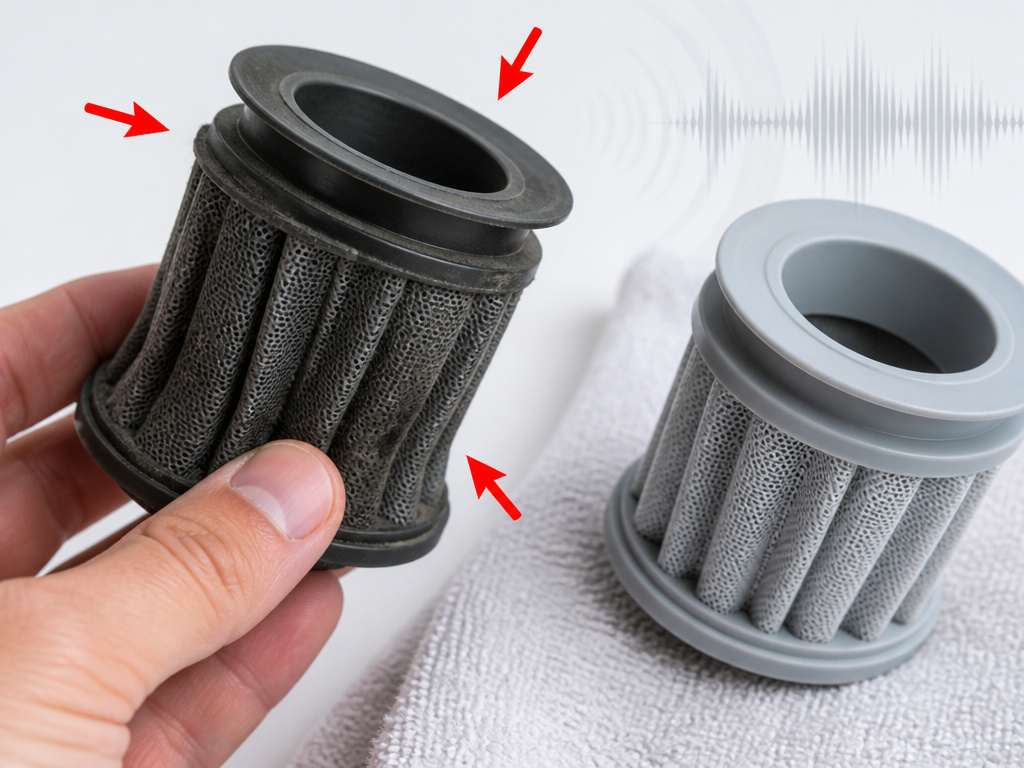
Dyson designs its filters to be washed. The official line for the DC27 is a cold-water rinse every three months and a full 24-hour dry. Reality is messier. Fine dust, pet dander, and especially plaster or construction debris load the filter material faster.
The pre-motor filter is straightforward. It’s a foam or felt block that catches larger particles before they hit the motor. When this clogs, you lose power. The post-motor HEPA filter is the critical one for noise. Its job is to trap microscopic particles before air exits the vacuum. As it clogs, airflow drops, and the motor works harder, creating that strained whine.
Common mistake: Putting a damp filter back in the vacuum. Even slightly damp filters will instantly clog with dust and can mold. They must be bone-dry. A sunny windowsill or a fan works; a dryer does not.
How to know it’s time to replace, not wash:
- The filter has turned a uniform dark grey or black, even after washing.
- It feels stiff or crumbly, not pliable.
- Water runs off it instead of soaking in during a rinse.
- The whistle returns within two weeks of a thorough wash and dry.
If your vacuum’s whistle is accompanied by other error codes, the filter may be part of a larger system fault. On cordless models, a clogged filter can trigger an overload warning.
What Dyson’s Manuals Say (And What They Don’t)
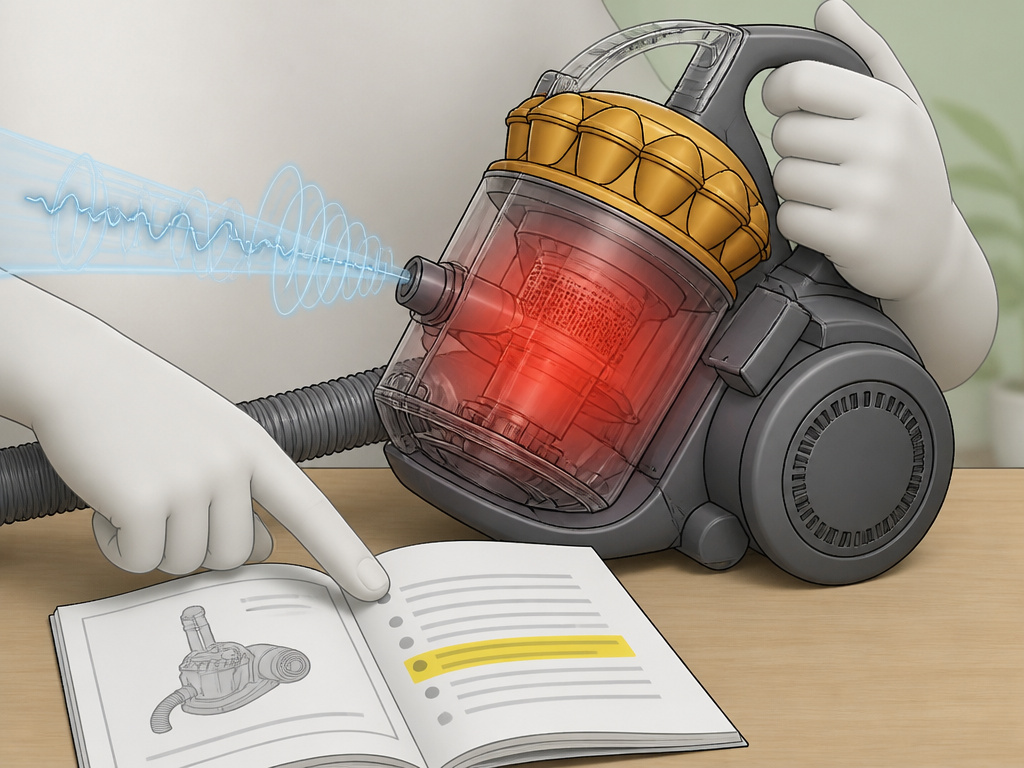
The official documentation is a useful baseline, but it’s written for warranty compliance, not for a five-year-old machine with real wear. A few critical notes often get overlooked.
First, the thermal cut-out. The DC27 manual states: “If any part of the vacuum becomes blocked, it may overheat and automatically cut-out.” If your vacuum shuts off with a whistle, that’s likely what happened. Unplug it and walk away for an hour. Let it cool before you start digging for a blockage.
Second, the warranty exclusions. The same manual clearly notes: “Clearing blockages is not covered by your vacuum’s limited warranty.” The same line applies to clearing brush bar obstructions. Dyson expects you to do this maintenance yourself. Don’t be afraid to take the machine apart to clear a jam.
Finally, the brush bar default. On many uprights, the brush bar defaults to ‘ON’ every time you recline the handle. If you’re vacuuming hard floors and hear a different, grinding grinding noise, you may have forgotten to turn the brush bar off. That noise is the bristles scraping against tile or hardwood, not an internal failure.
Preventing the Whistle Before It Starts
A consistent maintenance rhythm stops most noise issues before they begin. This isn’t about babying the machine; it’s about not letting small problems become big, noisy ones.
- Monthly: Check the cleaner head for hair wraps. Empty the bin before it hits the MAX line.
- Quarterly: Wash both filters with cold water. No detergent. Give them a full 24 hours to dry.
- Annually: Do a full airway check. Detach the hose and wand, look for obstructions, and ensure all seals are intact and pliable.
For homes with pets or lots of fine dust, move the filter wash to every two months. If you vacuum up a large object and the motor pitch changes, stop immediately. Find and remove the blockage before the thermal cut-out trips or the clutch engages.
This routine also prevents related issues like a brush not spinning or a sudden revving noise in cordless models. Airflow is the common thread.
Frequently Asked Questions
Why does my Dyson whistle only on carpet?
This usually points to the brush bar. On carpet, the brush bar is engaged and under load. A worn bearing in the brush bar end cap or a frayed drive belt can whistle under that load. Check for hair wrapped around the brush bar ends first, as that’s the most common cause.
Can a whistle damage my Dyson vacuum?
Yes, if left unchecked. A whistle from a blockage forces the motor to work against high pressure, generating excess heat. Over time, this can degrade motor windings. A whistle from a failing clutch means metal parts are grinding. Both scenarios shorten the vacuum’s life. Fix the cause promptly.
I washed the filters and it’s still whistling. What now?
You have a persistent airflow restriction. The most likely culprit is a blockage you missed deeper in the system—often in the curved plastic elbow where the hose meets the vacuum body or in the cyclone shroud itself. The second possibility is that your “lifetime” HEPA filter is truly spent and needs replacement, not washing.
Is a whistling Dyson covered under warranty?
The whistle itself isn’t a warranty claim; the underlying part failure might be. However, if the cause is a blockage or a clogged filter (normal maintenance), it is explicitly not covered. Warranty typically applies to defects in materials or workmanship, like a motor bearing failing under normal use. Always check your manual’s exclusions.
What’s the difference between a whistle and a high-pitched squeal?
In practical terms, not much. Both describe a high-frequency noise from restricted airflow. Technically, a whistle is a pure tone from air rushing through a narrow gap. A squeal often implies a mechanical component like a dry bearing or a slipping belt. Your diagnostic steps are the same: start with airflow, then move to mechanical parts.
The Bottom Line
A whistling Dyson is telling you where the air has stopped moving. Your job is to listen and follow the path. Start with the simple, free fixes: clear the brush bar, check the hose, wash the filters. If the noise persists, the filter’s lifespan is probably over—plan on replacing it. If the brush bar has also stopped, order a #15 Torx driver and a new clutch.
The goal isn’t silence at all costs. It’s understanding the machine well enough to know whether you need five minutes, a $30 filter, or an afternoon with a screwdriver. That knowledge turns an annoying unusual sound into a solvable problem.