
How to Clean a Dyson Upright Vacuum Head Properly & Safely
This post contains affiliate links. As an Amazon Associate, we earn from qualifying purchases.
To clean a Dyson upright vacuum head, unplug the machine, press the button on the back of the Motorbar cleaner head to release the end cap, and remove the brush bar. Clear all hair and debris from the bar and the housing with scissors or a dry cloth. Do not wash this head, only wipe it. Reassemble only after the brush bar is completely dry and you’ve checked the main filters, which require a full 24 hours of drying time after washing.
That 24-hour drying clause is where most people wreck a perfectly good vacuum. A damp filter shoved back into a Dyson will kill the motor, and that repair isn’t covered under the five-year limited warranty. The process isn’t just about pulling hair off a roller; it’s about protecting the several-hundred-dollar machine attached to it.
What follows is the full breakdown: which Dyson heads you can and cannot wash, the exact seven-step cleanout for the common Motorbar, and the two maintenance habits that prevent 80% of suction loss and overheating calls.
Key Takeaways
- The Dyson Motorbar cleaner head on UP19, UP20, and UP30 models is not washable. Submerging it voids the warranty. Only wipe it clean.
- A filter must dry for at least 24 hours after washing. Using the vacuum with a damp filter is a guaranteed path to motor damage.
- If you use the vacuum in a garage, wipe the base plate and ball with a dry cloth after every use. Sand and grit grind down floor finishes.
- Clearing blockages is not covered by Dyson’s warranty. Regular head cleaning prevents the clogs that lead to overheating and automatic shut-off.
- For delicate rugs or flooring, use the brush bar ‘OFF’ button. A spinning brush can fuzz or damage some materials.
The First Rule: Not All Dyson Heads Are Washable
This is the mistake that turns a simple cleaning into a service bill. Dyson uses two main types of motorized heads, and the cleaning rules are absolute.
The Dyson Motorbar cleaner head, the standard head on uprights like the UP19, UP20, and UP30, has a sealed motor unit. The official manuals state it is not designed to be washed. Water can ingress, short the motor, and corrode electrical connections. Your only job is to keep the brush bar and housing free of physical obstructions.
Conversely, models with a soft roller cleaner head (often called the “fluffy” head) have a removable brush bar that can be washed under cold water. The key is checking your specific model’s manual. If it’s not a soft roller, assume it’s not submersible.
Where this goes sideways: Assuming all brush bars are the same. Pouring water into a Motorbar head fries the internal motor within a few uses, and that’s considered misuse, not a warranty defect.
Why the Distinction Matters
The Motorbar’s design relies on de-tangling vanes that slice through wrapped hair as the bar spins. This is a mechanical, dry system. Introducing water doesn’t help it; it introduces the risk of rust on the vanes and bearing failure. The soft roller head uses a different, open-foam construction designed for wet cleaning. Using the wrong method is like using a screwdriver as a chisel, it might work once, but you’ll break the tool.
The 7-Step Motorbar Cleaner Head Cleanout
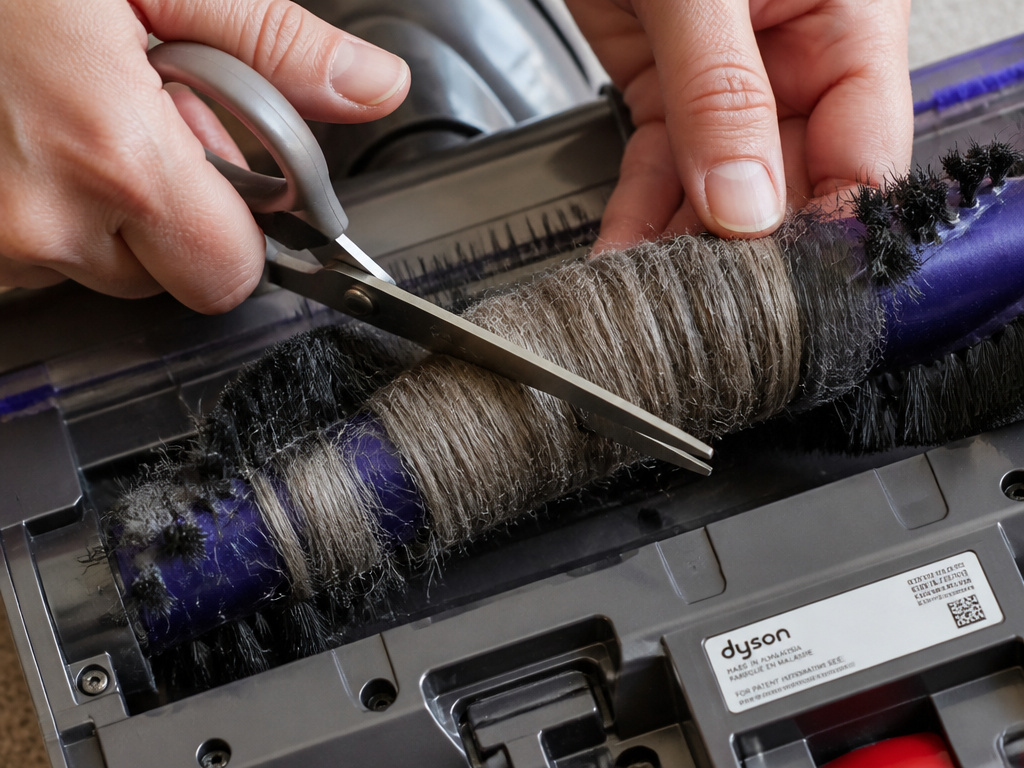 For the common, non-washable Motorbar head, cleaning is a dry, mechanical process. Set aside 10 minutes and a pair of scissors.
Before you start: Unplug the vacuum. This seems obvious, but the brush bar can engage if the power switch is bumped, and those bristles will take off a fingertip. Let the machine sit if it was recently running; the motor housing can be hot.
- Release the Cleaner Head. Lay the vacuum on its back. Find the quick-release catch near the ball and detach the entire head from the main body.
- Access the Brush Bar. Locate the small button on the back of the Motorbar head. Press it and push the end cap upward 90 degrees to release it. You can now slide the brush bar out of its housing.
- Cut and Remove Debris. Wrap a hand around the brush bar to hold the bristles. Use scissors to cut through hair and threads wound around the bar, parallel to the bar’s length. Pull the debris away. Do not cut the bristles.
- Clear the Housing. Shine a light into the now-empty brush bar channel in the head. Use your fingers or a long, thin object (like a chopstick) to pull out any packed-in dust, string, or hair. A clogged housing is a primary cause of a brush not spinning.
- Inspect the Bearings. Spin the brush bar by hand. It should rotate smoothly with a slight whooshing sound. Any grinding, clicking, or resistance means the bearings are failing, a sign the whole head may need replacement.
- Wipe Everything Down. Use a dry or slightly damp cloth to wipe the exterior plastic of the head and the brush bar itself. Do not soak it. Ensure no moisture remains in the brush bar channel.
- Reassemble and Test. Slide the brush bar back in, ensuring it seats fully. Swing the end cap back down until it clicks. Reattach the head to the vacuum body, ensuring the electrical plug connects. Plug the vacuum in, turn it on, and recline the handle. The bar should spin freely.
| Step | Tool Needed | Risk If Skipped |
|---|---|---|
| Unplug vacuum | None | Brush bar can engage, causing injury. |
| Cut hair parallel to bar | Scissors | Pulling hair strains and can break bristles. |
| Clear housing debris | Flashlight, chopstick | Leads to immediate re-clog and Dyson upright overheating. |
| Dry brush bar completely | Dry cloth | Residual moisture attracts more dirt, creating a mud paste. |
If the brush bar still doesn’t spin after cleaning, you’re facing an electrical or mechanical fault. The problem could be in the head’s motor, the wiring in the handle, or a separate head not spinning issue unrelated to a simple clog.
The Filter is the Other Half of the Equation
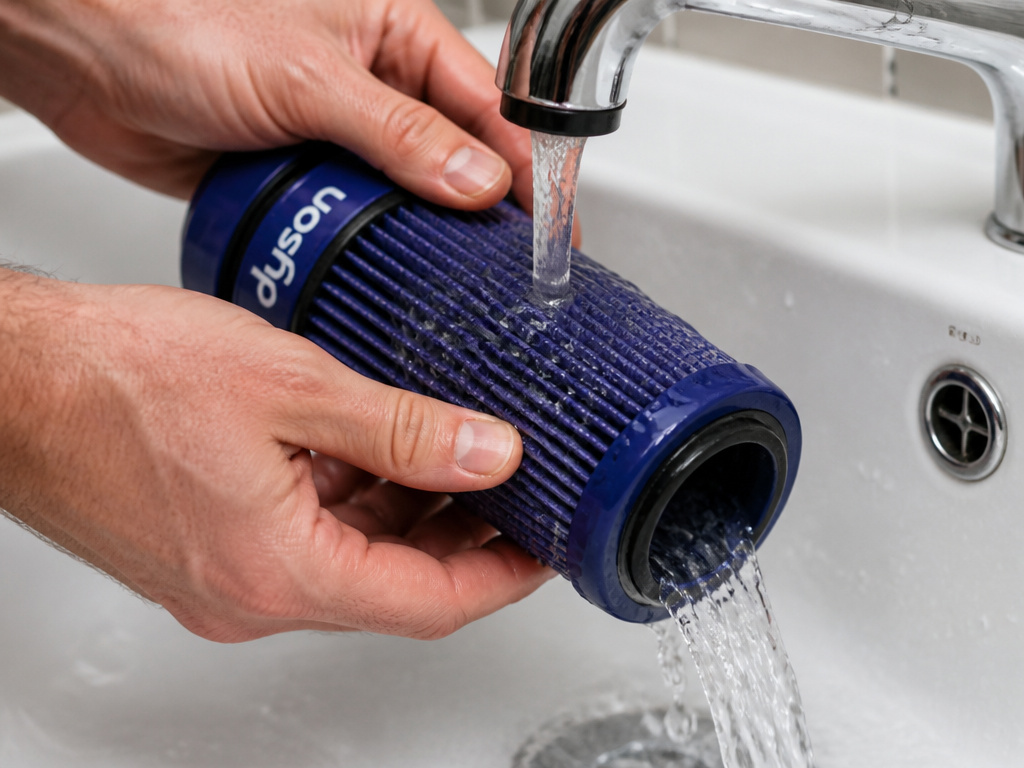 A clean head means nothing if the filter is choked. Suction is a system: the head agitates dirt, the airflow carries it, and the filter traps it. A dirty filter starves the motor of air, causing it to overwork and overheat.
Your Dyson upright has two washable filters. One is in the ball (Filter B), and one is in the cyclone handle (Filter A). Both have the same non-negotiable rule.
Wash with cold water only. Do not use detergents. Stand the filter on its wide end to dry. Leave to dry completely for a minimum of 24 hours before replacing.
This 24-hour timeline is printed in every manual for a reason. The filter material is dense, and moisture lingers at its core long after the surface feels dry. Inserting a damp filter forces the vacuum motor to pull air through wet material. This strains the motor and promotes mold growth inside the machine, a repair that costs more than a new vacuum.
How to wash a Dyson filter:
- Remove the filter according to your model’s manual (usually involves turning a dial on the ball and releasing a catch on the cyclone).
- Hold it under a cold tap. Run water through the open end until the water runs clear.
- Gently squeeze and twist with both hands, do not wring, to remove excess water.
- Place it upright in a well-ventilated, warm area. Not in direct sunlight, not on a heater.
Set a phone reminder for 24 hours later. Do not cheat. While it dries, that’s your window to tackle other tasks, like checking the hose for frequent clogs or wiping down the machine’s exterior.
Two Habits That Prevent Most Problems
Beyond the deep clean, two five-minute routines will keep your Dyson running like new and stave off the most common service calls.
1. The Post-Use Garage Wipe-Down.
If you ever vacuum your car or garage floor, this is mandatory. Sand, grit, and small pebbles get picked up by the cleaner head. The manual instructs: “always wipe the base plate and ball with a dry cloth after vacuuming.” If you don’t, that abrasive material transfers to your hardwood or tile the next time you vacuum indoors, acting like sandpaper on the finish. It’s a specific, avoidable form of damage.
2. The Monthly Filter Check.
Dyson recommends cleaning the filter monthly. Mark a calendar. A clogged filter is the root cause of lost suction, overheating, and that annoying clean filter alert on newer models. It’s not a suggestion; it’s the maintenance interval for the machine’s lungs. Pair this with emptying the bin before it hits the MAX line, and you’ve solved 80% of performance issues.
The part nobody mentions: That “monthly” filter wash assumes normal household dust. If you vacuum fine debris like plaster dust, pet hair, or baking flour, wash the filter weekly. Fine powder coats the filter media much faster, choking airflow almost immediately.
What to Do When Cleaning Isn’t Enough
Sometimes, the head is clean, the filters are dry, and the machine still acts up. The issue has moved past maintenance into troubleshooting.
- Head Still Won’t Spin: Verify the electrical connection between the head and the ball is secure. Test the brush bar ‘ON/OFF’ button. If there’s no power to the head, the fault is in the wiring or main body.
- Suction is Weak: You’ve cleaned the filters. Now check for a blockage in the hose, wand, or where the bin attaches. A single Lego or large thread can lodge in the airway. This is a primary reason a vacuum keeps getting clogged.
- Head Detaches During Use: The latch mechanism on the ball can wear out. Ensure the head is clicked firmly into place. If it’s a chronic head falling off issue, the plastic latch may be broken and need replacement.
Remember, Dyson’s 5-year limited warranty covers defects in materials and workmanship. It explicitly does not cover blockages, damage from misuse (like washing a non-washable part), or normal wear and tear. Your first line of defense is correct, regular cleaning.
Frequently Asked Questions
Can I use soap to clean my Dyson vacuum head?
No. Do not use any detergents, polishes, or cleaning agents on any part of the cleaner head or the vacuum’s plastic surfaces. For the non-washable Motorbar head, use only a dry or slightly damp cloth. For washable filters, use cold water only. Soap leaves residues that can attract more dirt and damage filter materials.
How often should I clean the brush bar?
Check it every time you empty the bin. If you have pets or long-haired people in the home, you’ll likely need to clear hair from the bar every two to three uses. Letting hair build up strains the motor, causes the belt to slip, and is the fastest way to stop the brush from spinning.
Why does my Dyson vacuum smell bad when I use it?
Foul smell usually points to a damp or moldy filter, or debris rotting inside the hose or bin. Ensure the filter is completely dry (24 hours). Wash the empty bin with cold water and let it dry thoroughly. Check the hose for trapped organic matter. Never vacuum wet debris.
Is it worth repairing an old Dyson upright vacuum?
It depends on the model and the repair cost. For common issues like a broken cleaner head clip or a worn belt, a DIY repair with a genuine Dyson part is often economical. For major motor or electrical failure on a model older than five years, compare the repair quote to the cost of a newer best Dyson upright model with updated technology.
Can I run my Dyson without the filter to get more suction?
Never. Operating the vacuum without both filters in place will immediately suck dust into the motor, destroying it. The filter is a critical component for motor protection, not just air quality. If suction is low, the solution is to clean the Dyson upright filter, not remove it.
The Bottom Line
Cleaning a Dyson upright vacuum head is straightforward once you know the rules: identify your head type, never wash the Motorbar, and never shortcut the 24-hour filter dry. The goal isn’t just a clean brush bar, it’s preserving the several-hundred-dollar motor that depends on clear airways and dry components. Make the post-garage wipe-down and monthly filter check habits. That routine alone prevents most suction problems and overheating issues before they start. Your Dyson is built to last, but only if you do the 20 minutes of maintenance it actually requires.