
How to Clean Dyson Stick Vacuum Attachments: A Full Guide
This post contains affiliate links. As an Amazon Associate, we earn from qualifying purchases.
To clean Dyson stick vacuum attachments, wash the HEPA filter monthly under warm running water until it runs clear, then let it dry for a full 24 hours. For brush bars, check your model: Fluffy Optic heads are washable; Motorbar X heads are not. Wipe all other tools and the bin with a damp cloth, avoiding detergents and never using a dishwasher.
That 24-hour dry time is a critical requirement, the line between a maintained machine and one that grows mold or burns out its motor within weeks. The process splits into three distinct jobs, filter, moving parts, and static tools, and mixing them up is how you void a warranty.
What follows: the model-specific rules printed in the manuals most people skip, the two tools that clean themselves, and the exact sequence that keeps a Dyson V12 or V11 running like it’s still new.
Key Takeaways
- The HEPA filter must dry for 24 hours after washing. Using it damp is the fastest way to damage the motor and trigger mold.
- Not all brush bars are washable. Fluffy Optic and soft roller heads are safe to wash; Motorbar X and High Torque heads are not. Submerging the wrong one wrecks the bearings.
- Never use detergent, polish, or a dishwasher on any part. It degrades plastics and leaves residues that ruin suction seals.
- Clean the filter at least monthly, but wipe the bin and clear shroud weekly to prevent dirt from baking onto the cyclone.
- A clogged tool or head is often the real cause of lost suction, not a dirty filter.
What You Can (And Cannot) Wash
Dyson designs some parts for water, others to never see a drop. Getting this wrong doesn’t just fail to clean, it breaks things.
The filter and certain brush bars are the only submersible components. Every other part of your stick vacuum, the bin, wand, hose, and plastic tool bodies, gets a wipe-down with a damp cloth. Detergents and dishwashers are banned across the board; they cloud plastic and leave films that attract more dust.
Where this goes sideways: Washing a non-washable brush bar. The bearings corrode, the bar seizes, and you’re buying a new $80 cleaner head because the repair isn’t covered.
| Part | Cleaning Method | Key Rule | Model Examples |
|---|---|---|---|
| HEPA Filter | Wash with water | 24-hour dry time, warm water only | V11, V12, V15, Gen5detect |
| Fluffy Optic Brush Bar | Wash with water | Air-dry upright, 24 hours | V12 Detect Slim, Gen5detect |
| Motorbar X Brush Bar | Do NOT wash | Wipe only; bearings are sealed | Gen5outsize, V15 Detect |
| Clear Bin & Shroud | Damp cloth wipe | No dishwasher, no detergent | All models |
| Tools (Crevice, Brush) | Damp cloth wipe | Avoid connector ends; ensure total dryness | All models |
The takeaway is binary. If the manual doesn’t explicitly say “washable,” assume it isn’t. This clean the vacuum head guide dives deeper into head-specific disassembly.
Washing Your Filter (The 24-Hour Rule)
This is the most important maintenance step. A clogged filter chokes suction; a damp one kills the motor.
First, twist the filter counter-clockwise to remove it from the back of the main body. Tap it over a trash can to knock loose dust out of the pleats. Hold it under warm, running tap water with the open end up. Let the water flow through the pleats, gently rubbing them with your fingers to dislodge fine dust.
Fill the filter with water, cover the ends with your hands, and shake it firmly. Repeat the fill-and-shake cycle until the water runs completely clear. This forces dirt out of the deep paper layers.
The final shake is critical. Hold the filter narrow-end-down and shake vigorously until no more water droplets fly out. Then, place it upright in a well-ventilated, warm spot to dry. The pleated paper element must face up.
Why the 24-hour dry time matters. The dense HEPA material holds moisture deep inside. A filter that feels dry on the outside can still be wet in the core. Reinstalling it pulls that moisture into the motor’s electrical path, leading to corrosion or a short circuit. Dyson’s manuals for the V11 and V12 specify this minimum dry period.
Never speed this up with a hair dryer, microwave, or radiator. High heat warps the plastic cage and can melt the paper-fiber bond. Just leave it for a full day. If your machine has a filter maintenance light that won’t reset, a filter that isn’t completely dry is the usual culprit.
Cleaning Brush Bars & Cleaner Heads
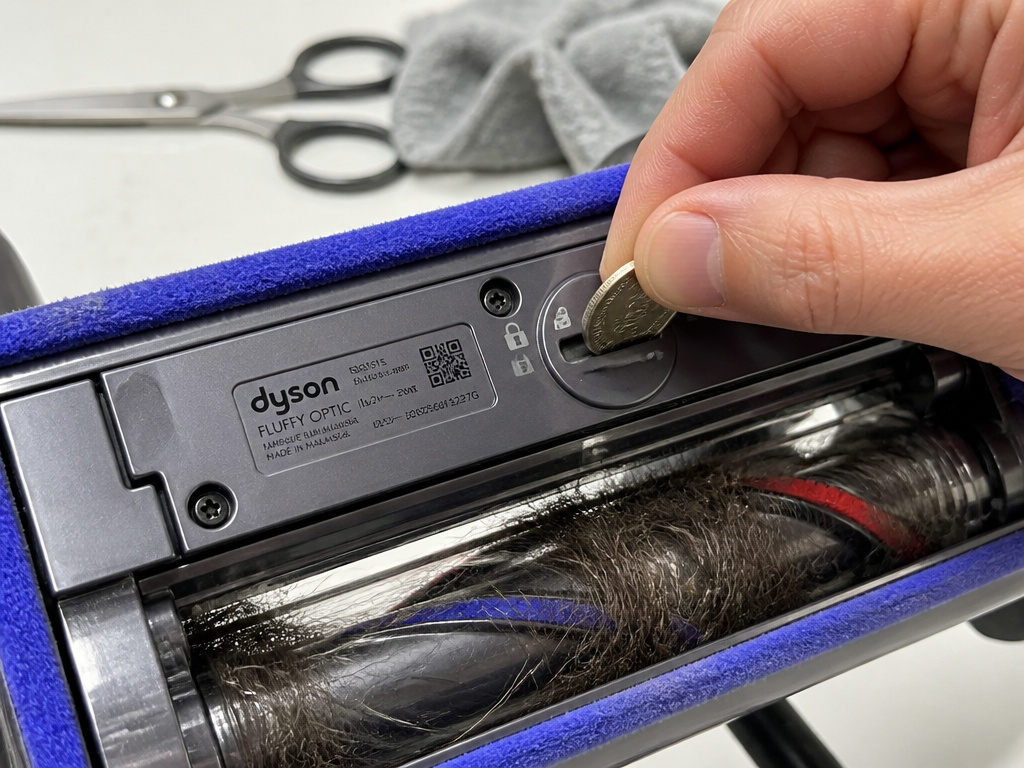 There are three types of motorized heads, and only two can get wet. Your first job is to identify yours.
For Fluffy Optic and Soft Roller heads: These have removable, washable brush bars. Turn the head over and look for a coin-slot fastener. Turn it a quarter-turn counter-clockwise to unlock, then slide the brush bar out. Rinse it under water, gently rubbing to remove hair and grit. Stand it upright to dry for 24 hours. The head housing itself just gets wiped.
For Motorbar X and High Torque heads: These are not washable. The brush bar is permanently sealed. Use the self-cleaning tool if your model came with one, lift the cuff until it clicks and rotate five times to slice wrapped hair. Otherwise, use scissors or a seam ripper to carefully cut and pull hair from the ends of the bar. Wipe the exterior with a cloth.
For the self-cleaning tool: This clever accessory on newer models cleans itself. After you use it on a brush bar, just wipe it with a cloth. No water needed.
Common mistake: Submerging a non-washable head. Water enters the motor housing at the axle, rusts the bearings silently, and the head starts making a grinding noise within a month. Then it stops spinning entirely.
If your brush head won’t spin after cleaning, you likely reassembled it while parts were damp or misaligned the brush bar. Strip it down, ensure everything is bone-dry, and reseat it firmly. For persistent frequent clogs in the head, check the inlet for a packed wad of hair.
Cleaning Non-Washable Tools & The Bin
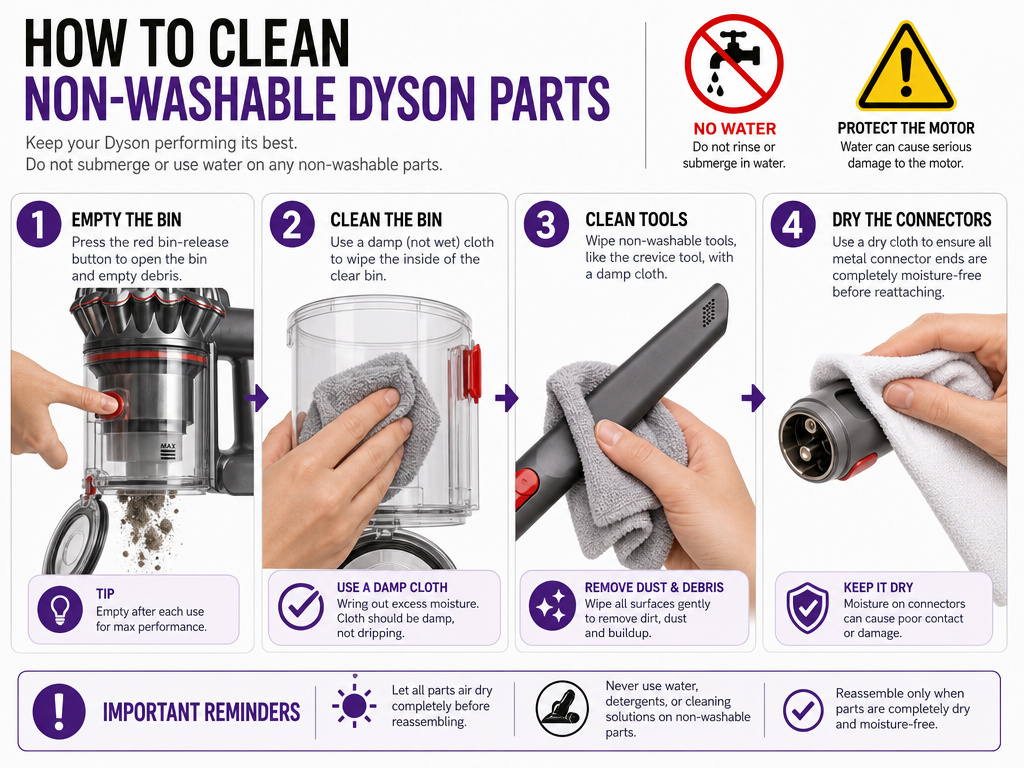 The bin, wand, hose, and attachments like the crevice tool or dusting brush never go underwater. The goal here is to remove caked-on dirt without introducing moisture to electrical contacts.
- Empty the Bin: Press the red bin-release button and slide the bin down to open the base. Empty debris into the trash.
- Wipe the Bin & Cyclone: Use a damp, lint-free cloth to wipe the inside of the clear bin and the plastic cyclone shroud. For stuck-on dirt, a soft-bristled brush (like a dry paintbrush) can dislodge it. Never run water into the cyclone, it’s a direct path to the motor.
- Clean the Tools: Wipe the exterior of each attachment with a damp cloth. Pay special attention to the crevice tool opening and brush bristles, where dust packs in. For the stuck latch on a bin that won’t release, a cloth dampened with warm water can soften greasy dirt around the mechanism.
- Dry Thoroughly: Ensure every nook is dry, especially the metal connector ends. Any moisture here can cause a connection error or corrosion.
A bin that isn’t emptied regularly lets fine dust coat the cyclone fins. This is a common source of lost suction that people blame on the filter. If your machine has a built-in crevice tool in the wand, extend it and wipe it down monthly.
The Step-by-Step Cleaning Schedule
Maintenance is a continuous rhythm that matches your use.
- After Every Use: Empty the bin if it’s at the MAX line. Check the cleaner head for wrapped hair.
- Weekly: Wipe the bin interior and cyclone shroud with a dry or damp cloth. Give all used tools a quick wipe.
- Monthly: Wash the HEPA filter. Deep-clean washable brush bars. Inspect tools for packed debris.
- Every 3-6 Months: Check for hidden blockages in the wand and hose. Inspect the filter seal for cracks.
If you vacuum construction dust or pet hair daily, wash the filter every two weeks. If you mainly do hard floors, you can stretch the brush bar cleaning to every other month.
The machine’s own alerts are your best guide. A flashing filter light after a wash usually means the filter isn’t seated perfectly or is still slightly damp. A blockage alert that won’t clear points to a clog you missed in the clearing blockages process.
Why This Prevents Damage & Loss of Suction
Each rule exists for a mechanical or electrical reason. Skip the “why,” and the steps feel arbitrary.
The 24-hour dry filter prevents moisture from being sucked into the motor, where it causes oxidation on the armature. This increases electrical resistance, makes the motor run hotter, and eventually leads to a winding failure. Mold growth in a damp filter also releases spores back into your home’s air.
No detergent on the bin is about plastic degradation. Harsh chemicals can make the clear plastic brittle and cloudy over time. More critically, residue left on the cyclone seals attracts dust, which builds up and breaks the air-tight seal, causing a massive drop in suction power.
Not washing non-washable heads protects sealed ball bearings. Once water infiltrates, it washes out the grease. The bearings rust, creating friction. The motor strains to turn the bar, drawing more battery power and generating excess heat until the bearing seizes completely.
Following the manual is essential, representing the difference between a vacuum that lasts a decade and one that’s on its last legs in two years.
Frequently Asked Questions
Can I use soap to clean my Dyson attachments?
No. Do not use soap, detergent, polish, or air fresheners on any part. Dyson explicitly warns that these substances can damage the plastics and seals. For the filter and washable brush bars, clean water alone is sufficient. For other parts, a damp cloth is all you need.
How do I dry my Dyson filter faster?
You don’t. Accelerated drying methods like a hair dryer, microwave, radiator, or tumble dryer can warp the plastic filter cage, melt the glue holding the HEPA material, or create hotspots that weaken the paper. The 24-hour air-dry is non-negotiable for complete moisture evaporation from the dense pleats. Plan your cleaning so the vacuum can be offline for a day.
What happens if I use the vacuum with a damp filter?
You risk two serious problems. First, moisture can be drawn into the motor, causing electrical damage and corrosion that leads to motor failure. Second, a damp, dark environment inside the filter is ideal for mold and mildew growth. You’ll then blow those spores into your home’s air every time you vacuum.
Are all Dyson stick vacuum filters washable?
Most post-2016 Dyson cordless stick vacuums have washable lifetime HEPA filters. This includes the V7, V8, V10, V11, V12, V15, and Gen5 series. Always double-check your specific model’s manual, as some very early or specialized models may have different filters. The process for washing the filter is consistent across these washable models.
Can I put the attachments in the dishwasher?
Absolutely not. The high heat and harsh detergents in a dishwasher will degrade plastics, cloud clear parts, and likely warp components so they no longer fit together properly. This applies to the bin, tools, and any part of the cleaner head. Stick to hand-wiping with a damp cloth.
Why does my vacuum smell musty after cleaning the filter?
Musty smell almost always means the filter was reassembled while still damp. Mold or bacteria has begun to grow inside the moist pleats. Immediately remove the filter and let it dry completely in a warm, airy place for at least another 24 hours. If the smell persists, you may need to contact Dyson for a replacement filter.
Before You Go
Cleaning Dyson attachments boils down to three non-negotiable rules: water only on the filter and specific brush bars, a full 24-hour dry time for anything washed, and never letting moisture near electrical connections or sealed bearings. The right clean the filter routine monthly keeps suction strong. The right drying discipline keeps the motor alive.
Most performance issues, from a vacuum not sucking to a head not rotating, trace back to skipped maintenance steps or rushed drying. Do it once, by the book, and you’ll feel the difference on the next pass across your floor.