
Can I Vacuum Small Pieces of Glass? Hazards & Safe Vacuums
This post contains affiliate links. As an Amazon Associate, we earn from qualifying purchases.
You should not vacuum small pieces of glass with a standard household vacuum cleaner. The sharp edges can slice internal hoses, jam or shred the motor’s impeller fan, and shred the filter, sending glass dust back into your air. The only vacuums rated for this job are industrial wet/dry shop vacs with specific filter setups, and even then, the cleanup method matters more than the machine.
That warning comes straight from the manuals. Kärcher, LG, Miele, and Roborock all explicitly list glass, sharp objects, or shards as prohibited materials. They aren’t being overly cautious. The physics inside a vacuum cleaner turn a tiny shard into a blade spinning at thousands of revolutions per minute.
What follows is the breakdown of why it’s a bad idea, the one type of vacuum that might get a pass, and the manual, broom-and-dustpan method that always works without a repair bill.
Key Takeaways
- Glass shreds filters and hoses. A standard paper or cloth filter offers zero protection. Shards cut the material, and the resulting glass dust passes through, ruining the motor and polluting your air.
- Wet/dry shop vacs are the sole exception. Only a vacuum with a sturdy, washable foam sleeve filter and a metal or thick plastic drum is designed for debris like broken glass. Never use a vacuum with a standard dustbag or a pleated HEPA filter.
- The size of the pieces dictates the risk. A few pea-sized chunks are a different problem than a sheet of tiny, powdered shards. The powder is worse, it’s guaranteed to ruin any household vacuum.
- Always hand-sweep first. Use a damp paper towel or bread to collect the finest particles. The vacuum should only be a final pass for dust you can’t see, and only with the right machine.
The Short, Direct Answer
Can I vacuum small pieces of glass? No, not with the vacuum you use on your carpets. The owner’s manual for the LG A9 states: “Do not allow the appliance to sweep up… Sharp objects.” The manual for the Roborock F25 XT is more direct: “Do not vacuum any hard or pointy objects (such as… Glass).” These prohibitions exist because the internal components, a plastic impeller fan, flexible internal hoses, and fabric filters, cannot withstand sharp edges.
Vacuuming sharp debris like glass, nails, or staples with a standard domestic vacuum cleaner violates the manufacturer’s safety and usage guidelines. This voids the warranty and leads to predictable mechanical failures, including cut hoses, unbalanced motor fans, and torn filtration media that allow fine particulate matter to bypass and damage the motor bearings.
If you proceed, you accept the cost of a new vacuum. The repair often costs more than the machine.
The 3 Types of Damage Glass Causes
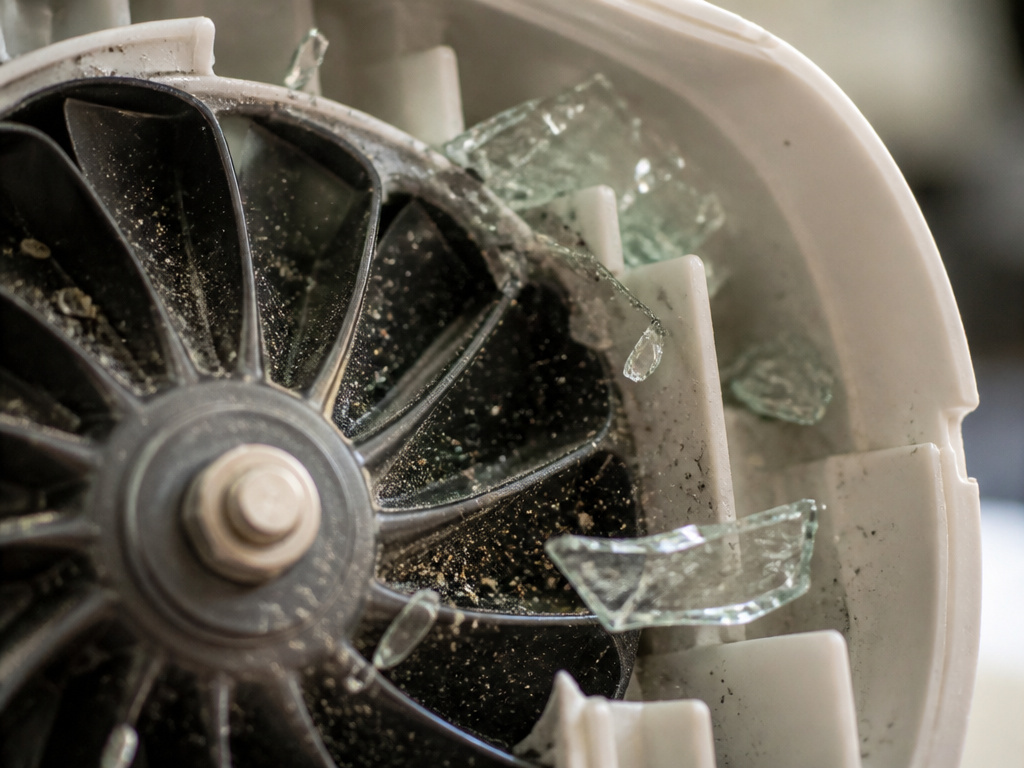
A vacuum cleaner is a controlled airflow system. It’s designed for dirt, dust, and hair, materials that are blunt, soft, or flexible. Glass is none of those. When you introduce a hard, sharp object, three components fail in sequence.
First, the filtration fails. Your vacuum’s filter, whether it’s a pleated HEPA filter, a cloth bag, or a felt sleeve, is a physical barrier. It’s meant to trap fine dust. A glass shard acts like a razor blade against this material. A single cut compromises the entire filter’s integrity. Once the filter is cut, all the fine glass dust you can’t see gets sucked straight through.
Next, the impeller fan shatters or jams. This is the heart of the vacuum. It’s a plastic or metal fan that spins at 15,000 to 30,000 RPM to create suction. When glass dust or a larger shard hits these spinning blades, one of two things happens. The dust acts as an abrasive, sand-blasting the blades and unbalancing the fan. An unbalanced fan vibrates violently, wearing out motor bearings in minutes. Or, a larger piece jams between the fan and the housing. The motor strains, overheats, and burns out.
Finally, internal hoses get sliced. The path from the floor to the dustbin isn’t a straight shot. There are flexible plastic hoses and connectors. A shard tumbling at high speed can score or puncture these lines. A small hole kills suction. A large cut means dismantling the entire machine to replace a five-dollar part with two hours of labor.
Where this goes sideways: Assuming a few big pieces are safe if you’re careful. You might get lucky once. But one shard you missed stays in the hose. The next time you vacuum, it gets pulled into the fan. The failure isn’t immediate; it’s delayed and guaranteed.
The Right Vacuum for the Job (And The Wrong One)
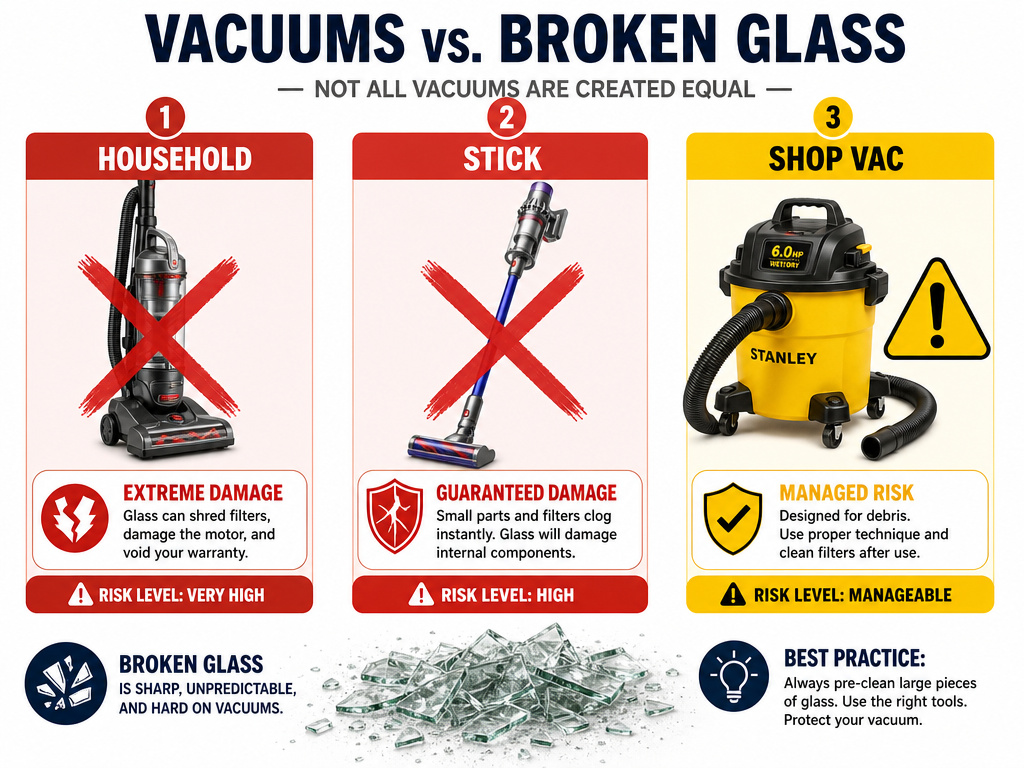
Not all vacuums are built the same. The key distinction is between vacuums designed for domestic debris and those built for construction debris.
| Vacuum Type | Designed For | Glass Risk | Key Filter |
|---|---|---|---|
| Upright / Canister (Household) | Dust, pet hair, crumbs | Extreme Damage | Paper/Cloth Bag, Pleated HEPA |
| Stick / Cordless | Quick cleanups, hard floors | Guaranteed Damage | Cloth or Foam Sleeve |
| Wet/Dry Shop Vac | Water, nails, sawdust, plaster | Managed Risk | Washable Foam Sleeve & Cloth Bag |
The Wrong Tools: Household Vacuums
Your Dyson, Shark, Miele, or bagless vacuums are out. Their filters are precision components for fine dust. The Miele Triflex HX2 manual warns that coarse debris like stones or shards of glass trapped in the brush roll can scratch floors, imagine what it does inside the machine. These models have zero tolerance for abrasives.
The Possible Tool: Wet/Dry Shop Vacuum
This is the only category where the manual doesn’t explicitly forbid it. A shop vac like a Kärcher DS 6.000 is built with a different purpose. It has a bare, durable plastic or metal drum. The standard filter is a thick, washable foam sleeve that sits over a cage. The foam can catch larger particles, and the design expects you to vacuum wet messes, which means it’s built to be hosed out entirely.
Even here, you must use the correct setup: 1. Always use a dry, empty drum. No leftover dust or water. 2. Install the foam sleeve filter. Never run it without a filter. 3. Consider a disposable filter bag. For extra protection, place a cloth filter bag inside the drum before you start. The glass goes into the bag, not the drum.
This isn’t a recommendation; it’s a description of the only machine with a fighting chance. For most people, buying a $150 shop vac for a single glass cleanup is not the answer.
Your Step-by-Step Safe Cleanup Protocol
Forget the vacuum for the main event. Your primary tools are your eyes, your hands, and some household items. Speed is safety, you want to contain the hazard before people or pets step on it.
Step 1: Secure the Area and Protect Yourself.
Clear everyone out, especially kids and pets. Put on sturdy shoes, no bare feet or slippers. Wear work gloves if you have them. This isn’t just about cutting fingers; it’s about preventing a shard from being kicked into a hard-to-reach corner.
Step 2: Collect the Big Pieces by Hand.
Use a stiff piece of cardboard or a dustpan to gently push the largest shards into a pile. Pick them up carefully and place them directly into a thick, puncture-proof bag like a paper grocery bag. Tape it shut immediately. Do not use a thin plastic bag that can tear.
Step 3: The Bread or Potato Trick for Tiny Shards.
For the small, glittery pieces you can see but can’t grab, use a damp paper towel. Press it gently onto the area, the moisture makes the glass stick. An even better tool is a slice of white bread or a cut potato. The soft, moist surface acts like a tack cloth, picking up micro-shards with surprising effectiveness. Discard it in the sealed bag.
Step 4: Final Pass with Sticky Tape.
Go over the entire zone with wide packing tape or duct tape, sticky side down. Press and lift. This will catch any remaining nearly-invisible slivers. Use a bright flashlight held at a low angle to illuminate any stubborn, reflective pieces.
Step 5: The Only Vacuum Step (If You Must).
After all the above, if you are certain only invisible dust remains, you can use a vacuum. But your choice is critical. – If you have a shop vac with a foam filter: Use it as described above. Empty it directly into your sealed bag outside. – If you only have your household vacuum: Place a brand new, unused vacuum bag or a clean filter in the machine. Vacuum the area slowly. When done, immediately remove and seal that bag or wash that filter outside, away from living spaces. Understand you are risking damage.
Step 6: Dispose of the Waste Safely.
Label your sealed bag “Broken Glass” with a marker. Wrap it in another bag for good measure. Do not place it loosely in your kitchen trash can. It goes directly into a sturdy outdoor garbage bin.
What About Robot Vacuums or Vacuums for Hardwood Floors?
The answer gets worse, not better. A robot vacuum like a Roborock or Roomba is the absolute worst tool for this job. Its navigation will spread the glass everywhere. Its tiny, high-RPM motor and essential filters are hypersensitive to abrasives. One pass over broken glass will almost certainly end its life.
Vacuums marketed for hardwood floors often have special brush rolls or suction ports to prevent scratching. This doesn’t make them glass-proof. It makes them more susceptible, as they’re engineered for perfect, small debris, not destructive, hard debris. Using your best vacuums for hardwood on glass is a fast way to ensure you need a new one.
The same logic applies to other fine, abrasive substances. Vacuuming baking soda or baby powder might not cut your filter, but the ultra-fine powder will clog it instantly and may coat the motor windings, causing overheating. Vacuuming bean bag beans (polystyrene beads) will jam the fan immediately. Each material has a specific failure mode.
Frequently Asked Questions
Can I vacuum up glass if I use a shop vac?
Wet/dry shop vac is the only type potentially rated for this. You must use it with its washable foam sleeve filter installed and ensure the collection drum is clean, dry, and empty. Even then, it’s a risk-management tool, not a guaranteed safe method. The safest protocol is manual pickup followed by a cautious vacuum pass for dust.
What happens if I accidentally vacuumed glass?
Turn off and unplug the vacuum immediately. Do not turn it back on. You need to fully disassemble the vacuum’s airflow path to inspect for damage. Check the hose for cuts, remove and inspect the filter for tears, and look into the fan housing (if accessible) for jammed debris. If you find any damage, the vacuum likely needs professional service. Running it again risks total motor failure.
How do I clean up tiny glass shards I can’t see?
The most effective method is the damp paper towel or bread trick, followed by using wide packing tape as a final pass. A bright flashlight held at an angle will make the smallest shards glitter, revealing their location. Avoid sweeping vigorously with a broom, as this can flick particles into the air.
Is it safe to vacuum glass with a bagged vacuum?
No. A paper or fabric vacuum bag offers no protection against sharp edges. A glass shard can easily slice through the bag material, allowing fine glass dust to enter and damage the motor. Furthermore, changing a bag full of glass shards is a serious puncture hazard for your hands.
The Bottom Line
A vacuum cleaner is not a universal debris collector. It’s a precision air pump designed for specific, non-destructive materials. The manuals from LG, Kärcher, Miele, and Roborock all draw the same line: do not vacuum sharp objects.
The physical consequence isn’t a maybe. It’s a certainty of cut hoses, shredded filters, and a ruined motor. The time and money you think you’re saving by reaching for the vacuum will be spent tenfold on repairs or a replacement.
Clean up the glass by hand. Use cardboard, damp paper, and tape. Keep your vacuum for its intended job, keeping your floors clean, not destroying itself. When deciding between a vacuum vs broom for this specific crisis, the broom wins every time. It’s the one tool that can’t break.