
Why Shark Vacuum Brush Roll Indicator Light Won’t Turn On
This post contains affiliate links. As an Amazon Associate, we earn from qualifying purchases.
The Shark vacuum brush roll indicator light won’t turn on for five main reasons: the vacuum is off, the wand isn’t reclined, the surface selector is set to hard floors, the brushroll garage lid is open, or there’s a critical blockage or connection failure. For models like the NV681 and NV755, the brushroll will not spin unless the wand is fully reclined, which keeps the light off.
That light is a diagnostic tool, not just a power indicator. Its absence means the vacuum’s control circuit doesn’t see a complete path to activate the motorized brush. The fix isn’t always a clog, sometimes it’s a specific switch or a connection you didn’t hear click.
What follows: a walkthrough of the five specific failure points, how to check each one on your model, and the exact steps from the official manuals to reset the system when it overheats. You’ll know in five minutes whether you’re dealing with a two-second fix or a sign of deeper motor trouble.
Key Takeaways
- The brushroll activates only when the wand is fully reclined on upright models like the NV681 and NV755. If the handle is upright, the light stays off.
- Check the surface selector switch. On “hard floor” or “bare floor” mode, the brushroll motor disengages entirely, leaving the indicator dark.
- A loose hose connection at the pod can kill power to the entire floor nozzle, turning the vacuum off and extinguishing the light. Listen for an audible click at every joint.
- If the brushroll garage lid isn’t firmly locked on both sides (NV830), the safety switch prevents activation and the light won’t illuminate.
- A solid or flashing red light after the brushroll was running indicates a blockage or overheating. A dark light from the start points to a power or mode issue.
The 5 Main Reasons Your Shark’s Brushroll Light Is Off
Start with the simple fixes. Ninety percent of “light won’t come on” complaints are solved by one of these five issues. Work through them in order.
First, verify the vacuum has power. Is the unit plugged in and the power switch on the body turned to “I”? It sounds obvious, but it’s the most common oversight. Next, check the most likely mechanical causes.
1. The Wand Isn’t Reclined (NV681, NV755 Series)
On upright Shark models, a safety switch prevents the brushroll from spinning unless the cleaning wand is tilted back into the operating position. This keeps the rotating brush from damaging hard floors when the vacuum is parked or carried.
The brushroll will not spin unless the wand is reclined. This is a direct safety interlock, not a suggestion.
If the handle is upright, the brushroll circuit is open. The indicator light gets no signal to turn on. Recline the handle fully until you feel it lock into the cleaning position. You should hear the brushroll engage with a low hum, and the light should illuminate green.
2. The Surface Selector Is on “Hard Floor” Mode
Many Shark DuoClean and Rotator models have a surface selector dial on the handle. This switch changes the brushroll speed or disengages it completely. Position I (often marked for hard floors or delicate rugs) runs the brushroll at a slow spin or stops it altogether to prevent scattering debris.
| Selector Position | Brushroll Activity | Indicator Light |
|---|---|---|
| I (Hard Floor) | Slow spin or disengaged | Off or may flicker |
| II (Carpet) | Faster, engaged spin | Solid Green |
If your light is off, slide the selector to the carpet setting (II). The light should come on immediately if all other conditions are met. This is the second most common fix after the reclined wand.
3. The Brushroll Garage Lid Is Open or Unlocked (NV830 Series)
Newer models like the NV830 use a “brushroll garage”, a hinged lid on the floor nozzle that gives access to the brushroll for cleaning. A safety switch inside ensures the lid is fully closed and locked before the brushroll can spin.
The official NV830 manual states: “If the brushroll indicator light on the floor nozzle remains red, and the brushroll garage lid is not firmly locked into position on both sides, this can prevent the brushroll from activating.” If the light doesn’t come on at all, this lid is the first place to check.
Open the lid, clear any debris from the latch areas, and close it firmly until you hear a click on both the left and right sides. Try the vacuum again.
4. A Loose Hose or Electrical Connection
The hose carries both suction and electrical power from the main pod to the motorized floor nozzle. If it isn’t fully seated, you lose both. The NV681 manual is specific about this: a poor electrical connection can cause the vacuum to turn off on its own or the indicator light to flash red.
Where this goes sideways: A hose that isn’t fully clicked in. The vacuum can run for a minute, then shut off when the connection wobbles loose.
Disconnect the hose from both the pod and the nozzle. Inspect the metal electrical pins for bending or debris. Reconnect it, pushing firmly until you hear a distinct, audible click at each connection point. This isn’t a gentle push; it needs to lock.
5. The Unit Is in a Protection Shutdown (Overheating or Blockage)
If the brushroll light was on and then turned off, or if it flashes red, the vacuum has entered a protection mode. A solid red light typically means a blockage is overloading the motor. A flashing red light means the motorized floor nozzle has overheated and needs to cool down.
For overheating, the fix is simple: turn the vacuum off and unplug it. Wait at least 30 minutes for the motor to cool completely. For the NV681, the manual suggests moving the Suction Control to minimum before restarting on the problematic surface to reduce strain.
How to Diagnose a Dark Brushroll Light Step-by-Step
Follow this sequence. It isolates the problem from the power source to the brushroll motor itself.
- Check Power Source & Switch. Plug the vacuum into a different outlet. Ensure the power switch on the body (not just the handle) is in the “I” position.
- Recline the Handle. Fully tilt the handle back into cleaning position. Listen for a change in motor pitch.
- Inspect the Surface Selector. Move the dial from “hard floor” to “carpet.” Listen and watch for the light.
- Verify All Connections. Unplug the vacuum. Disconnect and firmly reconnect the hose at the pod and the nozzle, listening for clicks. Check that the wand is fully inserted into the nozzle.
- Open the Brushroll Garage. Clear any wrapped hair, string, or debris from the brushroll and axle. Ensure the lid latches securely on both sides.
- Look for Blockages. Remove the floor nozzle and detach the hose. Shine a flashlight through the air path from the nozzle to the dust cup. Clear any obstructions.
- Test on a Different Surface. If the light works on a hard floor but not carpet, the brushroll may be jammed by thick pile. The motor needs more power, which can trip a thermal protector. For persistent loss of suction alongside a dark light, a deep clog is likely.
Skipping the connection check is the most common diagnostic mistake. A half-connected hose provides enough suction to feel like it’s working, but the electrical circuit for the brushroll remains broken.
What the Different Brushroll Light Signals Actually Mean
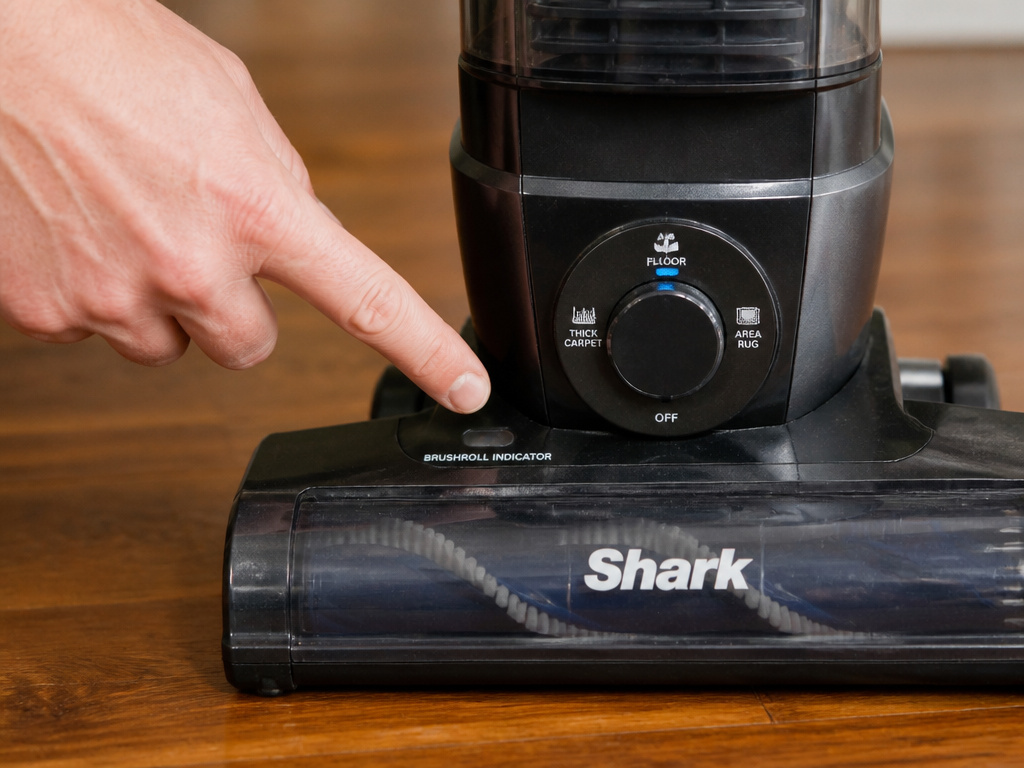 The light is a simple communication tool. Here’s the translation straight from Shark’s troubleshooting guides.
| Light State | What It Means | Immediate Action |
|---|---|---|
| Off | No power to brushroll circuit. Wand not reclined, selector on hard floor, loose connection, or garage open. | Go through the 5-point diagnostic list above. |
| Solid Green | Normal operation. Brushroll is powered and spinning. | None. Keep cleaning. |
| Solid Red | Critical blockage. The brushroll is jammed or the motor is straining against a clog. | Turn vacuum off. Unplug. Clear blockage in brushroll, hose, or nozzle. |
| Flashing Red | Motor overheating protection active. The brushroll motor has exceeded its safe temperature. | Turn vacuum off and unplug. Wait 30+ minutes for it to cool. Check for excessive debris wrap before restarting. |
A light that flickers between green and off usually points to a failing connection or a problem with the internal switch activated by the reclined handle.
When the Problem Is Overheating (Flashing Red Light)
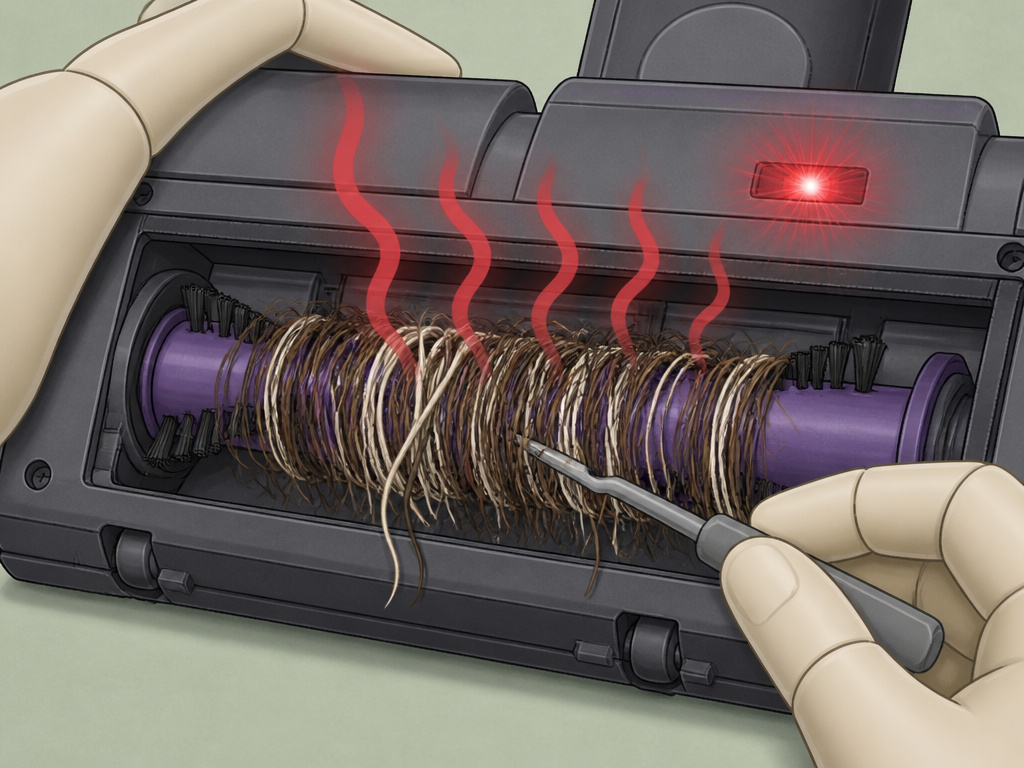 A flashing light is a thermal cutoff doing its job. The brushroll motor has a built-in protector that shuts it down before heat damages the windings. This isn’t a defect; it’s a safety feature.
The cause is almost always restricted airflow or mechanical binding. Thick carpet, a full filter, or a brushroll tangled with hair and string forces the motor to work harder, generating excess heat. According to the NV830 manual, if the headlights are also flashing, it’s a secondary indicator to check the brushroll garage lid.
Turn the vacuum off and wait for it to cool down. For subsequent use on that surface, try opening the Suction Control or simply allow it to cool.
After a cooldown, restart the vacuum on a hard floor setting with the suction control open (minimum suction). If the light stays green, the issue was temporary overload. If it flashes again quickly on any surface, you may have a failing motor or a persistent overheating fault that needs professional attention.
Model-Specific Quirks and Fixes
Not all Sharks are the same. The fix for an NV681 isn’t always the same for an NV830. Here are the documented differences.
For Shark NV681/NV755 Rotator Models:
- Suction Control Matters: The manual specifically says if the brushroll indicator light repeatedly turns red on carpet, try moving the suction release slide to minimum. This reduces the load on the motor.
- Hose Connection is Critical: The manual provides explicit steps to ensure the hose clicks into the pod, as a poor connection here can cause the entire unit to shut off.
For Shark NV830 DuoClean Models:
- Focus on the Garage Lid: The primary cause for a non-responsive brushroll (and dark light) is an unlatched brushroll garage lid. The manual states to check that it’s “firmly locked into position on both sides.”
- Check the Soft Roller: On DuoClean models, a second soft roller sits in front of the main brushroll. If this roller is jammed with debris, it can prevent the main brushroll from turning freely, leading to strain and a red light.
If your model isn’t listed, the principles still apply. Find your manual online using the model number from the QR code label on the back of the vacuum. Compare its brush roll not turning instructions to these steps.
The One Repair You Shouldn’t Attempt Yourself
If you’ve been through every step, connections are tight, selectors are correct, blockages are clear, and the light remains dead, the issue may be internal. The most common internal failures are the brushroll motor itself or the printed circuit board (PCB) that controls it.
Replacing the brushroll motor is a moderate repair involving disassembling the floor nozzle and soldering wires. Swapping the main PCB is a complex, model-specific task. At this point, the cost of parts and the risk of error often outweigh the benefit of a DIY fix, especially if the vacuum is still under warranty.
For older models, consult a repair shop for an estimate. For newer models, contact Shark customer support. Before you call, have your model and serial numbers ready from the label on the vacuum. Knowing you’ve already performed basic troubleshooting Shark suction loss and brushroll checks will streamline the support process.
Frequently Asked Questions
Why is my Shark vacuum brush roll light not on but the vacuum works?
The vacuum’s main suction motor and the brushroll motor are on separate circuits. You can have suction without brushroll power. This confirms the issue is isolated to the brushroll circuit: check the reclined wand, surface selector, brushroll garage lid, and the hose connection for power.
Is it safe to use my Shark if the brushroll light is off?
It is safe for suction-only cleaning on hard floors. In fact, that’s what “hard floor” mode is designed for. However, using it on carpet without the brushroll spinning will result in poor cleaning performance, as the agitator isn’t lifting the pile. It won’t damage the vacuum, but it won’t clean your carpets either.
The light was green, then went red and now won’t come back on. What happened?
The sequence indicates an overload. The brushroll likely jammed (solid red), the motor overheated in the struggle (flashing red), and then the thermal protector cut power completely to prevent damage. Unplug the vacuum and let it cool for at least 30 minutes. After cooling, clear any jam in the brushroll. It should reset and the light may return. If it doesn’t, the thermal fuse may have blown, requiring repair.
I checked everything and the light is still off. Could it be a blown fuse?
Most Shark vacuums use a thermal fuse or protector on the brushroll motor, not a user-serviceable glass fuse. If this thermal fuse blows, it permanently opens the circuit to prevent fire risk. This is a definitive repair job. Another possibility is a broken wire in the hose or a failed switch in the handle. Professional diagnosis is needed.
Does the brushroll indicator light affect battery models?
Yes, but the behavior can differ. On cordless Shark vacuums, a dead battery will prevent the brushroll from engaging at all, leaving the light off. Some cordless models also use indicator lights to show charging problems or battery health. Always ensure the vacuum is fully charged and seated correctly in its dock if it’s a robot vacuum not working.
Before You Go
A dark brushroll light is usually a simple fix. Recline the handle, flip the surface selector, and slam that hose connection home until it clicks. These three actions solve most cases. When the light is red, it’s talking to you: solid red means “clear a jam,” flashing red means “let me cool down.”
For anything more persistent, your model’s manual has the specific answer. The label with the serial number is your key to the right diagram. If the vacuum is young, use the warranty. If it’s old and other issues are piling up, consult our guide on best Shark vacuums to weigh repair against replacement. Most of the time, you don’t need a new vacuum, you just need to find the one switch you missed.